

Can the High Pressure Grinding Roll (HPGR) significantly reduce energy consumption and improve fine crushing efficiency for hard ores?
2026-06-04Frequently Asked Question Q Can the High Pressure Grinding Roll (HPGR) significantly reduce energy consumption and improve fine crushing efficiency for hard ores? A Yes. Our High Pressure Grinding Roll utilizes inter-particle crushing technology, applying high pressure to form a packed material bed. This mechanism delivers a higher reduction ratio while consuming 30–50% less energy than conventional cone crushers or rod mills. It also generates more micro-fractures within the ore, which substantially improves downstream grinding efficiency. Need a solution for your material? Consult Our Experts →

Can the Four Roller Crusher handle wet or sticky materials like coal gangue without clogging?
2026-05-31Frequently Asked Question Q Can the Four Roller Crusher handle wet or sticky materials like coal gangue without clogging? A Yes. Our Four Roller Crusher features a screen-less design that fundamentally eliminates clogging issues. It is highly adaptable and capable of processing various solid materials with a moisture content of up to 30%, ensuring stable production even in rainy seasons. Need a solution for your material? Consult Our Experts →
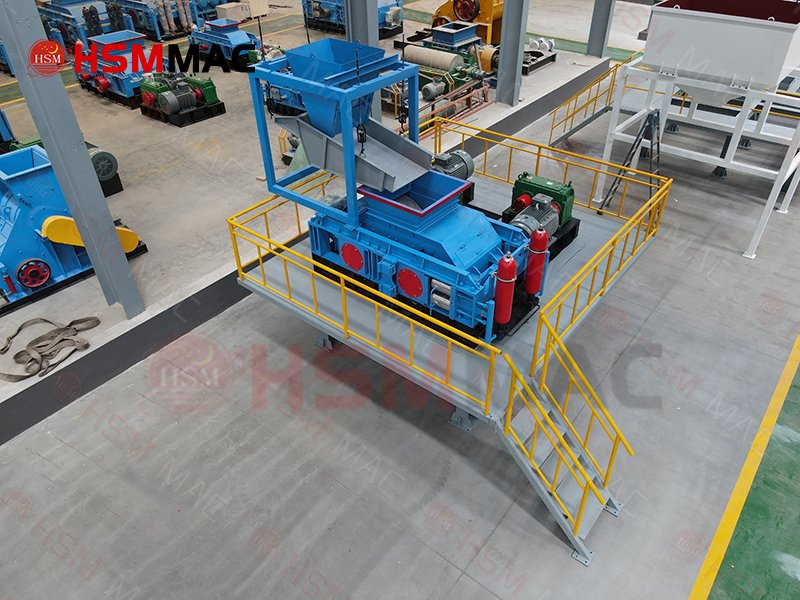
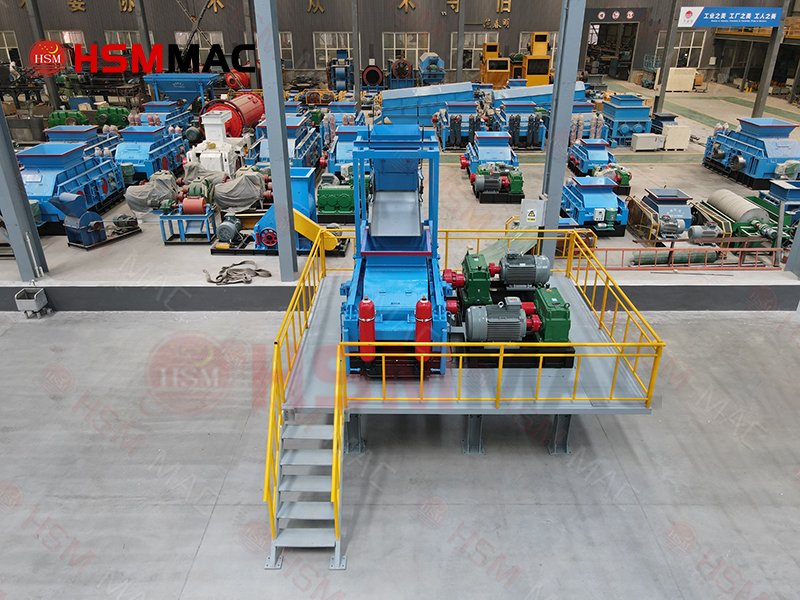
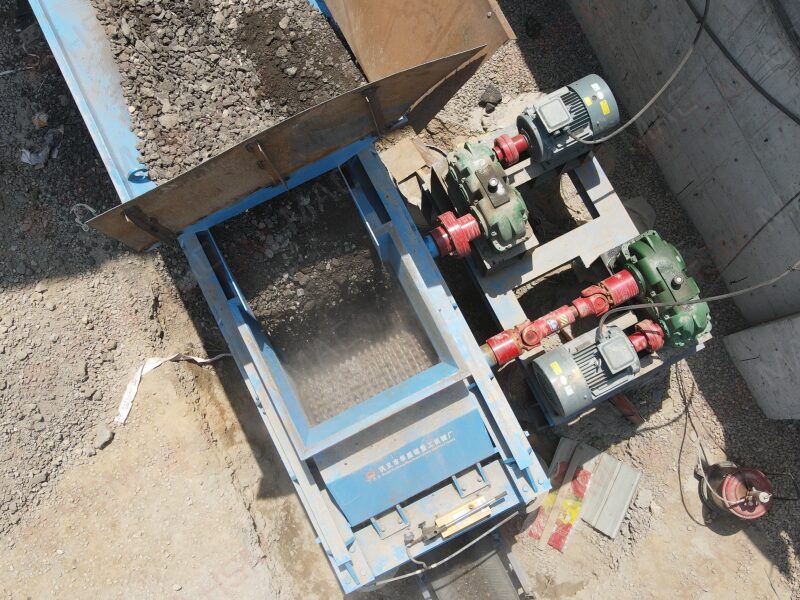
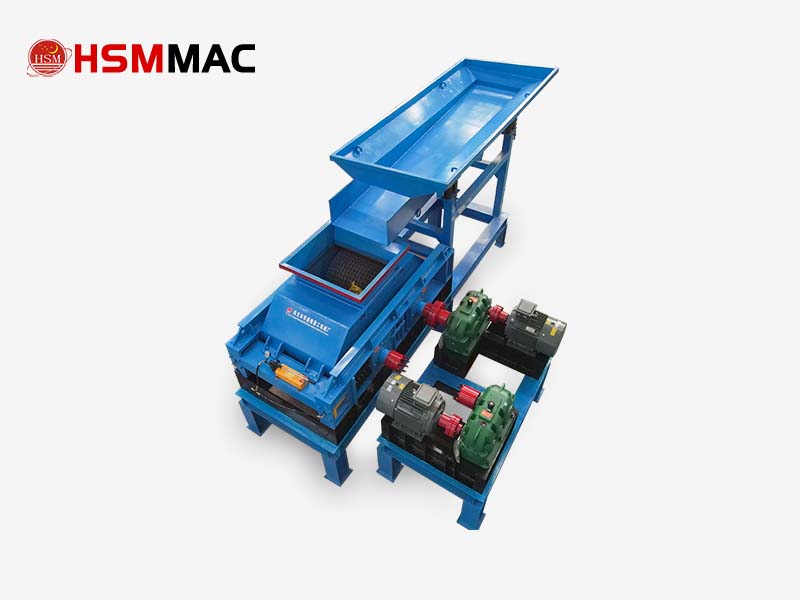
How does the Large Hydraulic Double Roller Crusher save 20%-30% energy compared to traditional crushers?
2026-05-28Frequently Asked Questions Q How does the Large Hydraulic Double Roller Crusher save 20%-30% energy compared to traditional crushers? A Traditional impact or hammer crushers rely on high-speed dynamic collisions, which waste massive amounts of kinetic energy and electricity generating useless dust and friction heat. In contrast, our Large Hydraulic Double Roller Crusher operates on a highly efficient static pressure extrusion principle. Driven by a powerful hydraulic system, the low-speed counter-rotating rollers pull the material directly into the narrowing gap, forcing rocks to break cleanly along their natural fractures and weak points. This targeted force minimizes energy dispersion, allowing the system to easily cut your power bills by 20% to 30% while simultaneously boosting overall capacity by 30% to 40%. Want to see how much energy your plant can save? Consult Our Engineers →
What happens if uncrushable foreign objects (like tramp iron or steel blocks) enter the crushing chamber?
2026-05-27Frequently Asked Questions Q What happens if uncrushable foreign objects (like tramp iron or steel blocks) enter the crushing chamber? A Our Large Hydraulic Double Roller Crusher is equipped with an advanced Intelligent Hydraulic Protection System designed precisely for this scenario. When an uncrushable foreign object drops into the rollers, the extreme spike in resistance forces the hydraulic system to automatically retreat the movable roller. This instantly widens the discharge gap, allowing the object to pass through safely without harming the durable high-chromium manganese alloy roller skins or overloading the motor. Once the item is discharged, the system automatically resets the rollers back to your precise preset gap within seconds—ensuring completely continuous, safe, and stable operation. Looking for technical parameters from 20 to 400 t/h? Get Full Equipment Specs →
-
How does this machine control ‘over-crushing’ and protect our lithium ore flotation recovery rate?
2026-05-25Frequently Asked Questions Q How does this machine control ‘over-crushing’ and protect our lithium ore flotation recovery rate? A Traditional hammer or dynamic impact mills pulverize brittle lithium minerals (like spodumene and lepidolite) into useless micro-fines or “slime” (under 200 mesh), which cannot be recovered by standard flotation reagents and end up as waste in tailings. Our 2PGY Hydraulic Double Roller Crusher operates at a very low rotational speed (low RPM). It uses massive, controlled static hydraulic pressure to squeeze materials cleanly—shattering the rocks right along their natural crystal boundaries in a single pass. This continuous gap regulation restricts re-crushing, keeping mud slime generation below 10% and directly protecting your target concentrate yield. Want to run a crushing simulation for your lithium ore geology? Contact Our Engineers →
-
How does the hydraulic double roller crusher eliminate iron contamination during potassium feldspar processing?
2026-05-23Frequently Asked Questions Q How does the hydraulic double roller crusher eliminate iron contamination during potassium feldspar processing? A Unlike traditional hammer mills or impact crushers that use high-speed striking (which causes massive mechanical wear and sheds iron manganese dust into the mineral), the Hydraulic Double Roller Crusher operates at a very low rotational speed (low RPM). It crushes potassium feldspar using controlled static hydraulic pressure, squeezing the material cleanly along its natural crystal cleavage planes. Combined with our customized non-magnetic, high-alloy roller shells, frictional wear is minimized to near-zero levels, completely safeguarding the whiteness and chemical purity required for premium ceramic glazes and glass batches. Have more technical questions about your mineral matrices? Contact Our Engineers →
-
How does the double toothed roller crusher handle sticky, high-moisture, or high-mud materials without clogging?
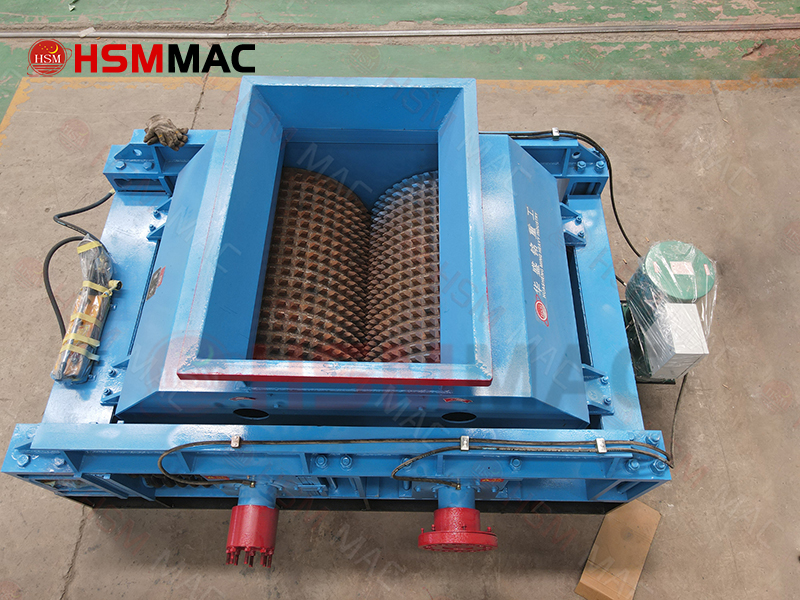
2026-05-21Technical Highlight Frequently Asked Question Q How does the double toothed roller crusher handle sticky, high-moisture, or high-mud materials without clogging? Unlike traditional jaw or impact crushers that rely on closed-chamber crushing screens, our crusher utilizes an advanced intermeshing extrusion-shear mechanism. The counter-rotating serrated teeth act as a continuous geometric force that actively shears through clay, raw coal, and damp mineral feed. Its completely screenless base layout paired with a natural self-cleaning geometry ensures that sticky particles cannot pack together or bridge. This effectively eliminates “blind hole” blockages and operational downtime, even during extreme rainy seasons or high-mud material surges. Need custom tooth configurations for your specific material? Contact Engineer
-
How does the double roller crusher handle wet coal without clogging?
2026-05-19Double Roller Crusher: FAQ Quick Technical Insight for Coal Processing Q: How does the double roller crusher handle wet coal without clogging, and how does it reduce waste fines? A: Unlike traditional impact crushers that rely on internal screens (which easily blind with moisture), the double roller crusher utilizes a continuous low-speed static pressure extrusion mechanism. Wet coal is drawn down and forced through the roller gap instantly, eliminating material buildup and sticky clogging. Furthermore, by pressing materials along their natural fractures rather than shattering them repeatedly, it controls the over-crushing rate (fine dust under 3mm) to less than 5%, maximizing your high-premium coal output. Need custom roller dimensions or a project quote? Contact Our Engineers
-
Why is the Hydraulic Double Roller Crusher more cost-effective than a VSI crusher for river pebble sand making?
2026-05-18Q Why is the Hydraulic Double Roller Crusher more cost-effective than a VSI crusher for river pebble sand making? The primary reason lies in the Wear Mechanism and Energy Consumption. While VSI (Vertical Shaft Impact) crushers rely on high-speed impact which leads to rapid wear of expensive throw-out heads when hitting hard river pebbles, our Double Roller Crusher uses Static Pressure Extrusion. ✅ Lower Wear Cost: The high-chromium roller skins have a significantly longer service life than VSI wear parts, reducing your cost per ton of sand by 30-50%. ✅ Higher Yield: It produces more fine material (0-5mm) in a single pass with a much lower circulation load. ✅ Power Saving: At the same capacity, the power consumption is roughly 20% lower because the energy is applied directly to the stone rather than air resistance from high-speed rotation. Engineers’ Note: For high-silica river stones, the hydraulic roller crusher is often the “secret weapon” for plant owners to maintain high margins when others are struggling with frequent part replacements. → Compare Operating Costs for Your Project
How do I select the correct model of Hydraulic Double Roller Crusher for my specific capacity and material?
2026-05-17Quick Technical Support Q How do I select the correct model of Hydraulic Double Roller Crusher for my specific capacity and material? Selecting the right model isn’t just about the hourly tonnage; it’s about balancing Material Hardness, Feed Size, and Desired Fineness. Here is the professional matching logic used by our engineers: Step 1: Check Feed Size. If your raw material is ≤120mm, the 2PGY1512 or 2PGY2012 series provides the necessary “bite” for efficient intake. Step 2: Match the Tonnage. For 100-120 TPH, the 2PGY1210 is standard. If you need a heavy-duty 300+ TPH line, the 2PGY2012 with dual 355kW motors is the industry benchmark. Step 3: Define the Hardness. For high-hardness materials like Quartz or Iron Ore, we recommend opting for a larger roll diameter (e.g., φ1800+) even if your capacity requirement is lower, to increase the crushing force and skin life. Pro Tip: Always aim for a machine with a rated capacity 15-20% higher than your actual requirement. This “buffer” reduces mechanical fatigue and prevents system overheating during peak operation. → Get a Customized Model Selection Guide © 2026 HSM Heavy Industry | Technical Knowledge Base
-
How long does the roller skin of a hydraulic crusher last?
2026-05-16Technical Support | FAQ Expert Answers: Maximizing Your Crusher’s ROI Q How long is the service life of the roller skin, and what factors affect its wear? This is the most common concern for our users. Generally, the roller skin of an HSM Hydraulic Double Roller Crusher can last between 6 months to 2 years, but this varies significantly based on several key factors: Material Hardness (Mohs Scale): Harder materials like quartz or granite will cause faster wear than softer materials like coal or limestone. Moisture & Impurities: Excessive silica content or uncrushable foreign objects (tramp iron) accelerate surface abrasion. Operating Pressure: High-pressure settings for super-fine crushing increase the mechanical stress on the alloy surface. Maintenance Habits: Regular inspection of the hydraulic pressure and ensuring uniform feeding across the entire width of the roller can extend life by 30%. 💡 HSM Pro Tip: Our roller skins are made from a proprietary High-Chromium Manganese Alloy. Unlike standard skins, they can be surface-welded and repaired on-site, significantly reducing replacement frequency and downtime. Don’t see your question here? Our engineers are ready to help. Ask a Technical Engineer © 2026 HSM Heavy Industry | Technical Knowledge Base | Maintenance Guide
How does the intelligent hydraulic system handle unbreakable foreign objects like iron blocks during operation?
2026-05-15Technical FAQ Deep Dive into Hydraulic Double Tooth Roller Technology Q How does the intelligent hydraulic system handle unbreakable foreign objects like iron blocks during operation? The core of our Double Tooth Roller Crusher’s reliability lies in its proactive defense mechanism. Instead of suffering mechanical failure when encountering non-crushable items, the system executes a three-step “Detect-Protect-Reset” protocol: 01. Instant Pressure Sensing When an iron block or similar hard object enters the crushing chamber, the hydraulic sensors detect a peak pressure exceeding the safety limit within milliseconds. 02. Automatic Roller Retraction The hydraulic cylinders immediately retract the movable roller, expanding the discharge gap to let the foreign object pass through safely without damaging the alloy teeth. 03. Zero-Downtime Reset Once cleared, the rollers return to their original position automatically. The entire process requires no manual intervention and keeps the production line running. Engineer’s Note: This hydraulic flexibility not only prevents shaft deformation but also allows for real-time adjustment of the product size (8-200 mm) depending on your specific project needs. Need a specific technical configuration for your site? Consult Our Engineering Team
 +86-13838144666
 +86-13838144666