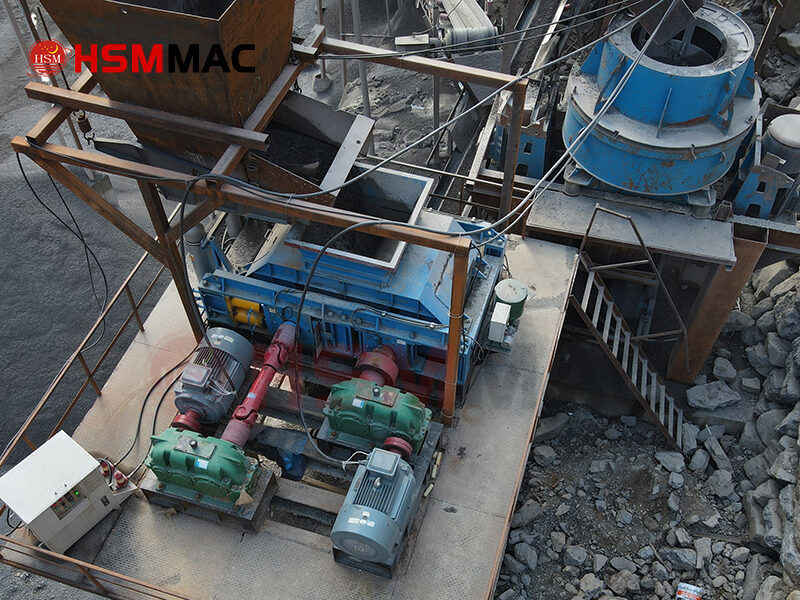
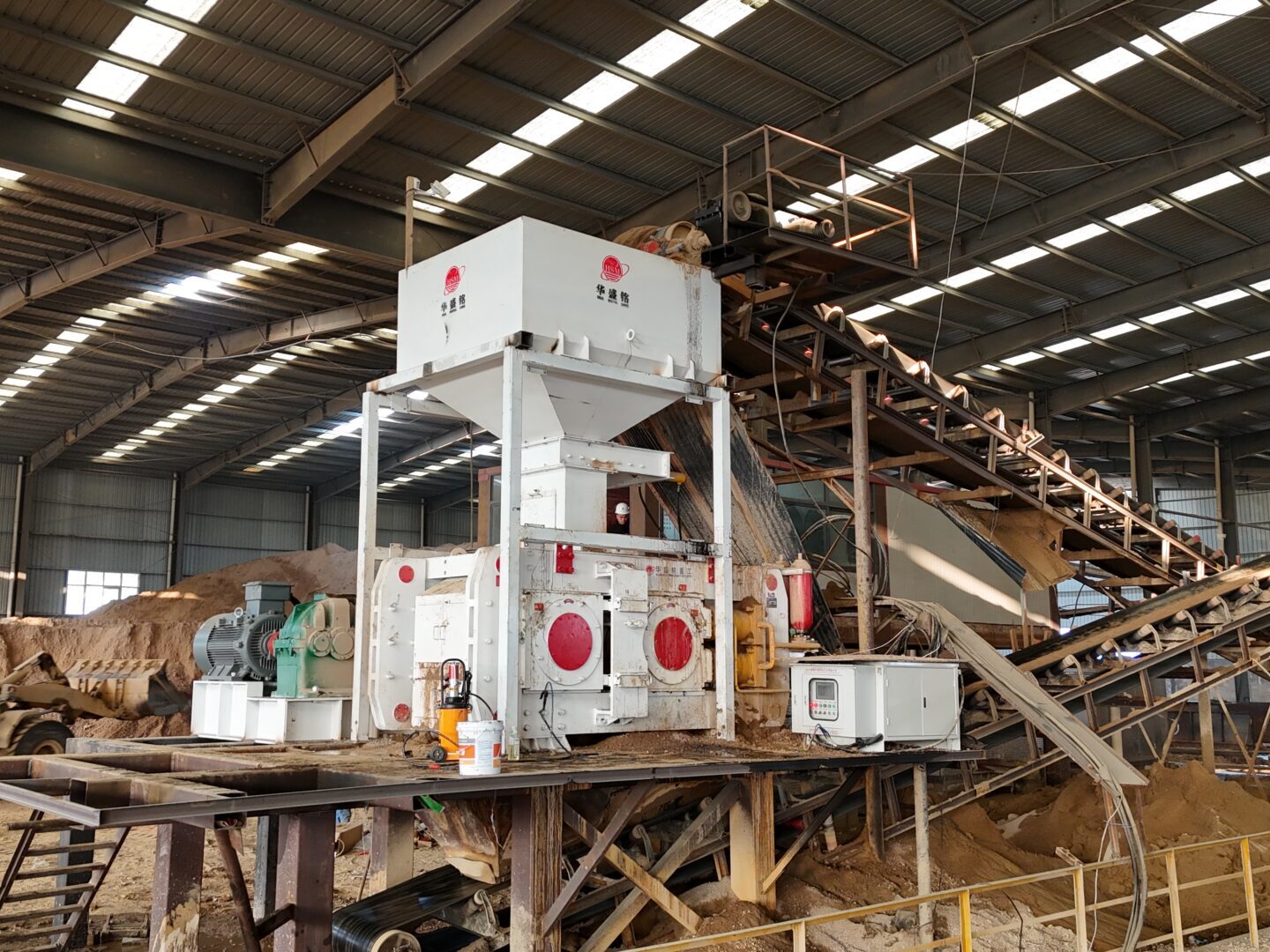
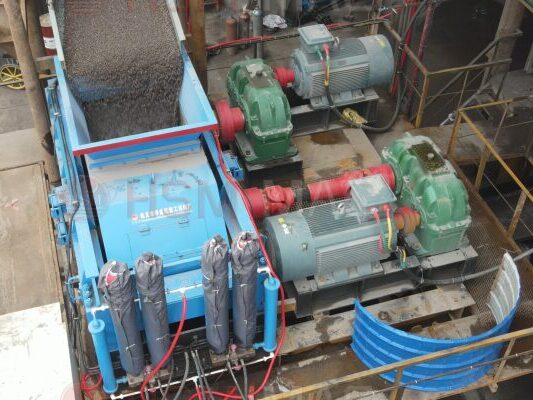

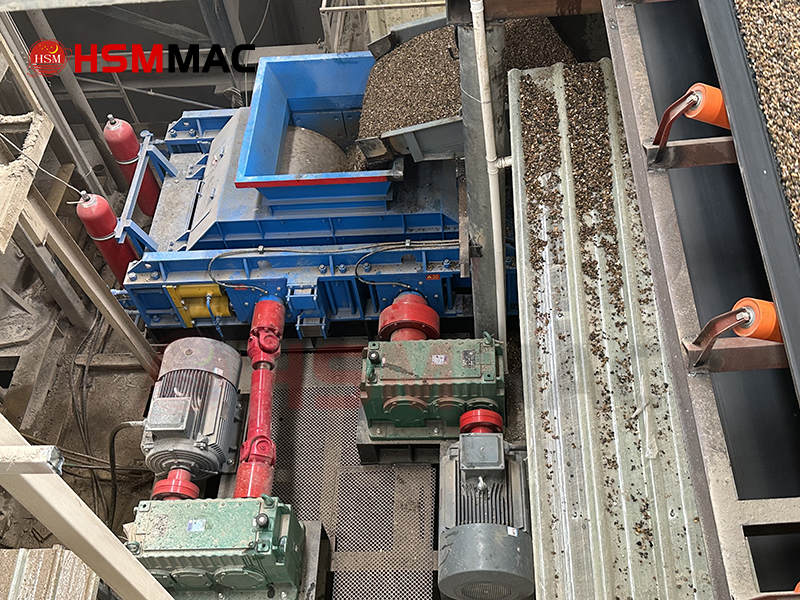
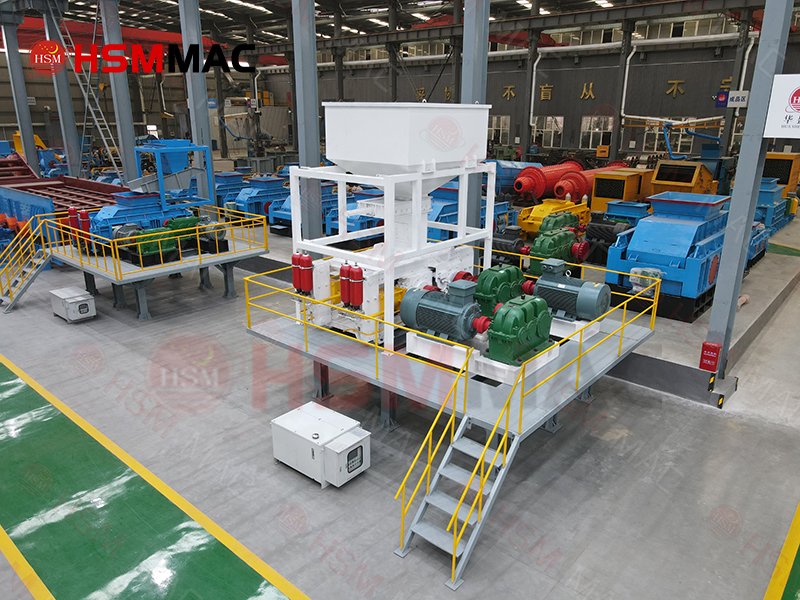
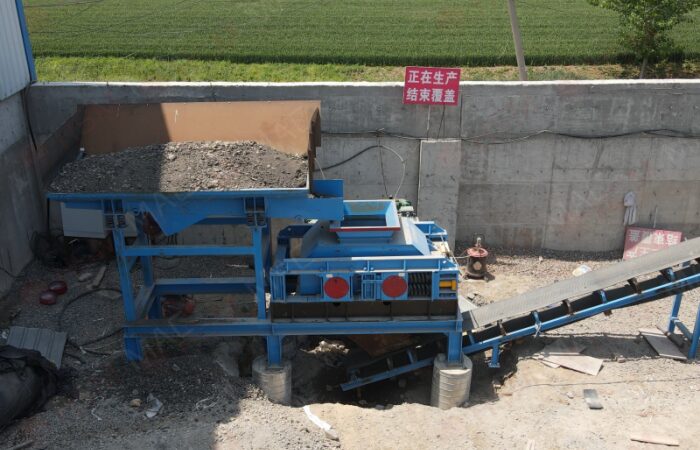
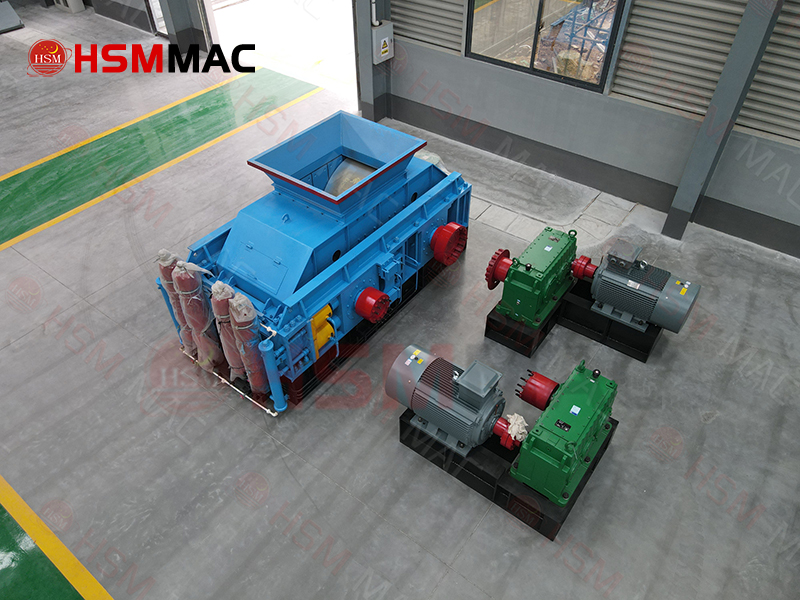
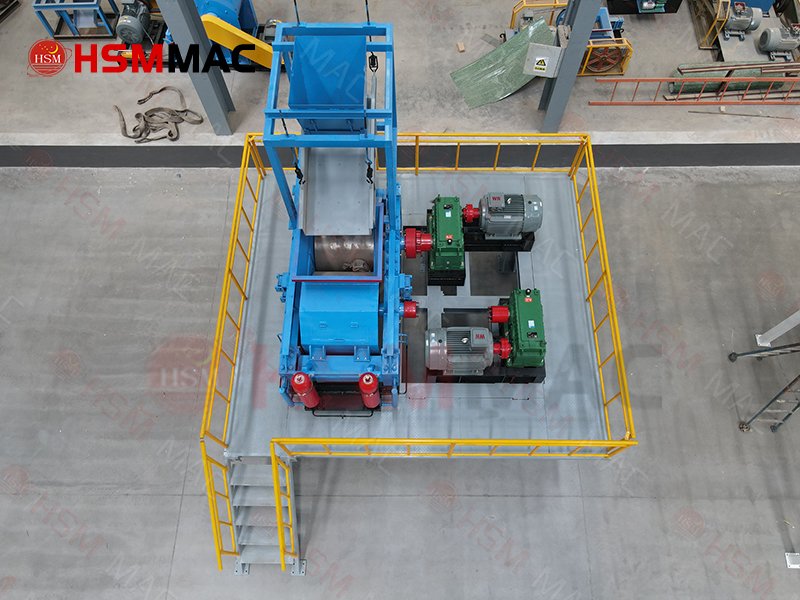
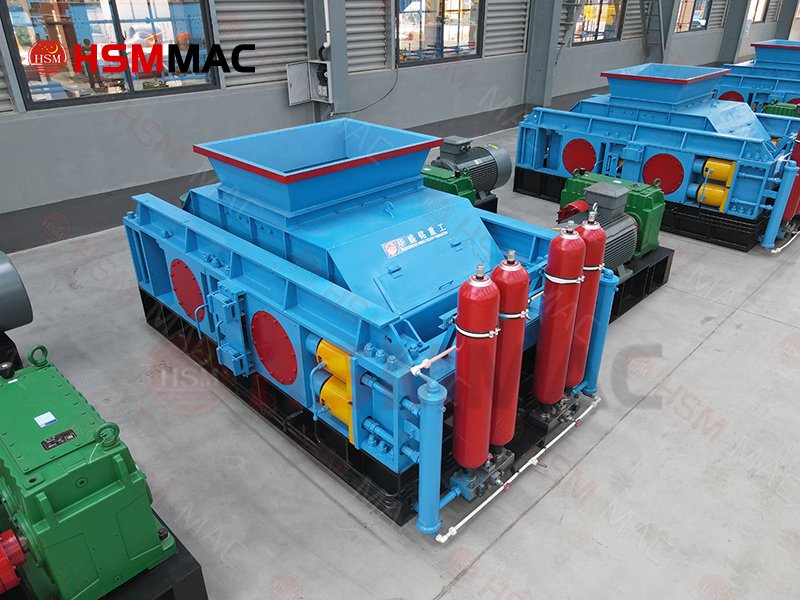
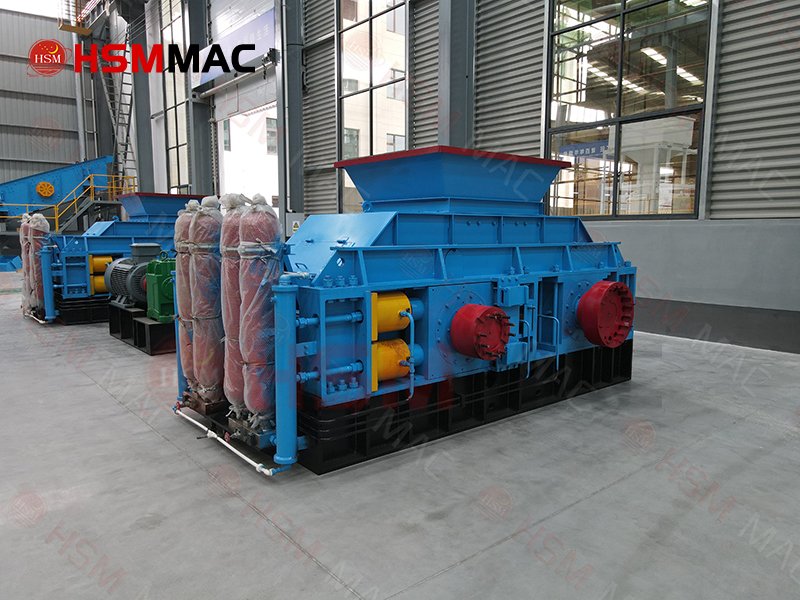
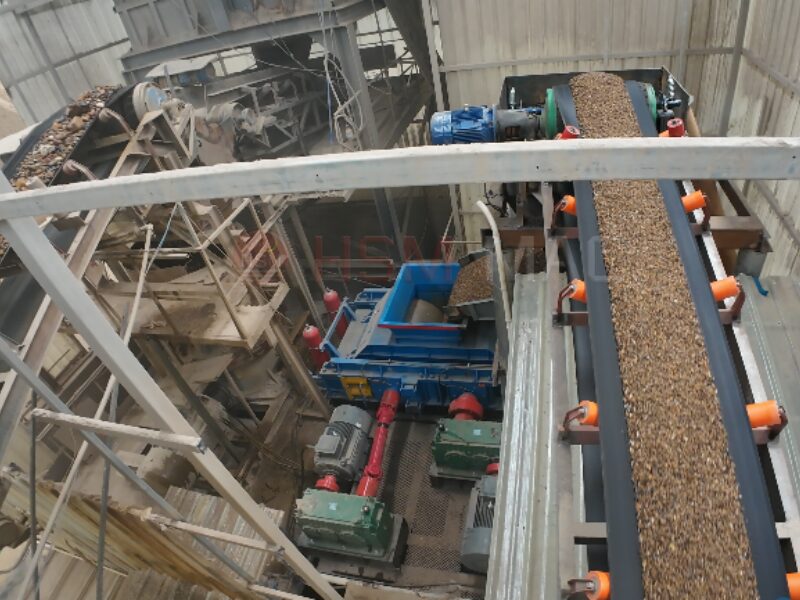
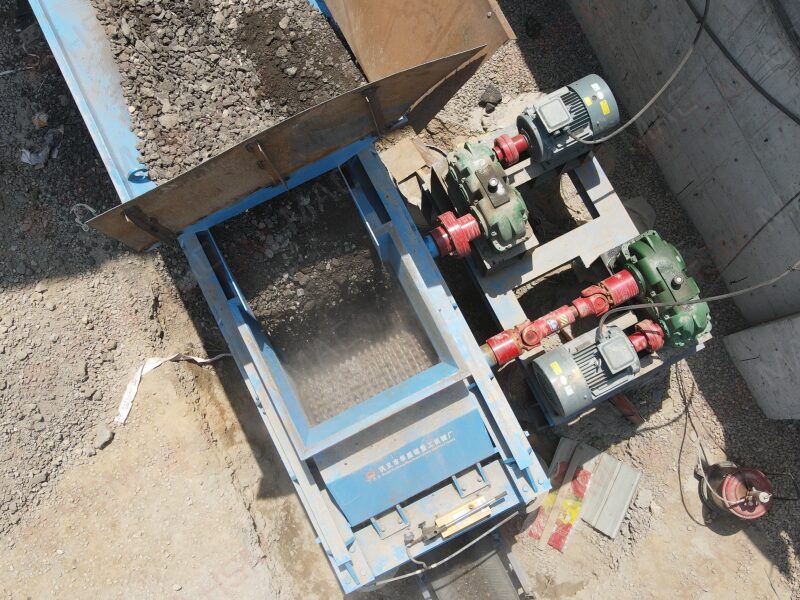

HSM Double Roller Sand Maker | Premier Choice for Limestone Sand Making, Consistently Delivering Premium ≤5mm Sand
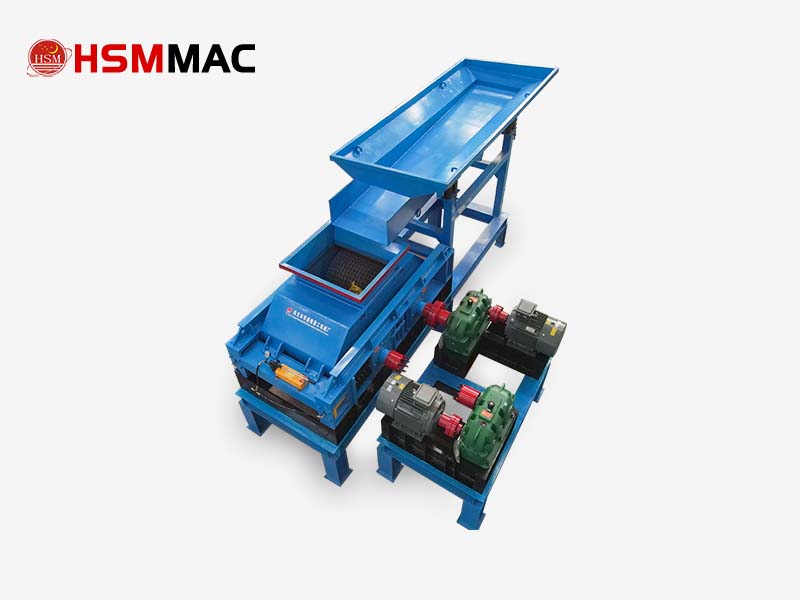
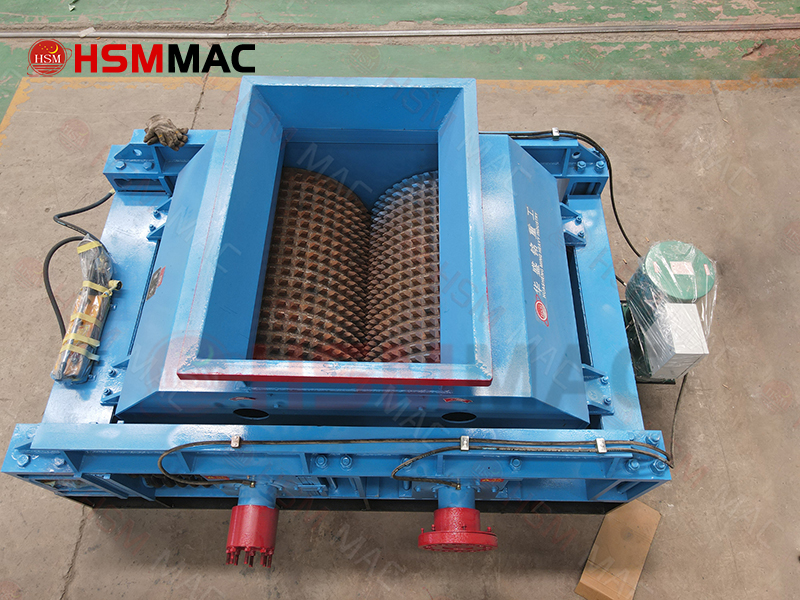
2026-09-21Executive Summary: To address common industry pain points in limestone sand making—such as excessive fine powder, uneven particle sizing, and tedious maintenance—the HSM Double Roller Sand Maker utilizes interparticle compression technology to process feed sizes up to ≤2 cm into high-quality manufactured sand ≤5 mm in a single pass. Featuring low dust emissions, high wear resistance, low operating costs, and versatile material adaptability, it is a highly reliable choice for aggregate processing plants looking to lower costs and boost efficiency. Core Performance Highlights & Technical Features Technical Feature Operational Performance & Value Delivered Crushing Principle & Particle Size Utilizes dual-roller compression and grinding; accepts feed up to ≤2 cm (20 mm) and yields premium construction sand ≤5 mm in a single pass. Product Quality & Particle Shape Significantly reduces over-crushing (fine dust) compared to impact crushers, yielding uniform, well-shaped cubic particles meeting strict construction aggregate standards. Wear Resistance & Lifespan Equipped with high-wear-resistant alloy roller shells, dramatically extending replacement cycles and minimizing maintenance shutdown frequency. Eco-Friendly & Low Maintenance Operates with minimal vibration and low dust emissions; simple structural design ensures quick disassembly, reducing labor and operational costs. Material Adaptability In addition to limestone, it efficiently handles calcite, river pebbles,…

HSM Heavy Industry Hydraulic Roller Grinding Mill: Empowering Mining and Aggregate Processing via “More Crushing, Less Grinding”
2026-09-17Executive Summary: Amid the quality upgrade in aggregate and mineral processing, the HSM Heavy Industry Hydraulic Roller Grinding Mill stands out as a premier choice for cost reduction and efficiency. Built on 150–300 MPa interparticle crushing technology, it integrates an intelligent hydraulic gap-adjustment and tramp iron protection system. Equipped with wear-resistant studded rollers and PLC central control, it offers capacities from 60 to 300 tph—ideal for fine crushing of hard rocks like river pebbles, gold, iron, and copper ores. I. Core Technological Highlights & Technical Specifications Technical Feature Core Specifications & Working Mechanism Working Principle & Pressure Interparticle bed crushing; applies 150–300 MPa high pressure between rollers to generate dense micro-cracks inside materials. Production Capacity 60–300 tph, flexibly matching small, medium, and large-scale mining processing plants. Smart Hydraulic Control Smooth hydraulic roll-gap regulation; features an automatic tramp iron relief system that resets automatically after uncrushables pass. Wear Resistance & Service Life Optional studded roller shells for abrasive feed, delivering 2–3x longer service life compared to standard rollers. Automation & Control Standard PLC centralized control system + dual-motor synchronous drive, lowering energy consumption and labor dependence. II. All-Scenario Applications & “More Crushing, Less Grinding” Advantage Aggregate Sand Making: High-efficiency processing of…

Roller Crusher vs. Impact Crusher for Sand Making: Which Should You Choose?
2026-09-15Direct Answer: Choose a Roller Crusher for hard, abrasive rocks (cobblestone, granite, quartz) to minimize wear costs, cut fine powder production, and ensure stable output sizing. Choose an Impact Crusher for soft to medium-hard rocks (limestone) when high reduction ratios and single-pass shaping are required. 📊 Comparative Breakdown: Roller Crusher vs. Impact Crusher Feature / Metric HSM Roller Crusher Impact Crusher Crushing Principle Material bed crushing by compression High-speed mechanical impact Material Hardness Hard/abrasive stone (cobblestone, granite, quartz, calcite) Medium-to-soft stone (limestone) Fines & Powder Strictly controllable fines; low needle/flake ratio Generates a higher volume of stone powder Wear Parts Cost Low wear consumption; energy-saving (“more crushing, less grinding”) High blow bar wear costs when handling hard materials Feed Size Capability Limited feed size; may require recirculation for ultra-fine sand Large feed capacity with a large reduction ratio Tramp Metal Defense Hydraulic overload protection avoids damage from iron objects Vulnerable to internal damage if tramp metal enters Quick Selection Guide Select Roller Crusher if: Processing hard, high-silica raw materials (cobblestone, granite, quartz), where controlling fine powder generation and minimizing ongoing operating costs are top priorities. Select Impact Crusher if: Processing soft-to-medium stones (limestone), requiring large single-stage reduction ratios and rounded…
-
How Double Roll Sand Making Machines Work: Compression-Based Fine Crushing Mechanics
2026-09-11Core Concept: In manufactured sand production, impact crushers and vertical shaft impactors (VSI) rely on high-velocity kinetic impact, whereas double roll sand making machines operate on interparticle compression and shear friction between counter-rotating rollers. By fracturing rocks along natural cleavage planes, this mechanism reduces over-grinding, yields well-rounded cubical manufactured sand with low flakiness, and maintains precise gradation via a fixed roll gap. Schematic diagram of double roll sand maker showing material drawn into the gap between counter-rotating rollers by friction, undergoing compression and discharge. 1. Compression Over Impact: Reducing Over-Grinding & Improving Sand Shape Unlike impact breakers that shatter rock forcefully, a double roll crusher draws material smoothly into the roll gap using surface friction from two independently driven wear-resistant rollers. Materials compress and shear along their natural crystal cleavage planes rather than shattering randomly, delivering distinct advantages: Crushing Feature Impact / VSI Crushers Double Roll Sand Making Machines Primary Mechanism High-speed kinetic collision / hammer strikes Squeezing, interparticle compression & shear friction Fracture Pattern Violent random splitting & impact shatter Layered cleavage cracking along natural grain boundaries Over-Grinding Rate Higher percentage of ultra-fine dust (<0.075 mm) Significantly reduced over-grinding, higher usable sand yield Finished Sand Shape Variable flakiness; high…
-
Conquering Hard Materials: High-Capacity Double-Roll Sand-Making Machines by Huashengming Heavy Industry
2026-09-05Product Overview: Crushing high-hardness materials like river pebbles, granite, and basalt has long been a primary bottleneck for aggregate producers—causing rapid wear, exorbitant maintenance costs, and volatile output. Huashengming Heavy Industry (HSM) resolves this pain point through proprietary casting processes and intelligent double-roll crushing technology, delivering single-unit capacities up to 450 TPH and extended roller shell lifespans of 1 to 3 years. 🪨 Hard-Rock Capabilities & Direct Feed Range Traditional impact or hammer-based sand makers experience severe wear and drastic capacity drops when encountering hard, abrasive stone. HSM double-roll sand makers pair high-chromium alloy roller shells with an automatic hydraulic buffering system, boosting wear and compression resistance by 300% to ensure continuous, jam-free production. Maximum Direct Feed Size: ≤ 50 mm (Direct sand making without secondary pre-crushing). Applicable Feed Materials: River pebbles, cobbles, granite, basalt, iron ore, and over 200 hard minerals. 📈 Full-Range Model Hierarchy (5 to 450 TPH) HSM offers over 20 standardized model configurations engineered to fit various plant sizes, from entry-level sand yards to large-scale commercial ready-mix concrete suppliers: 1. Small Series (5–50 TPH) Low initial investment and fast return on investment; ideally suited for small-scale aggregate plants and startups. 2. Medium Series (50–300 TPH) The…
-
High-Pressure Grinding Rolls (HPGR) vs. Impact Crushers in Iron Ore Processing
2026-09-04High-Pressure Grinding Rolls (HPGR) vs. Impact Crushers in Iron Ore Processing: High-Efficiency & Low-Wear Crushing Upgrade Overview: Iron ore features extreme hardness and strong abrasiveness. Processing it with impact crushers often leads to rapid wear, unstable discharge sizing, over-grinding, and excessive power consumption per ton. High-Pressure Grinding Rolls (HPGR) / Hydraulic High-Pressure Roller Mills replace high-velocity strikes with continuous, high-pressure material-bed comminution, maximizing energy utilization, ensuring uniform particle sizing, and lowering operational costs. ⚡ Mechanism Comparison: Impact Striking vs. High-Pressure Material-Bed Comminution The operational issues encountered with impact crushers stem directly from their working principle: high-speed mechanical strikes against extremely hard ore yield low energy utilization, localized severe wear, and uncontrollable particle size distributions. The HPGR Advantage: HPGR operates on continuous high-pressure bed comminution between counter-rotating rollers. Materials are compacted and crushed layer-by-layer rather than struck via single-point impacts. Energy is applied directly to particle fractures, resulting in superior size uniformity and evenly distributed roll-surface wear. 📊 Field Performance Comparison Performance Metric Impact Crusher High-Pressure Grinding Roll (HPGR) Finished Product Particle Sizing High fines content, high proportion of flaky/elongated particles, wide size distribution. Increases downstream grinding & separation load. Inter-particle compression fractures ore along natural texture lines. Concentrated particle sizing,…

Tooth Roller Crusher: The Ideal Solution for Coal Crushing
2026-09-01In the coal mining and processing industry, crushing equipment plays a vital role in determining operational efficiency, product quality, and overall production costs. Among the various types of crushers available, the tooth roller crusher—also known as the double-tooth roller crusher—has emerged as a preferred choice for coal crushing applications. This article provides a comprehensive overview of tooth roller crushers, their working principles, key advantages, and their extensive applications in the coal industry What Is a Tooth Roller Crusher? A tooth roller crusher is a type of crushing equipment that utilizes two or four toothed rollers rotating in opposite directions to shear, squeeze, and split materials. It is specifically designed for crushing medium-hard and brittle materials, with coal being one of its primary applications. The equipment is widely used in coal mines, coal preparation plants, metallurgical facilities, and other industrial sectors. The crusher typically consists of a transmission device, frame, crushing rollers, hydraulic adjustment systems, and coupling mechanisms. Working Principle The working principle of a tooth roller crusher is fundamentally different from traditional crushers that rely on impact and compression. Instead, it takes advantage of the fact that materials like coal have compressive strengths far greater than their shear and tensile…
-
Cobblestone Roll Crusher – Reliable Choice for Hard Rock Sand Making
2026-08-19 Cobblestone is one of the harder natural stones. Processing it into manufactured sand requires equipment with sufficient crushing capacity and wear resistance. Hua Sheng Ming roll crusher with its compression crushing principle, demonstrates stable performance and good product quality when processing hard and highly abrasive materials like cobblestone, playing an important role in construction sand production. Structure and Working Principle Hua Sheng Ming cobblestone roll crusher mainly consists of rolls, roll support bearings, compression and adjustment devices, and a drive system. The drive mechanism uses two motors connected via V-belts or couplings to drive the two rolls in opposite directions. Material falls from the feed opening between the two rolls and is crushed under the compressive and shearing forces generated by the counter-rotating rolls. The finished product is discharged from the bottom. Discharge size is controlled by adjusting the gap between the rolls—a smaller gap produces finer material, while a larger gap produces coarser material. Gap adjustment methods include wedge devices, shim devices, or hydraulic systems, allowing operators to adjust according to production requirements. Modern roll crushers are equipped with hydraulic adjustment and overload protection systems. When encountering unbreakable material, the rolls can automatically retract through hydraulic cylinders or…
-
Crusher Equipment Selection: “Compression” vs. “Impact” – What’s the Real Difference?
2026-08-12Manufactured sand has become the mainstream source of construction aggregates. However, many production lines still follow the old logic of aggregate crushing when selecting sand-making equipment—choosing the one with the largest capacity. The result is often excessive fines, poor particle shape, and frequent hammer replacements, with overall efficiency falling short of expectations. The Hua Sheng Ming roll crusher takes a different approach—replacing “impact” with “compression,” allowing materials to fracture along natural textures and changing the quality boundary of finished products from the very method of crushing. Sand making and aggregate crushing may both involve “breaking rocks,” but their core objectives differ. Aggregate crushing requires “breaking it down,” while sand making requires “breaking it evenly”—particle shape, gradation, and fines content all directly affect the workability and strength of concrete. This is why roll-type sand-making equipment has gained increasing attention in recent years. The Limitations of Impact Crushing Impact crushers rely on high-speed impact to break materials, resulting in low energy efficiency. When processing materials with fluctuating hardness, two extremes are common: hard materials are not fully broken, while softer materials are crushed into excessive fines. The finished product contains many flaky and elongated particles with a high percentage of fines, making…
-
Roll Crusher for Quartz Sand | Uniform Gradation, Extended Roll Shell Life
2026-08-06With natural sand resources becoming increasingly scarce, manufactured quartz sand has become an essential raw material for the glass, ceramics, foundry, and building materials industries. However, quartz stone is hard and highly abrasive, presenting two long-standing challenges in sand production: excessive fines resulting in poor product gradation, and rapid equipment wear that drives up production costs per ton. The Hua Sheng Ming quartz sand making roll crusher is designed specifically to address these real-world problems. Crushing Isn’t About “The Finer, The Better” Many users mistakenly believe that sand making means “smashing the stone as fine as possible,” only to end up with excessive fines that not only reduce product value but also compromise downstream performance. The Hua Sheng Ming roll crusher uses inter-particle crushing—two rollers apply sustained compressive force to the material, causing quartz stone to naturally separate along mineral grain boundaries, rather than being shattered into powder by impact hammers. The direct benefits are: Tighter particle size distribution, with significantly lower -200 mesh fines compared to impact crushing; Cubic grain shape with sharp edges; Stable operation with minimal adjustment, suitable for continuous long-hour production. Savings Are What Ultimately Drive Profit The largest operating expense in quartz sand production is…
-
Solving the Four Major Industry Challenges in Sea Salt Crushing!Huashengming Full Hydraulic Roller Crusher
2026-07-28Targeting sea salt crushing challenges – caking, corrosion, excessive fines, and clogging – Huashengming Full Hydraulic Roller Crusher delivers a stable, low-loss, low-maintenance solution for salt processors worldwide. I. Why Does Sea Salt Crushing Require Specialized Equipment? General-purpose crushers suit hard ores, not sea salt. Mismatched impact crushing leads to uneven sizing, fines, corrosion, and clogging – hurting capacity and quality. That’s why specialized equipment is a must. II. Specialized Upgrades for Salt-Chemical Operating Conditions Building on years of R&D experience in crushing brittle and corrosive materials, Huashengming has optimized the equipment structure and core configurations. The new generation of sea salt hydraulic roller crushers completely breaks free from the limitations of conventional crushing equipment, adapting to the fine crushing requirements of various materials including sun-dried sea salt, caked industrial salt, and refined salt. III. Strict Particle Size Control – Reducing Fines Loss In terms of product quality control, the equipment adopts a uniform-speed double-roll static-pressure compression principle. Materials are naturally fractured along their inherent textures and fissures, with no violent impact or over-crushing. Fines content is effectively controlled, ensuring uniform and well-shaped salt particles that meet production standards for industrial salt, refined sea salt, de-icing salt, and other product…
-
Huashengming Roll Sand Maker: Low-Speed Compression, a New Path for Premium Manufactured Sand
2026-07-23The sand market is evolving. Customers now demand premium aggregates, low fines, controlled shape, and lower costs. Tighter environmental rules mean stricter specs for concrete and road materials. Traditional impact crushers over-crush hard rock, creating excess fines, wasting material, and wearing parts fast. Many producers need a more stable, cost-effective solution for fine crushing and sand making. Huashengming delivers — with an upgraded roll sand maker for pebbles, granite, basalt, limestone, and recycled aggregates. Conventional sand making processes rely on high-speed impact crushing, which tends to damage the aggregate crystal structure, resulting in high flat and elongated particle content and difficult-to-control fines production. When processing high-hardness stone, blow bars and hammers wear out quickly, and frequent downtime for parts replacement directly reduces effective production line operating time. Certain sticky materials and weathered rock also tend to cause chamber clogging, further disrupting continuous production. Many operators have tried various equipment combinations but struggle to balance product quality and production costs. The Huashengming roll sand maker employs a low-speed compression crushing principle, distinct from impact-based sand making. Two wear-resistant rolls rotate in opposite directions, using compression to achieve controlled crushing of stone. This effectively limits over-crushing, producing sand and aggregates with a…
 +86-13838144666
 +86-13838144666