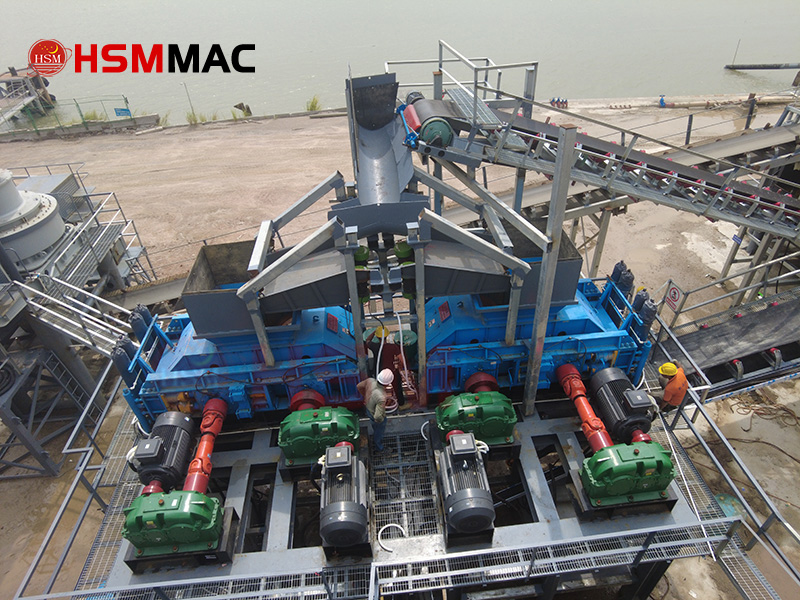
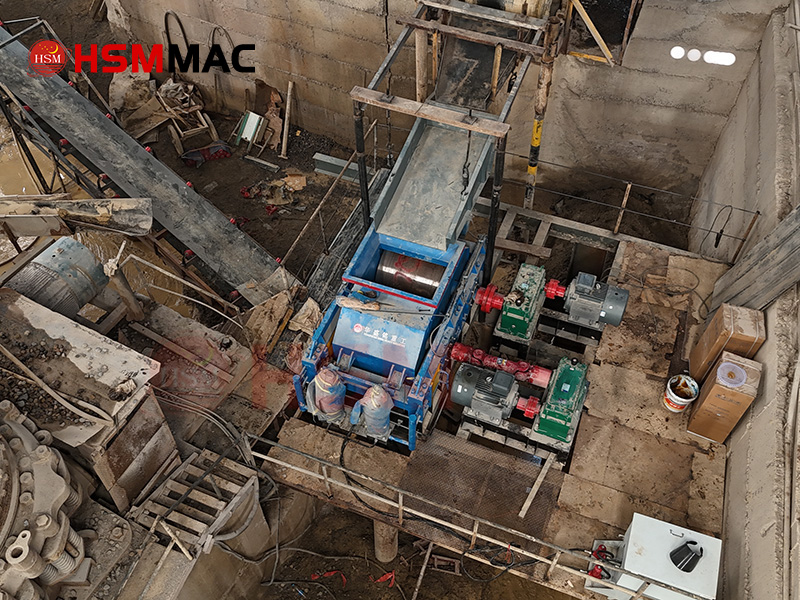
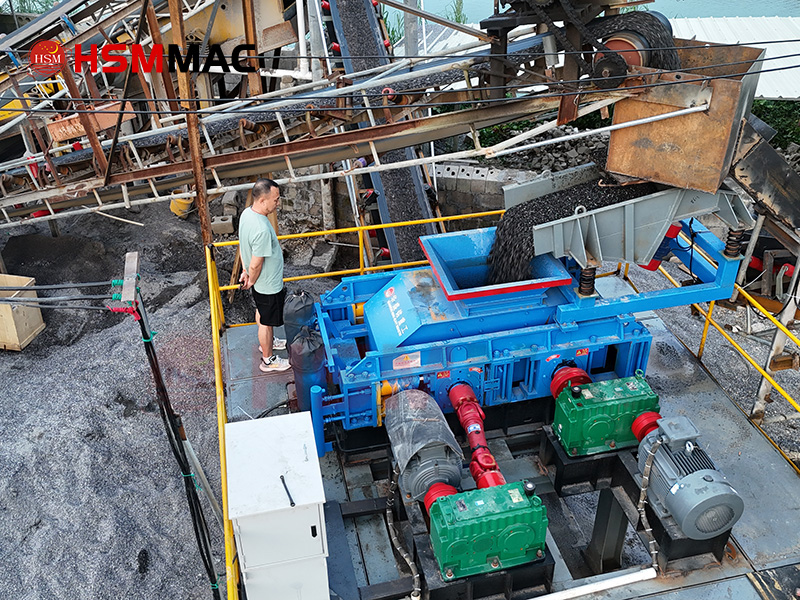
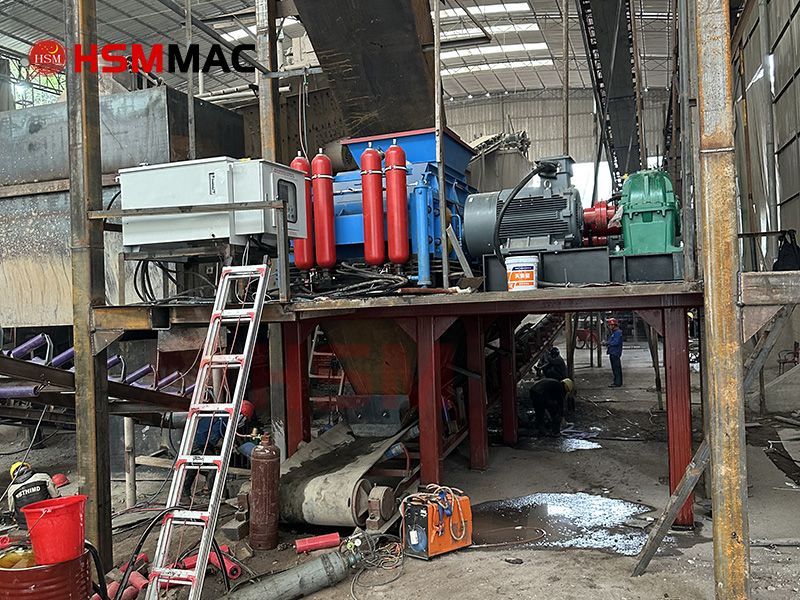
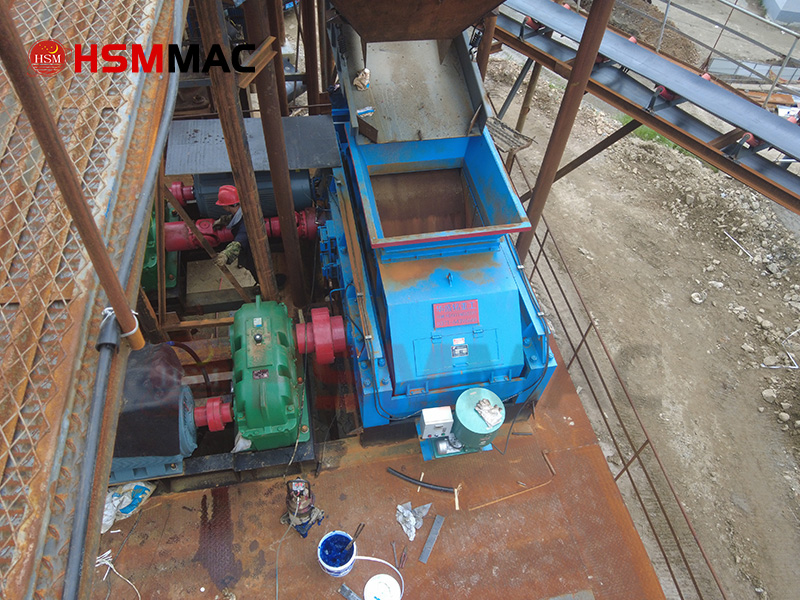
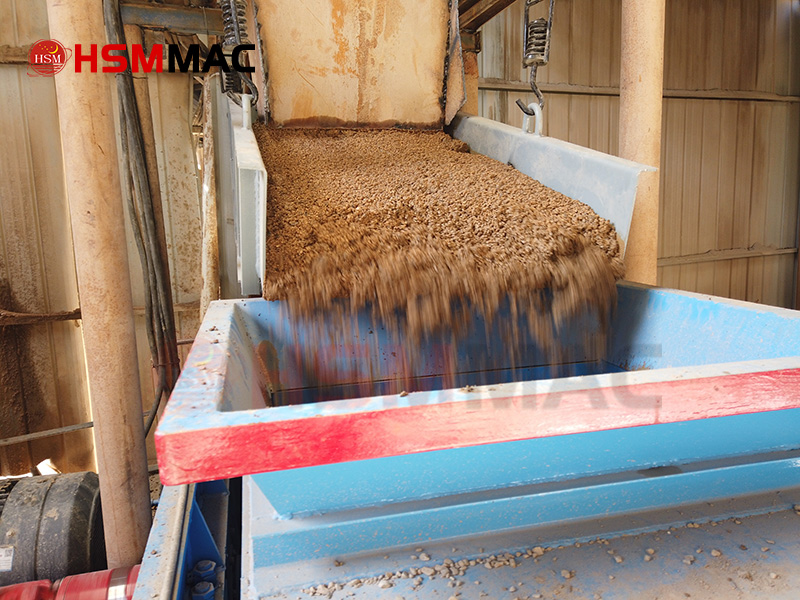
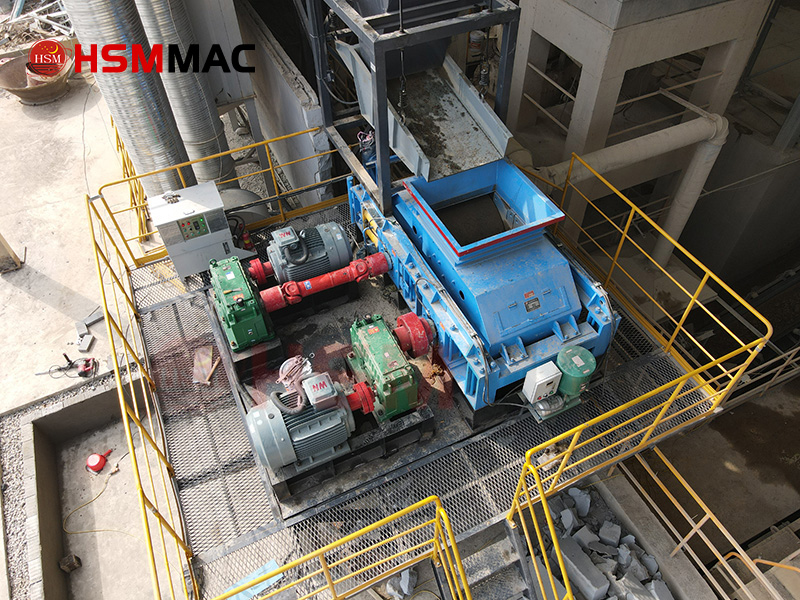
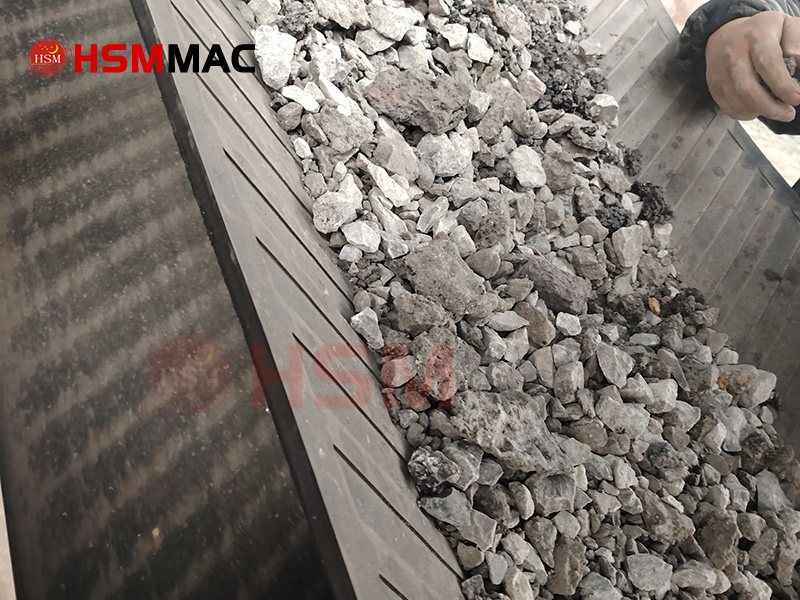
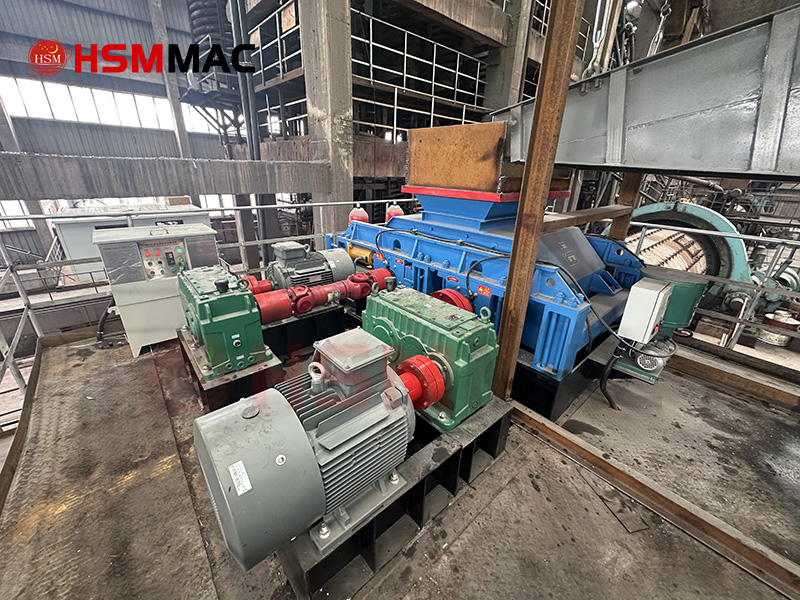
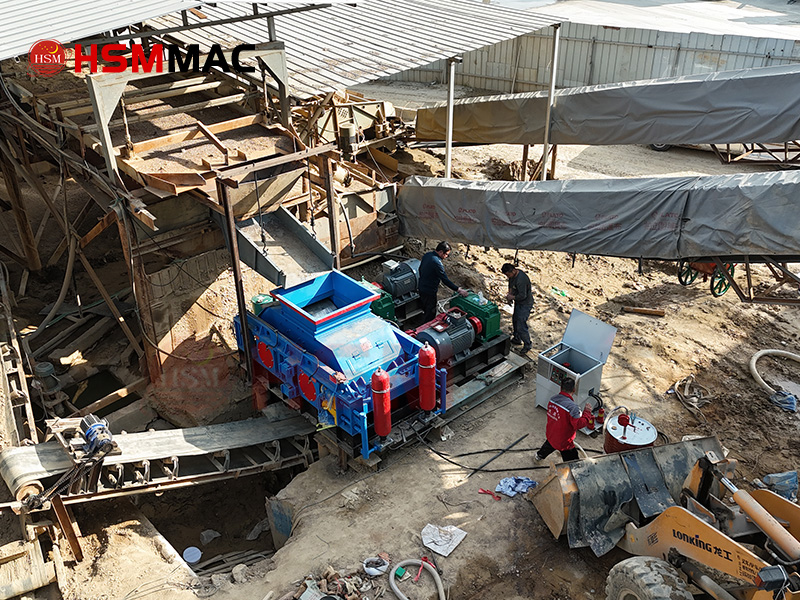
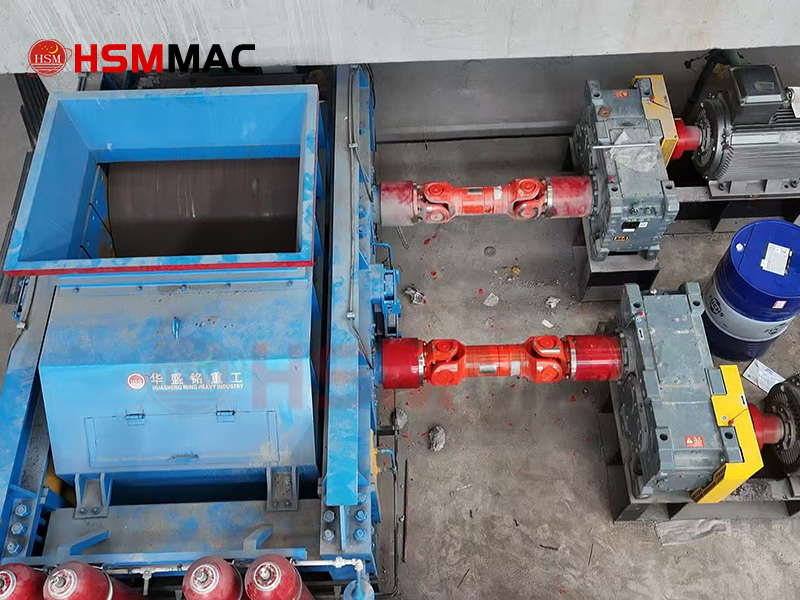

Selecting a 150 TPH Double Roll Crusher for River Pebble Sand Making
2026-10-21Article Summary: This article provides an expert sizing and configuration guide for a 150 TPH (tons per hour) river pebble sand-making production line. Given the extreme hardness (Mohs ~7) and high abrasiveness of river pebbles, selecting equipment requires looking beyond simple tonnage figures. By evaluating net finished output versus feed rates, integrating primary jaw reduction with secondary roll crushing, equipping heavy-duty high-chromium wear packages, and utilizing closed-circuit screening loops, the piece demonstrates how Huashengming (HSM) delivers high-capacity durability and lowest total cost of ownership (TCO). Producing 150 TPH of manufactured sand from river pebbles represents a heavy-duty, large-scale industrial operation—and river pebbles are famously stubborn materials to crush: combining extreme compressive hardness with intense abrasiveness that accelerates machinery wear. The core principles of model selection are clear: employ a primary-to-secondary crushing combination, equip heavy-duty wear packages fully, and calculate sizing based strictly on net finished output. Huashengming (HSM) matches heavy-duty equipment configurations to exact operating conditions, offering ready-to-ship factory inventory and empirical material trial testing to guarantee complete customer confidence. 1. Clarifying Production Capacity Metrics Net Finished Output Basis: 150 TPH of net finished manufactured sand represents a massive volumetric workload; equipment sizing must be calculated on a net finished…
-
Conquering Hard River Pebbles: How HSM Double Roll Crusher Controlled Output, and Plant-Wide Cost Reduction
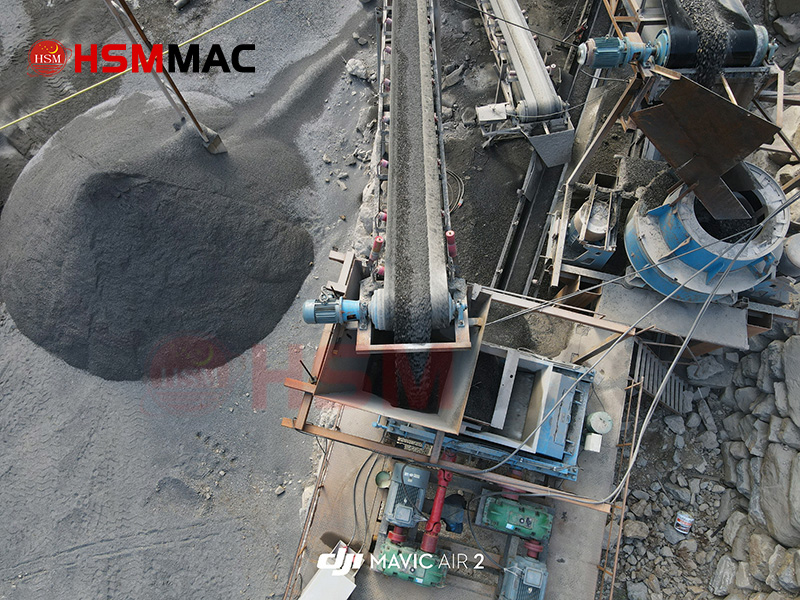
2026-10-16Article Summary: This article examines the challenges of processing high-hardness river pebbles (Mohs hardness ~7) and demonstrates how Huashengming (HSM) double roll crushers achieve optimal manufactured sand production. By leveraging layer-compression crushing rather than high-velocity impact, HSM double roll crushers deliver superior cubical particle shapes, adjustable output grading, minimal ultra-fine powder, and robust wear protection—providing aggregate plants with a turnkey, cost-effective solution for hard-rock sand making. River pebbles and cobbles possess high compressive hardness (around Mohs hardness 7) and dense, abrasive mineral structures, making them universally recognized as tough, stubborn materials to crush. Traditional sand-making methods either suffer from rapid hammer wear and frequent part replacements or produce poor particle shapes with excessive fine dust, eating away at aggregate plant profit margins. Huashengming (HSM) Heavy Industry double roll crushers process river pebbles using layer-compression comminution, yielding regular cubical particle shapes and highly controllable discharge sizing. Paired with complete manufactured sand production lines, this approach provides a mature, reliable solution for achieving maximum cost reduction and efficiency in pebble sand manufacturing. HSM Double Roll Sand-Making Line 1. River Pebble Sand-Making Production Line Overview A typical river pebble sand production line follows a structured process flow: Standard Flowsheet: Vibrating Feeder → Jaw…
-
High-Quality Manufactured Sand: Achieving Optimal Particle Grading with Double Roll Crushers
2026-10-14Article Summary: This article explores the critical role of particle size distribution (grading) in manufactured sand quality and explains how double roll crushers achieve optimal grading. By utilizing layer-compression comminution to deliver uniform size distribution with minimal ultra-fines, and pairing equipment with closed-circuit vibrating screening systems, Huashengming (HSM) double roll crushers ensure stable, high-performance sand grading that meets rigorous commercial concrete and masonry standards. When evaluating manufactured sand, grain shape is only half the equation—particle grading (size distribution) is equally critical. Rational particle grading ensures a balanced proportion of coarse, medium, and fine grains, which is essential for guaranteeing high-performance concrete and mortar. Utilizing layer-compression crushing, the Huashengming (HSM) Double Roll Crusher delivers an even particle size distribution that, when paired with precision vibrating screening, achieves perfectly balanced sand grading. HSM provides ready-to-ship inventory backed by empirical material trial verification. 1. What Is Particle Grading? Particle grading refers to the proportional distribution of different grain sizes within a batch of sand. Optimal grading requires a harmonious blend of coarse and fine particles—neither dominated entirely by coarse aggregates nor flooded with excessive ultra-fine powder. Well-graded sand minimizes void ratios, enhances packing density, and guarantees superior workability and compressive strength in concrete…
-
Can Double Roll Crushers Be Used for Fine Crushing in Gold Mines? Process Placement, Applications & Selection Guide
2026-10-13Article Summary: This article examines the application of double roll crushers in gold ore fine crushing circuits. By evaluating process stage placement and quartz-induced ore hardness, the piece highlights how double roll crushers deliver uniform discharge, precise sizing control, and stable ball mill feed. Backed by customizable wear-resistant alloy metallurgies, hydraulic tramp protection, and pre-production sample trial testing, double roll crushers offer an efficient, cost-effective alternative for hard-rock gold beneficiation plants. In gold mineral processing, selecting the right equipment for the fine crushing stage directly governs downstream grinding efficiency and overall beneficiation costs. Can double roll crushers be used for gold ore fine crushing? The direct answer is: Yes, and they fit the process stage exceptionally well, provided two critical factors are addressed—proper circuit stage placement and ore hardness levels. Because gold ores frequently contain abrasive quartz components, choosing specialized wear-resistant configurations and conducting pre-production sample trials ensures reliable, long-term operation. Huashengming (HSM) double roll crushers support custom wear-resistant metallurgies and empirical material trial testing. 1. Why the Process Stage Placement Is an Ideal Fit A typical gold beneficiation flowsheet follows this sequence: Primary Coarse Crushing (Jaw Crusher) → Medium-Fine Crushing (Double Roll Crusher) → Grinding (Ball Mill) → Beneficiation…
-
Double Roll Crusher Fine Crushing Machine — HSM Heavy Industry
2026-10-12Article Summary: This article details the engineering advantages and operational value of HSM’s double roll fine crushing machine. By utilizing high-pressure layer-compression crushing instead of high-speed impact, the equipment delivers uniform discharge, adjustable output sizing, minimal fine dust generation, and lower energy consumption. Backed by durable wear-resistant alloy rolls, hydraulic tramp protection, and flexible closed-circuit integration, it provides an efficient, low-OPEX solution for secondary and tertiary fine crushing across diverse mineral applications. Fine crushing is where many crushing plants lose efficiency and product quality. A machine that crushes unevenly, generates excessive fines, or wears out quickly drives up operating costs and hurts your end product. HSM double roll crusher fine crushing machine is designed for this exact stage: uniform discharge, adjustable output size, low fines, and durable wear-resistant rolls. 1. What Is a Double Roll Crusher Fine Crushing Machine? It is a secondary and tertiary crusher built on the crushing principle of two counter-rotating rolls. Material enters between the rolls and is crushed by continuous pressure, rather than by high-speed impact. This layer-compression crushing action produces uniform particles with fewer flats and less over-powdering — exactly what downstream grinding or sand-making processes need. 2. Key Advantages of HSM Fine Crushing…
-
What Sand Specifications Do Aggregates Plants Require? Performance Review of Double Roll Sand Makers
2026-10-10Market Requirements vs. Equipment Capability Takeaways: Commercial Sand Demands: Aggregate purchasers demand stable fineness modulus, cubical/polyhedral grain shapes, controlled micro-fines (<75μm), and low production OPEX. Double Roll Squeeze Advantage: Compression crushing directly addresses each market requirement—delivering precise gap adjustment, low dust over-grinding, and high power efficiency. Material Compatibility: Delivers exceptional sand yields across limestone, river pebbles, cobblestones, granite, and silica gravels. Reduced Washing OPEX: Minimal dust generation significantly cuts water consumption and sludge treatment burdens in downstream washing circuits. The profitability of a aggregate sand plant hinges on producing manufactured sand that meets strict concrete mixing and construction engineering standards. Buyers look for four core quality metrics: consistent particle gradation, high cubical shape yield, optimized fine powder ratios, and competitive per-ton pricing. Utilizing controlled inter-particle squeeze compression, Double Roll Sand Makers directly align with these commercial requirements—providing adjustable sizing, low power consumption, and long wear shell service life. Huashengming (HSM) delivers factory-direct double roll units backed by site-specific material trial testing. 1. What Sand Specifications Do Buyers Demand? 1. Consistent Particle Sizing & Continuous Gradation Fineness modulus must remain stable shift-to-shift. Inconsistent sizing causes concrete slurry segregation and unpredictable compressive strength in downstream batching plants. 2. Plump, Cubical/Polyhedral Grain Profiles…
-
Is a Double Roll Sand Maker Too Expensive? Do the Math: Savings Are Pure Profit
2026-10-08Total Cost of Ownership (TCO) Takeaways: Beyond Purchase Price: True machine value equals Initial Price + Electricity + Wear Parts + Maintenance + Downtime Losses. Cheap equipment is cheap to buy but expensive to run. Extended Wear Cycles: High-durability alloy roller shells cut part replacement frequency, saving significant maintenance and labor costs over time. Inter-Particle Energy Efficiency: Dual-roller compression consumes substantially less power per ton compared to high-speed kinetic impact crushing. Downtime Elimination: Simple mechanical construction with minimal failure points keeps the plant running continuously, preserving daily tonnage and revenues. Many aggregate producers ask: “Double roll sand makers cost more upfront than conventional crushers—are they worth the investment?” Purchase price is only the first number on the ledger; long-term profitability depends on Total Cost of Ownership (TCO). Lower electricity bills, fewer wear-part replacements, simple routine maintenance, and minimal unplanned downtime turn initial equipment expenditure into ongoing operational profit. Huashengming Heavy Industry (HSM) provides factory-direct roll crushers optimized for site-specific ROI and quick deployment. 1. The 5 Cost Factors Driving Real Profitability Account 1: Durable Roller Shells & Extended Wear Life Wear parts are a continuous operating expense. Standard crushers often require frequent blow bar or liner replacements every few months….
-
What Material Size Delivers Maximum Efficiency in a Double Roll Crusher? HSM Feed Size Guide
2026-10-06Optimal Feed Size & Efficiency Rule: The “Sweet Spot” (~1/2 Maximum Limit): Maximum throughput and energy efficiency occur when the feed size is approximately 50% of the machine’s maximum rated feed opening. Ideal Reduction Ratio: Peak efficiency is maintained when the single-pass reduction ratio stays within the optimal 2.5:1 to 4:1 range. Uniformity Over Extremes: Uniformly sized material ensures stable nip angles, prevents dynamic roll slippage, and eliminates excessive liner wear. For the exact same double roll crusher, varying the incoming feed size causes drastic performance differences. Feeding rock near the maximum design limit leads to roll bounce, material bridging, and accelerated liner wear; conversely, feeding material that is too fine underutilizes the compression zone. The highest throughput and lowest energy consumption occur when raw material sits in the mid-range of allowable feed dimensions and exhibits uniform grading. Huashengming (HSM) assists customers with precise model selection based on feed particle size distribution and real-world trial testing. 1. Why Feed Size Directly Controls Crushing Efficiency Double roll crushers rely on the friction between two counter-rotating roller surfaces to draw material into the crushing chamber. The particle diameter directly dictates whether material is gripped instantly or slips: • Roller Gripping & Nip…
-
Which Crusher Is Best for Gold Ore? Huashengming Gold Ore Crushing Equipment Selection Guide
2026-09-30Key Challenges in Gold Ore Selection (Wide Ore Hardness Range & High Cost of Mistakes): Wide Hardness Variation: Ranging from soft oxidized ores (Mohs ~3) to extremely hard quartz vein ores (Mohs ~7), choosing the wrong crusher leads to rapid wear or insufficient throughput. High Energy & Grinding Costs: Coarse output from traditional crushing stages shifts the burden onto ball mills, driving up power bills and grinding media consumption. Limited Recovery & Fine Fraction Yield: Suboptimal fine crushing reduces mineral liberation rates prior to cyanidation or flotation, undermining overall mineral recovery. Gold ores vary significantly in hardness; selecting the wrong crushing machinery results in low output, excessive energy consumption, and rapid component wear—directly impacting mineral processing costs and recovery rates. Equipment selection must evaluate ore hardness, target product size, and downstream beneficiation methods. Jaw crushers serve as primary crushers for run-of-mine ore; secondary and fine crushing stages utilize cone crushers, double roller crushers, or double toothed roller crushers based on rock hardness; and High-Pressure Grinding Rolls (HPGR) deliver energy-efficient pre-grinding. Huashengming Heavy Industry provides complete plant solutions—including double roller crushers, toothed roller crushers, and HPGR units—tailored specifically through ore sample testing. 1. Key Factors in Gold Ore Crusher Selection Gold…
-
Granite Sand-Making Machine: The HSM Double-Roll Sand-Making Machine Solves the Challenges of Granite Sand Production
2026-09-30Three Core Bottlenecks in Granite Sand Production (High Hardness, Abrasiveness & High Operating Costs): Severe Crushing Difficulty: With a Mohs hardness of 6–7, granite places extreme demands on equipment crushing force and structural rigidity. Rapid Wear & High Operating Costs: Traditional impact crushers and hammer mills suffer accelerated wear on hammers and blow bars, leading to frequent downtime and costly replacements. Poor Particle Shape: Violent impact crushing produces excessive needle-like and flaky particles as well as high fine dust, compromising concrete strength and reducing sand market value. Granite’s extreme hardness and toughness make sand manufacturing exceptionally challenging: traditional equipment wears down quickly, wear parts are consumed rapidly, particle shape is difficult to control, and production costs remain high. Huashengming Sand Making Equipment utilizes roller compression crushing as its core mechanism to deliver well-shaped cubic sand with adjustable discharge sizes. Equipped with high-wear alloy materials and hydraulic overload protection, it provides a stable and cost-effective solution for granite sand production. Furthermore, we maintain a practical, honest approach: processing high-hardness rocks requires a thorough evaluation of specific working conditions, and we fully support material sample testing to ensure the machinery perfectly matches your project requirements. 1. Key Challenges in Processing Granite Featuring…
-
Pebble Double-Roll Sand-Making Machine: Choose HSM’s Pebble Sand-Making Equipment Solution
2026-09-28Two Major Bottlenecks in Pebble Sand Production Lines: High Hardness & Rapid Wear: River pebbles have a dense structure, high SiO₂ content, and high hardness. Traditional impact sand makers suffer extreme blow bar and hammer wear, requiring frequent shutdowns and driving up maintenance costs. Poor Particle Shape & Low Market Value: Violent impact crushing produces excessive fine dust and slates/elongated particles with poor shape, failing to meet high-grade concrete standards and lowering market price. When processing river pebbles into manufactured sand, plant operators fear two main issues: high hardness leading to rapid wear and constant wear-part replacements, and poor particle shape with excessive dust that depresses sand selling prices. The Huashengming Double Roll Crusher replaces traditional high-impact crushing with dual-roller compression and shear mechanics. This yields well-shaped cubic particles, millimeter-level adjustable discharge sizes, and minimal over-crushing. Combined with high-wear-resistant alloy roller shells and an intelligent hydraulic protection device, it offers a stable, cost-effective, and long-lasting crushing solution for pebble sand plants. 1. Solution Overview: Compression Crushing Replaces Impact Crushing Natural river pebbles possess high hardness, high abrasiveness, and a dense physical structure. Traditional hammer or VSI impact crushers convert massive kinetic energy into frictional heat and dust, causing rapid metal…
-
How to Choose Equipment for Limestone Crushing? Huashengming Heavy Industry’s Limestone Crushing Equipment Solutions
2026-09-23Top 4 Operational Headaches in Quarry Plants: Tramp Iron Damage: Stray iron mixed into raw feed chips and damages roller shells, leading to costly maintenance. Inconsistent Output Size: Fluctuating particle size degrades sand quality and lowers usable product yield. Dust Pollution Concerns: Excessive airborne dust at the plant site fails to meet environmental compliance standards. Frequent Maintenance Downtime: Equipment breakdowns stall production schedules and cut profitability. The HSM Heavy Industry Double Roller Crusher (also known as a twin-roll crusher) is engineered specifically for medium-hard materials like limestone. Utilizing two counter-rotating rollers to achieve high-efficiency compression and shear crushing, it features hydraulic overload protection, adjustable discharge gap, and a low-dust sealed design—delivering a stable, efficient, and low-wear solution for aggregate and building material processing plants. 5 Key Advantages of the HSM Double Roller Crusher Pain Point Solution Core Feature & Technology Practical Value for Production 1. Hydraulic Overload Protection Smart hydraulic system automatically retreats the moveable roller when encountering unbreakable hard objects (like tramp iron). Resets automatically after the foreign object passes, preventing roller shell cracking and jamming. 2. Adjustable Discharge Size Equipped with an adjustable gap setting mechanism to fine-tune the clearance between the two rollers. Allows precise control over…
 +86-13838144666
 +86-13838144666