In the lithium battery new energy industry chain, battery-grade lithium carbonate, as the core raw material for cathode materials, its purity, particle size and physical form directly affect the cycle performance, safety and consistency of lithium batteries. However, during production, drying or storage, lithium carbonate is prone to form hard lumps due to moisture absorption, static electricity or crystallization (the particle size often reaches 20–50mm), which cannot be directly used in subsequent mixing or sintering processes. How to efficiently and cleanly break these lumps into uniform particles of 1–3mm, while avoiding the introduction of metal contamination, controlling over-pulverization and ensuring high yield, has become a key technological challenge that lithium salt producers urgently need to solve.
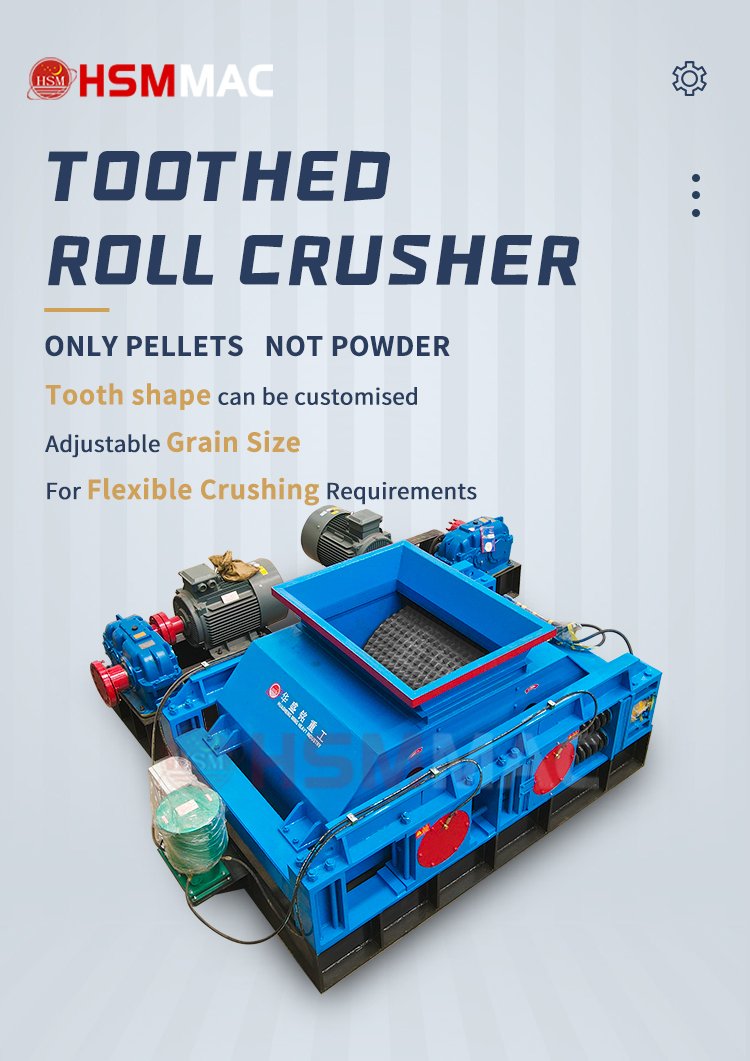
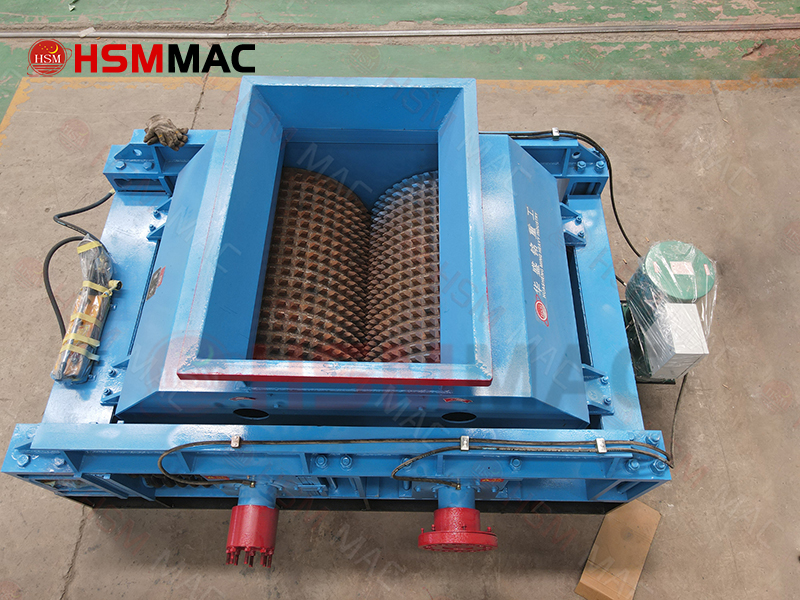
HSM heavy-duty toothed roller crusher: Optimized for high-efficiency primary crushing with advanced tooth-pattern design
Traditional crushing equipment such as hammer crushers, jet mills or vibration mills face three fatal shortcomings in this scenario:
One is the high risk of metal contamination – the high-speed rotating parts rubbing against the materials cause iron, chromium and other metal particles to mix into the products, resulting in excessive impurities such as Fe and Cr, making it difficult to meet the strict standard of “Fe ≤ 20ppm” for battery-grade lithium carbonate.
The second issue is severe over-pulverization – the impact or grinding process generates a large amount of ultra-fine powder less than 0.1mm, which not only leads to the waste of lithium resources but also affects the fluidity of subsequent granulation and the density of sintering.
Third, there is a significant amount of dust escape – the open structure or high air flow leads to material loss, and there are also risks of explosion and cross-contamination.
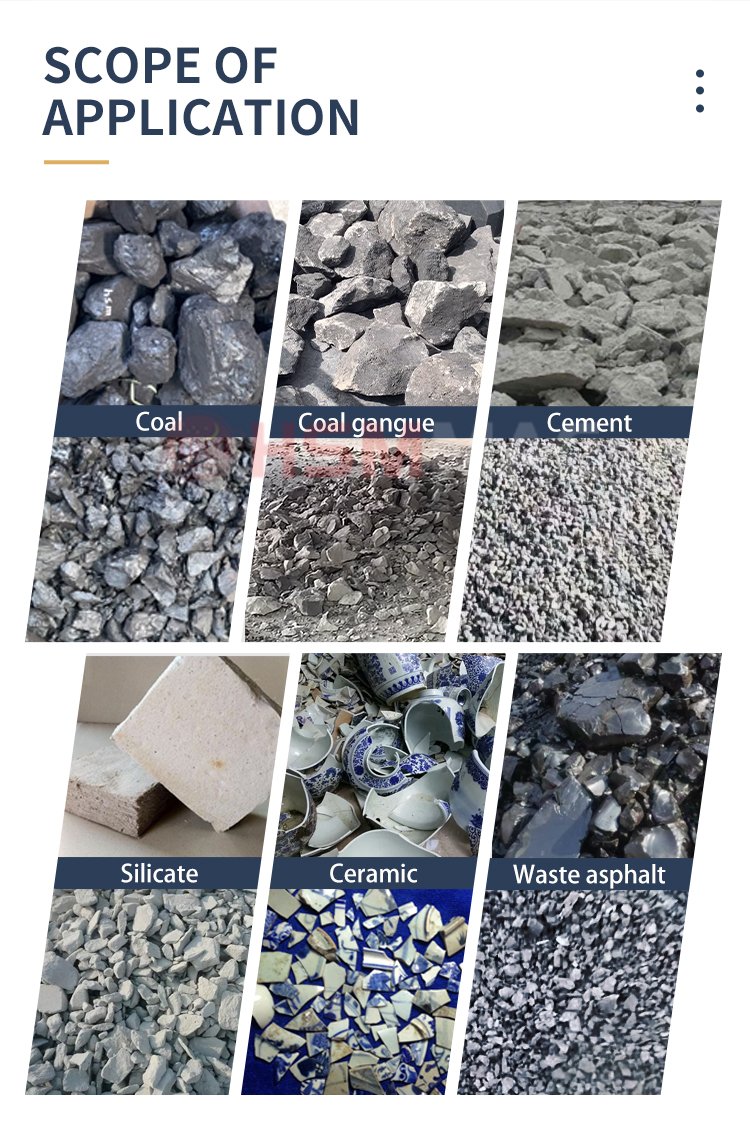
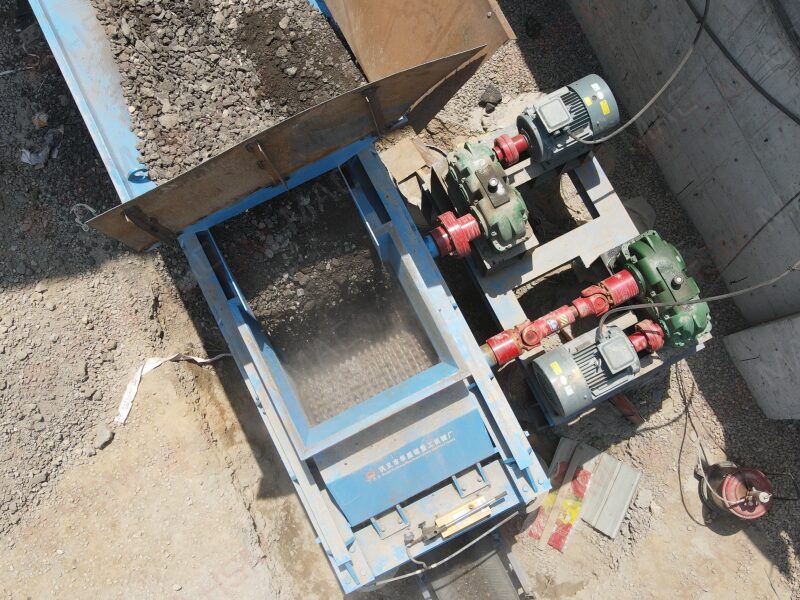
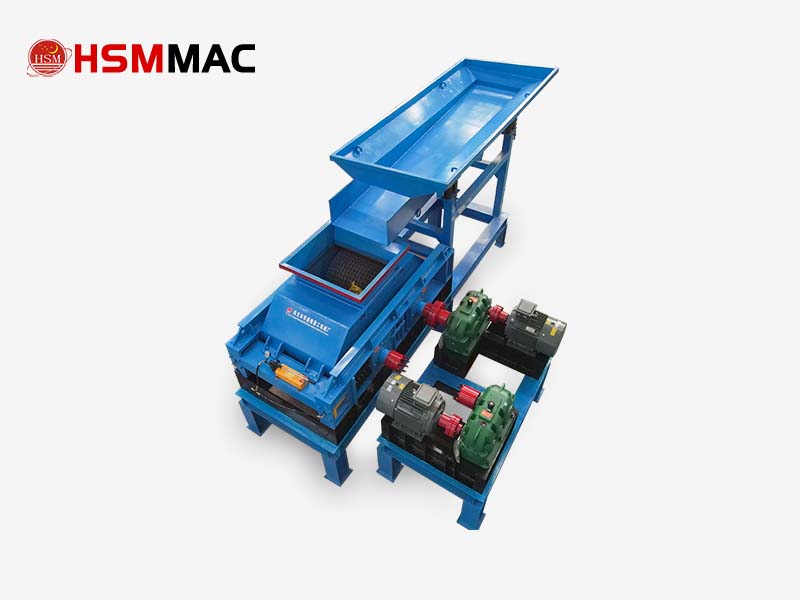
Against this backdrop, the fully hydraulic roller crusher, with its unique advantages of low-speed extrusion, clean crushing and precise particle size control, is becoming the ideal solution for the crushing of lumps of battery-grade lithium carbonate.
1. Clean Crushing: Eliminate Metal Contamination, Safeguard Product Purity
For high-purity requirements, professional manufacturers can customize a fully stainless steel body with ceramic composite roller surfaces or high-molecular wear-resistant non-metallic rollers to ensure that all parts in contact with the material contain no iron components. The roller surfaces are precisely processed to be smooth and dense, eliminating friction sparks and metal shedding during the crushing process, thus preventing the introduction of impurities such as Fe, Ni, and Cr from the source. The entire machine adopts a fully enclosed design and is equipped with a negative pressure dust removal interface to achieve “zero leakage and zero cross-contamination”, meeting the requirements of GMP-level clean workshops.
2. Precise particle control: 5 cm feedstock, 1-3 mm output in one step.
Although the lumps of battery-grade lithium carbonate are hard, they are brittle and thus very suitable for extrusion crushing. The hydraulic double-roller machine applies stable and uniform static pressure through two parallel rollers, allowing the lumps to naturally separate along the grain boundaries without causing lattice damage or thermal degradation due to violent impact. By adjusting the roller gap with a high-precision hydraulic system (usually set at around 2mm), it can stably achieve a one-step molding process where the feed size is ≤50mm and the output size is 1–3mm, eliminating the need for screening and re-feeding. The finished product has a narrow particle size distribution, with over 90% of the particles concentrated in the target range and a low over-crushing rate of less than 5%, significantly improving the raw material utilization rate and process consistency.
Three. Reliable structure: low maintenance, low energy consumption, continuous operation
The equipment has no high-speed rotor or impact hammer, and its rotational speed is usually below 100 revolutions per minute. It operates smoothly with low vibration and noise. Its energy consumption is only 1/3 to 1/2 that of a jet mill, significantly reducing the power consumption per ton of material. Daily maintenance only requires regular lubrication of the bearings, which can be managed by ordinary operators. Key components such as hydraulic cylinders and seals are all selected from industrial-grade brands to ensure long-term stable operation and meet the requirements of 7×24-hour continuous production.
IV. Real Application Verification
A leading lithium salt enterprise originally used an air flow mill to process lithium carbonate lumps. Although it could control the particle size, the yield was only 88%, and metal impurities needed to be tested monthly. Later, a custom-made stainless steel hydraulic double-roller machine with a ceramic composite roller surface was adopted. After one year of operation, the roller skin did not need to be replaced, and the Fe content of the product was stably below 12 ppm, with a yield of over 96%. The customer commented: “Not only have electricity and filter cores been saved, but more importantly, the batch stability has been greatly improved.”
V. Selection Suggestions
Material priority: It is essential to choose a manufacturer that can provide all-stainless steel or non-metallic contact surfaces.
Support trial operation: Conduct a closed trial operation with real clumped samples to test the impurity content and particle size distribution after crushing.
Dust removal system: It is recommended to integrate a pulse bag filter or HEPA filtration system to ensure that the dust is discharged in compliance with regulations.
Battery-grade lithium carbonate is not an ordinary chemical product, but a strategic material that concerns the safety and performance of new energy. Its crushing process should be clean, accurate, efficient and reliable. The fully hydraulic double roller sand making machine, with the comprehensive advantages of “no pollution, no waste and no interruption”, provides a high-quality, low-cost and green technical path for lithium battery material enterprises. Choosing a professional and reliable equipment supplier is to build the first line of defense for the quality of your products.
 +86-13838144666
 +86-13838144666