Limestone is one of the most forgiving materials in manufactured sand production—featuring moderate hardness, excellent brittleness, and low abrasiveness. However, because it is easy to crush, plant operators frequently make missteps in equipment selection. This article analyzes limestone material properties and breaks down equipment selection across three distinct operational routes: medium-to-small capacity jaw and double-roll circuits, high-tonnage impactor lines, and limestone powder grinding systems. A reference configuration for a 60 TPH limestone sand-making plant and expert FAQ guidance are also included.
Limestone is among the most manageable materials in manufactured sand production: boasting moderate compressive strength, high brittleness that shatters easily, and low surface abrasiveness. Yet precisely because it is “easy to crush,” many plant operators take missteps during equipment selection—such as relying on single-stage hammer crushers for quick upfront savings only to face excessive hammer wear, stone powder over-generation, and poor sand marketability; or installing massive high-tonnage impact crushers where electricity bills and fine powder management erode profit margins. Limestone sand making has no single rigid answer; correct selection hinges entirely on your production scale and finished sand specifications. Huashengming (HSM) Heavy Industry outlines three mainstream selection routes.
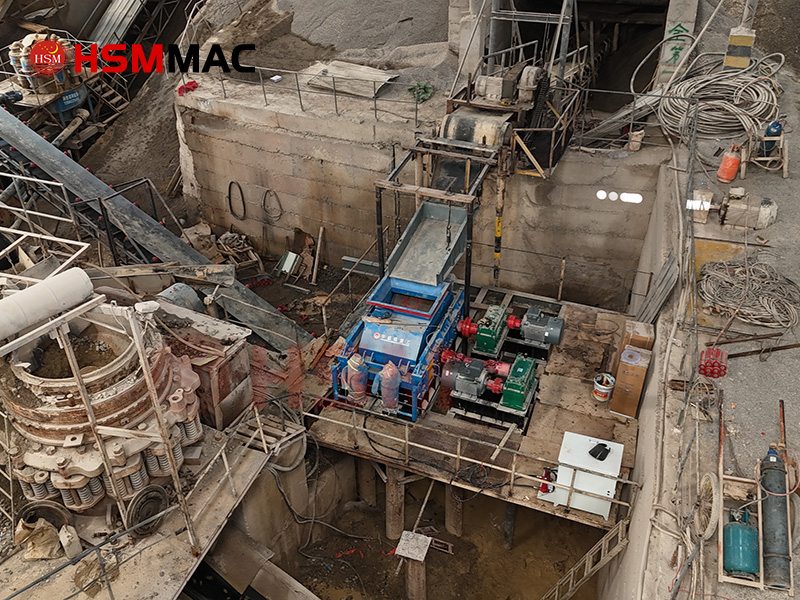
HSM Limestone Crushing & Manufactured Sand Production Line
1. Material Analysis: Optimal Crushing Methods for Limestone
Limestone compressive strength falls within a moderate range, exhibiting brittle fracture characteristics that respond well to compression, impact, and shear forces. The operational differences lie in:
- Impact Crushing (Hammer Crushers, Impact Crushers, VSI Sand Makers): Offers high reduction ratios and excellent particle shapes, but high-speed impact generates excessive stone powder while hammer heads and blow bars serve as high-frequency wear items.
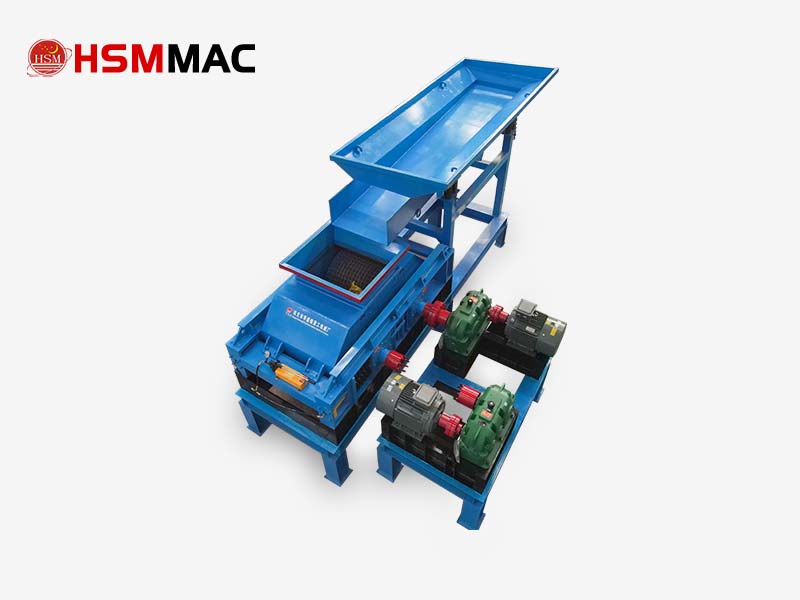
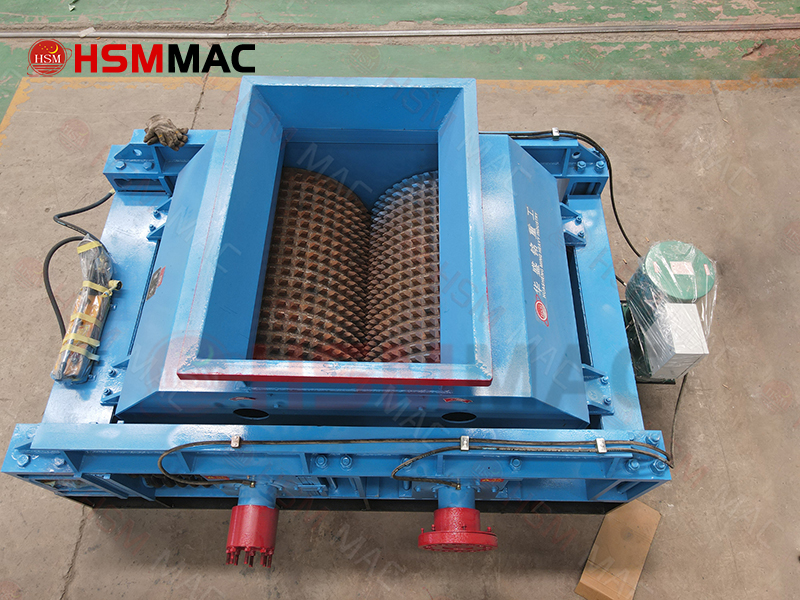
- Compression Crushing (Double Roll Crushers, HPGR): Features concentrated force application and minimal over-crushing, keeping stone powder generation controllable while delivering slow roller shell wear and low power consumption—though single-unit throughput and reduction ratios trail impact machinery.
Consequently, the primary question is not “Which machine is best?” but rather “Do I prioritize raw volume, or particle shape and operating cost?”
2. Three Mainstream Selection Routes Based on Output & Shape
| Selection Route | Process Flow Configuration | Operational Advantages & Target Scenario |
|---|---|---|
| Route 1: Medium-Small Output & Strict Gradation | Primary Jaw Crusher + Secondary Double Roll Crusher (30–80 TPH) 【Custom Parameters Available】. | Low capital investment, low power draw, minimal stone powder, excellent cubical shape; easily adjustable for 0–3mm or 0–5mm specs. |
| Route 2: High-Tonnage Commercial Concrete Supply | Primary Jaw + Secondary Impact Crusher + VSI Sand Maker (100+ TPH). | High hourly output and striking particle shapes; requires robust dust collection and fine powder management, tailored for stable commercial concrete markets. |
| Route 3: Fine Powder & Filler Production | High-Pressure Grinding Rolls (HPGR) or Industrial Grinding Mills 【Custom Parameters Available】. | Tailored when the target product is industrial limestone powder, flue gas desulfurization (FGD) sorbent, or mineral filler rather than construction sand. |
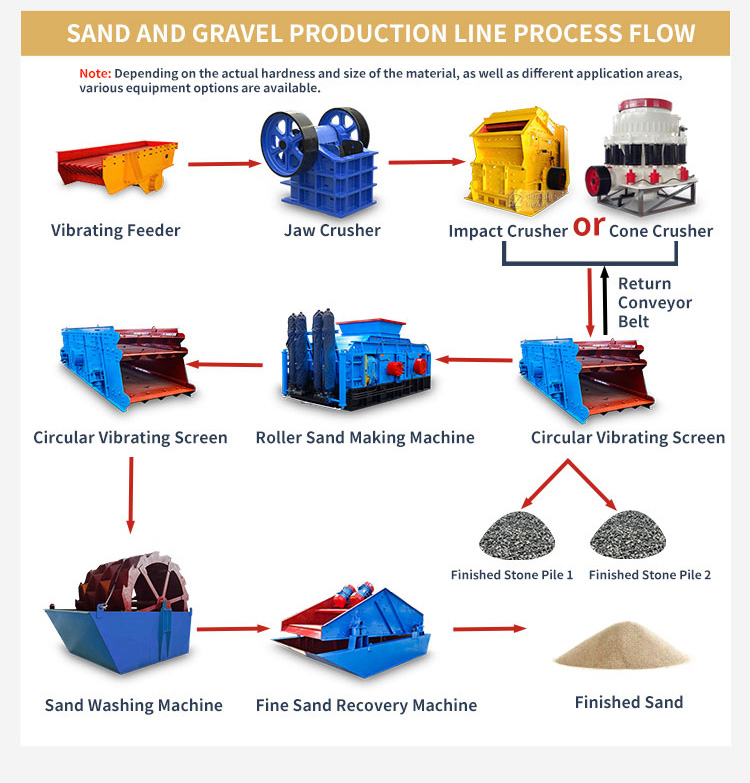
60 TPH Limestone Sand-Making Plant Flowsheet & Equipment Layout
3. Reference Configuration: 60 TPH Limestone Sand Line
Standard Proven Flowsheet (60 TPH Capacity):
Vibrating Feeder $rightarrow$ Jaw Crusher (Primary Coarse Reduction) $rightarrow$ Double Roll Crusher (Secondary Fine Sand Making) $rightarrow$ Circular Vibrating Screen (Oversize Return Loop) $rightarrow$ Bucket Wheel Sand Washer $rightarrow$ Dewatering Screen.
This circuit runs exceptionally stable on limestone, keeping roll wear minimal. Routine maintenance focuses primarily on roll gap inspections and screen mesh checks. Exact models, roll diameters, widths, and motor ratings are custom-calculated based on feed sizing and target fineness 【Custom Parameters Available】.
4. Frequently Asked Questions
Q: Can I use a single-stage hammer crusher for limestone sand making?
A: For small-scale, temporary projects unconcerned with particle shape, yes. However, rapid hammer wear and high stone powder ratios make it uneconomical for long-term continuous production.
Q: How durable are roller shells when processing limestone?
A: Because limestone has low abrasiveness, roller shell lifespans are significantly longer than in abrasive quartz or river pebble applications. Specific service intervals depend on site operating records 【Custom Parameters Available】.
Q: How can I adjust excess stone powder in the finished product?
A: First verify whether roll gap clearances are set too tight or screen meshes are damaged. Next, evaluate screening efficiency. Slightly widening roll gaps, enhancing screening capacity, and optimizing closed-circuit circulation load will effectively reduce stone powder ratios.
Q: What is the total investment cost for a complete limestone line?
A: Investment varies depending on targeted output capacity, site layout, and whether washing or dust collection systems are included. Configurations for identical tonnages can differ; we recommend requesting customized flowsheets and quotations based on your site data.
Ready to Design Your Limestone Sand-Making Plant?
Huashengming Heavy Industry provides custom selection solutions, equipment quotations, and on-site operational videos tailored to your raw limestone source, target output, and product specifications 【Custom Parameters Available】.
Contact HSM today for factory-direct inventory, professional engineering support, and free raw material sample trial testing.
 +86-13838144666
 +86-13838144666