This article provides an expert sizing and configuration guide for a 150 TPH (tons per hour) river pebble sand-making production line. Given the extreme hardness (Mohs ~7) and high abrasiveness of river pebbles, selecting equipment requires looking beyond simple tonnage figures. By evaluating net finished output versus feed rates, integrating primary jaw reduction with secondary roll crushing, equipping heavy-duty high-chromium wear packages, and utilizing closed-circuit screening loops, the piece demonstrates how Huashengming (HSM) delivers high-capacity durability and lowest total cost of ownership (TCO).
Producing 150 TPH of manufactured sand from river pebbles represents a heavy-duty, large-scale industrial operation—and river pebbles are famously stubborn materials to crush: combining extreme compressive hardness with intense abrasiveness that accelerates machinery wear. The core principles of model selection are clear: employ a primary-to-secondary crushing combination, equip heavy-duty wear packages fully, and calculate sizing based strictly on net finished output. Huashengming (HSM) matches heavy-duty equipment configurations to exact operating conditions, offering ready-to-ship factory inventory and empirical material trial testing to guarantee complete customer confidence.
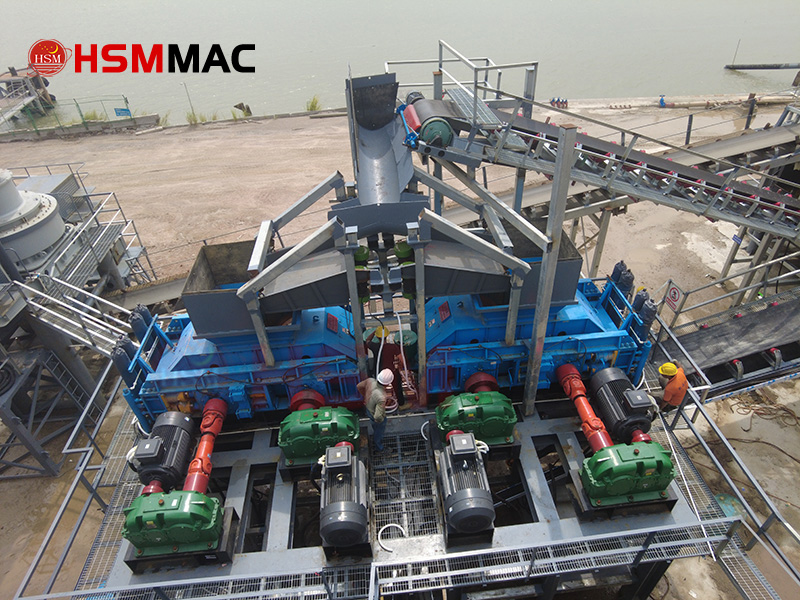
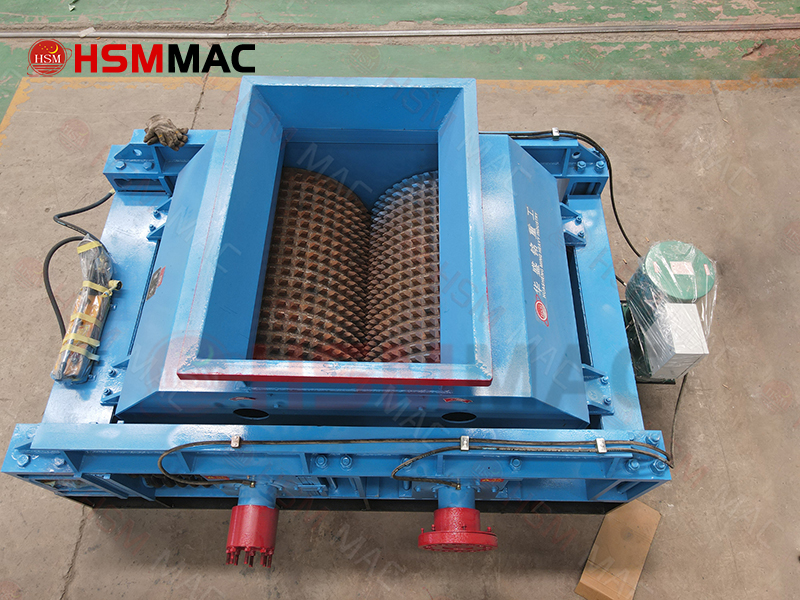
150 TPH Double Roll Crusher for River Pebble Sand Making
1. Clarifying Production Capacity Metrics
- Net Finished Output Basis: 150 TPH of net finished manufactured sand represents a massive volumetric workload; equipment sizing must be calculated on a net finished basis incorporating appropriate safety buffers 【Custom Parameters Available】.
- Avoid Raw Feed Tonnage Confusion: Calculating strictly from raw feed volume causes actual finished yields to fall short; equipment scale must be reverse-engineered from net finished product targets.
- Incorporate Operational Buffers: Always integrate a 10%–20% capacity safety margin to seamlessly accommodate raw material hardness variations and peak seasonal demand surges.
2. Navigating River Pebble Abrasiveness & Wear Economics
| Operational Factor | Engineering Reality | Long-Term Economic Impact |
|---|---|---|
| High Quartz Content (SiO2) | Intense abrasiveness that rapidly erodes standard steel surfaces. | Unprotected standard shells wear out rapidly, triggering frequent maintenance halts. |
| Mandatory Wear Packages | Thickened high-chromium alloy shells paired with hydraulic safety relief 【Custom Parameters Available】. | Keeps component wear strictly controllable, lowering annual per-ton consumable costs. |
| False Economy of Standard Parts | Attempting to process quartz-rich river pebbles with light-duty equipment. | Drives up spare parts expenditures and production losses, destroying operating margins. |
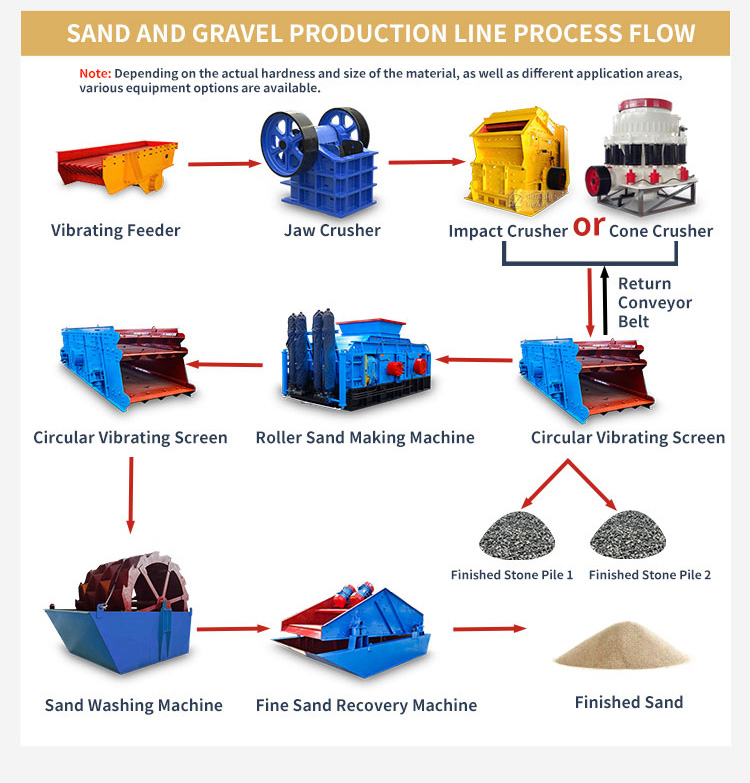
Process diagram showing raw river pebbles passing through a primary jaw crusher before feeding parallel or large-scale double roll fine crushers.
3. Recommended Flowsheet Configurations for 150 TPH
- Primary Coarse + Secondary Roll Combination: Raw river pebbles (typically 5–25 cm) should first pass through a primary jaw crusher to reduce feed sizes to 5–10 cm before entering the double roll sand-making machine, ensuring maximum stability and longevity 【Custom Parameters Available】.
- Single Large-Scale Unit vs. Dual Parallel Units: At 150 TPH, plants can utilize either a single large-diameter heavy-duty double roll crusher or dual medium-capacity units operating in parallel, determined by feed lump size and plant layout constraints 【Custom Parameters Available】.
- Closed-Circuit Screening Integration: Integrate multi-deck vibrating screens to separate finished sand while returning oversized particles back to the crushers for re-crushing, maximizing overall finished product yield 【Custom Parameters Available】.
4. Four-Step Protocol for Precision Sizing
- 1. Report Four Essential Parameters: Disclose raw material type, maximum feed lump dimensions, target finished gradation, and net hourly output goals.
- 2. Match Motor Power Ratings: Calculate required motor power based on extreme river pebble hardness, ensuring adequate torque reserves under heavy load 【Custom Parameters Available】.
- 3. Equip Full Wear Protection: Install high-chromium alloy roller shells and dynamic hydraulic tramp release systems; never compromise on essential wear packages in abrasive hard-rock applications 【Custom Parameters Available】.
- 4. Conduct Empirical Trial Testing: For high-capacity 150 TPH operations, pre-purchase raw material sample trial testing verifies real-world throughput and wear rates with hard performance data.
Planning a 150 TPH River Pebble Sand-Making Line? Partner with Huashengming Heavy Industry:
A 150 TPH sand-making line requires rigorous engineering: accurate capacity sizing, heavy-duty wear configurations, and optimized circuit design. Provide your site parameters to let HSM lock in the ideal heavy-duty model 【Custom Parameters Available】.
Contact HSM Heavy Industry today to review model specifications, request quotation proposals, or schedule a free raw material sample trial test.
 +86-13838144666
 +86-13838144666