In the fields of mining crushing and sand making, the working principle of the equipment directly determines the quality of the finished product and operational costs. The Hydraulic Double-Roller Crusher (referred to as the double-roll crusher) is a classic piece of equipment. While its structure appears simple, it embodies ingenious mechanical wisdom. Without needing complex terminology, you can fully grasp its operating logic in just a few minutes and understand why it has become the “favorite” of countless stone quarries and coal plants.
I. Core Structure: Counter-Rotating Rollers, Compression is King
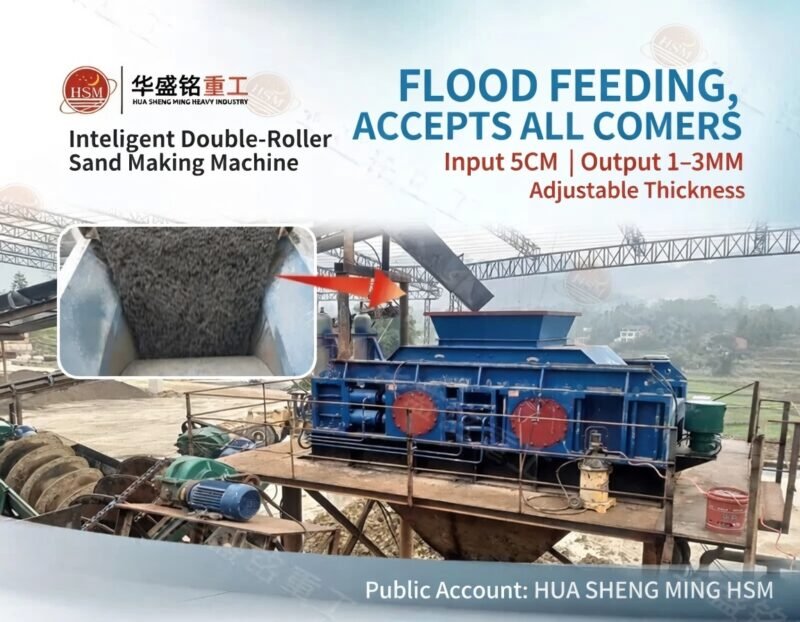
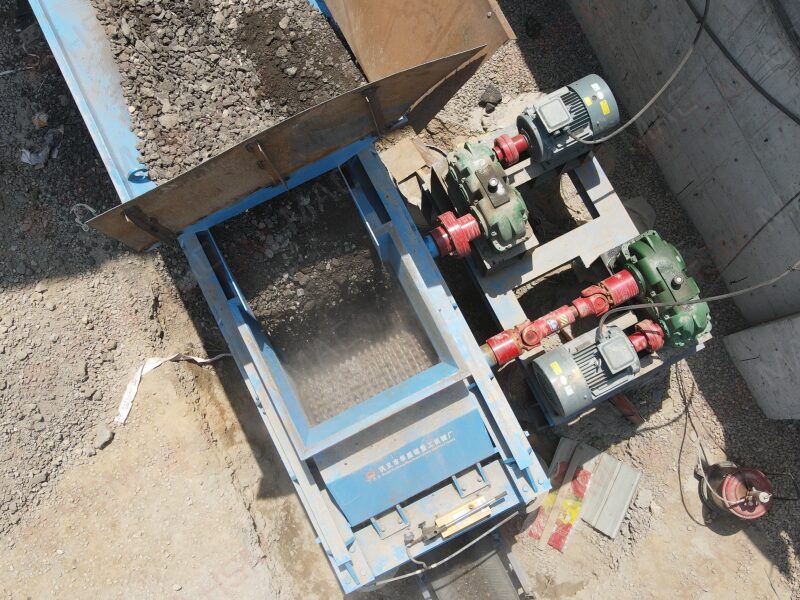
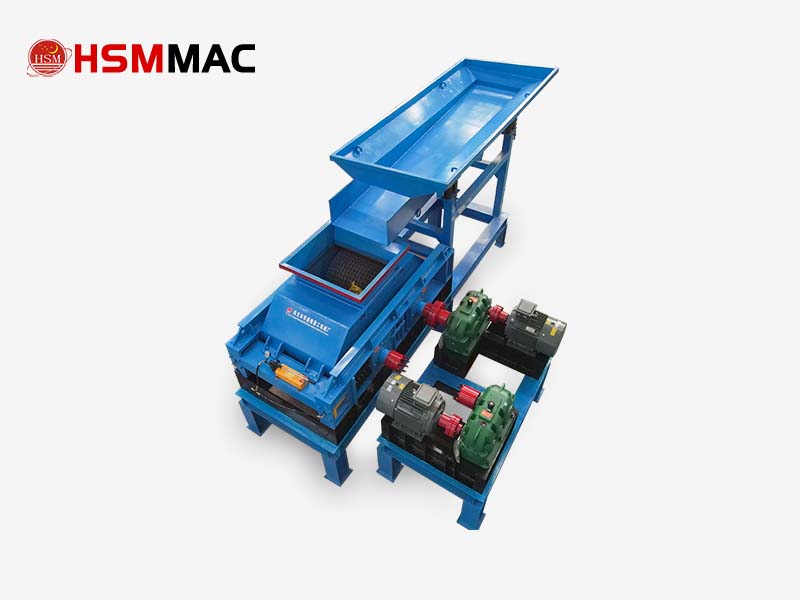
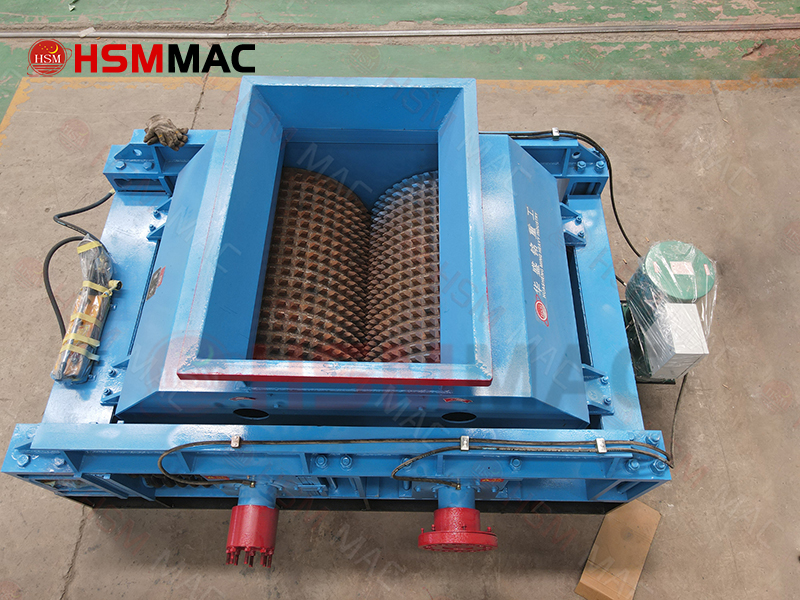
The core components of a double-roll crusher are intuitive: two parallel cylindrical rollers mounted on a frame. Driven by an electric motor, these two rollers rotate in opposite directions (counter-rotating). Imagine the two rollers of an old-fashioned pasta machine: material falls from above into the gap between the rollers (known as the “crushing chamber”). As the rollers turn, the material is forcibly drawn into this gap.

double roller crusher
Unlike traditional “hammer crushers” or “impact crushers” that rely on high-speed impact to pulverize material, the double-roll crusher primarily relies on static pressure compression. When material enters the space between the two rollers, it is subjected to immense compressive force. This force far exceeds the material’s own compressive strength, causing the material to fracture along its natural internal textures and weak points. This method is known as “inter-particle compression” or “bed compression.” It doesn’t “smash” the rock; it “squeezes” it apart.
II. Working Process: Biting, Crushing, and Discharging
The entire process can be broken down into three simple steps:
Biting (Nipping): Material falls evenly onto the top of the two rollers via a feeder. The roller surfaces are typically designed with teeth or protrusions to increase friction, ensuring that large chunks of material are successfully “bitten” into the crushing chamber without slipping.

crushing
Crushing: The material instantly disintegrates under the high-pressure compression of the two rollers. Since this is a compression action, the internal stress generated is uniform. The resulting product particles are mostly cubic with rounded edges and a low content of needle-like or flaky shapes.
Discharging and Adjustment: The crushed material falls through the gap beneath the rollers. The size of this gap determines the discharge particle size. Modern double-roll crushers are equipped with a hydraulic adjustment system. Operators can simply use the control panel to push the movable roller, easily changing the distance between the two rollers. This allows for flexible control over whether the output is coarse gravel or fine sand, all without stopping the machine for manual adjustments.
III. Intelligent Protection: Automatic Retraction Upon Encountering Iron
One of the most praised principles of the double-roll crusher is its overload protection mechanism. During the crushing process, if uncrushable iron blocks or super-hard foreign objects mix in, the pressure between the two rollers spikes instantly. At this moment, the hydraulic system senses the abnormal pressure and immediately pushes the movable roller backward, widening the gap to allow the foreign object to pass through smoothly. Once the object is discharged, the roller automatically resets to its original position under hydraulic pressure and resumes normal operation. This mechanism effectively prevents “jamming” shutdowns or damage to the main shaft and motor, ensuring production continuity.
IV. Why Choose a Double-Roller Crusher? Advantages at a Glance
Once the principle is understood, the advantages of the double-roll crusher become clear:
Superior Particle Shape: Compression crushing avoids over-crushing, resulting in less stone powder and full, robust particles. This makes it ideal for sand making and producing aggregates for high-grade concrete.
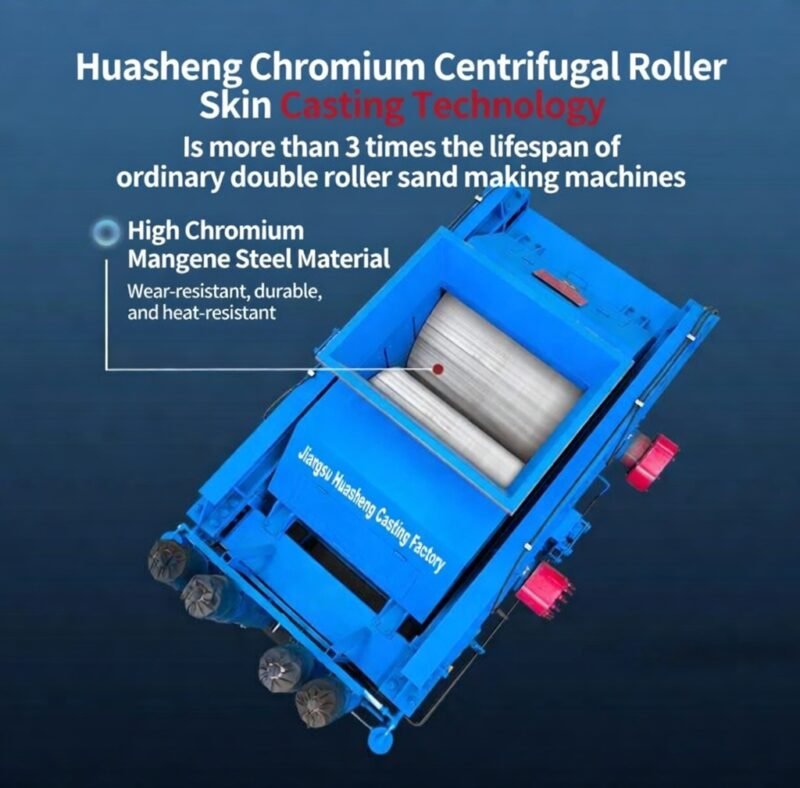
Long Wear Life: Low-speed operation reduces impact wear. Combined with high-chromium manganese steel alloy roller skins, the equipment remains durable even when processing medium-to-high hardness materials.
Low Operating Costs: The simple structure means fewer wearing parts, relatively low energy consumption, and easy maintenance.
Strong Adaptability: Whether it is brittle coal gangue and limestone or somewhat tough construction waste, the machine handles them with ease. It is also insensitive to material moisture and rarely clogs.
In summary, the double-roll crusher has become a powerhouse in the crushing industry thanks to its simple and reliable compression principle, intelligent self-protection capabilities, and excellent product quality. By understanding how it works, you hold the key to selecting high-quality crushing equipment.
 +86-13838144666
 +86-13838144666