This article emphasizes that the suitability of double roll crushers in cement manufacturing depends entirely on proper process stage placement. While highly recommended for secondary and tertiary medium-fine raw comminution—delivering uniform sizing, minimal over-grinding, energy efficiency, and mixed-material adaptability—they are unsuited for primary coarse reduction of large run-of-mine ore. By matching equipment capabilities to the correct circuit stage, cement plants can maximize operational efficiency, lower power consumption, and ensure stable raw mill feed preparation.
When selecting crushing equipment for a cement plant, the greatest fear is placing the machine in the wrong circuit stage: choose the right stage, and you achieve high efficiency and low energy consumption; choose the wrong stage, and even the best machinery will underperform. Deciding whether a double roll crusher is suitable for a cement facility comes down to one golden rule: It all depends on the processing stage! For medium-fine raw material comminution, it is an exceptional fit. For primary coarse reduction of large boulders, it is not recommended. Positioning equipment correctly unlocks immediate operational efficiency. Huashengming (HSM) supplies ready-to-ship double roll crushers and welcomes material trial testing.
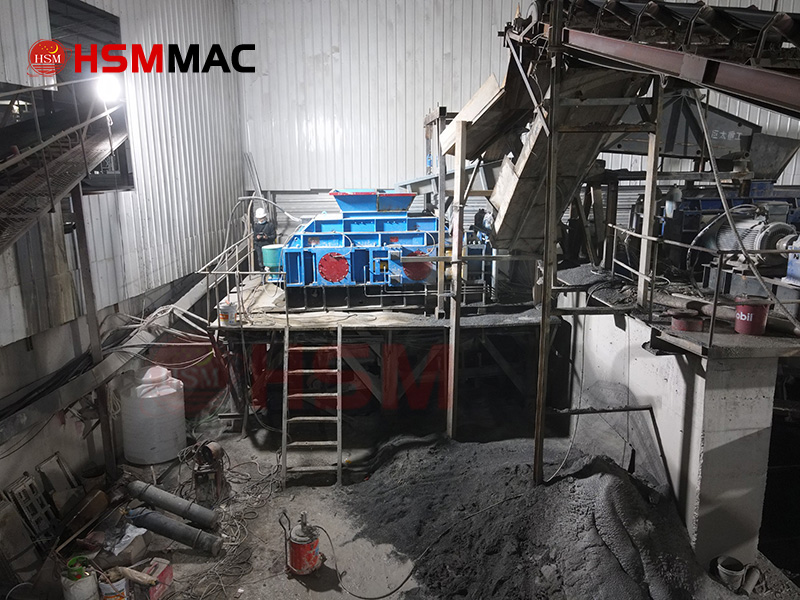
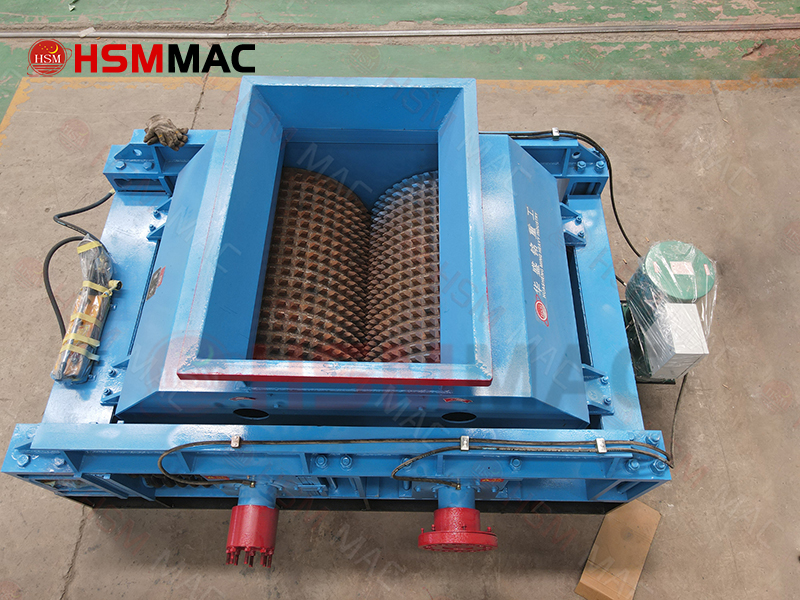
Huashengming double roll crusher
1. Why Equipment Selection Relies on Stage Placement
Crushing is a progressive reduction process. Moving raw stone from massive run-of-mine boulders down to fine mill feed requires multiple sequential steps. Each stage demands distinct mechanical traits: primary coarse crushing requires massive intake capacity and high impact resistance, whereas medium-fine comminution demands uniform discharge and precise size control. Letting equipment perform tasks suited to its design ensures optimal efficiency and cost control. Selecting machinery without regard for process stage is like asking a sprinter to run a marathon—effort is high, but results are poor.
2. Medium-Fine Raw Comminution: The Perfect Fit
| Operational Benefit | Engineering Mechanism | Cement Plant Application |
|---|---|---|
| Uniform Sizing Discharge | Continuous inter-particle layer compression. | Maintains stable particle sizing to meet raw grinding mill feed standards 【Custom Parameters Available】. |
| Adjustable Particle Sizing | Hydraulic and shimming roll clearance gap control. | Allows smooth integration and sizing adjustments for downstream equipment. |
| Minimal Over-Grinding | Low-velocity mechanical squeezing vs. violent impact. | Reduces fine dust generation and unloads raw mill air classifiers. |
| Mixed Blend Adaptability | Positive nip friction handles hard limestone, soft clay, and brittle coal concurrently. | Prevents choking when processing variable raw feed mixtures. |
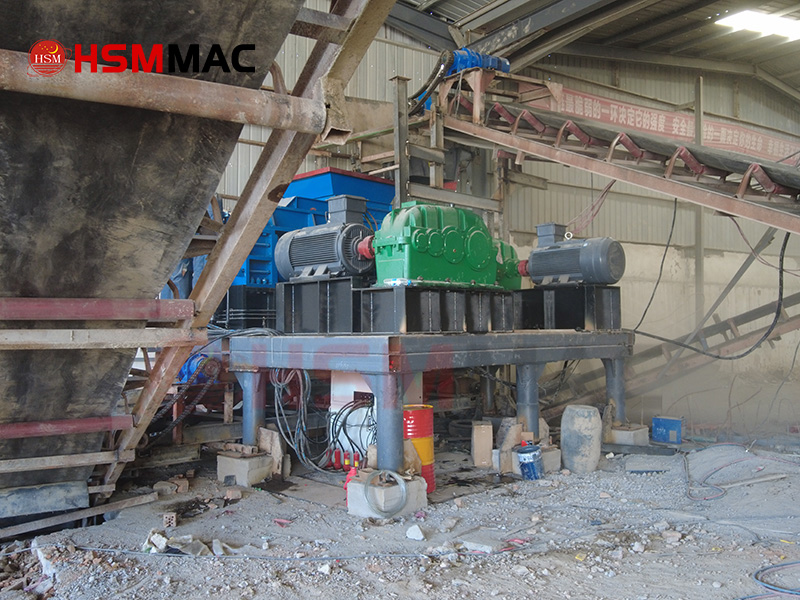
Crushing Site of a Double-Roll Crusher
3. Primary Coarse Reduction: Why It Is Not Recommended
Double roll crushers are medium-fine feed machines whose intake capabilities are strictly governed by roller diameter and gap clearance. Feeding large, run-of-mine limestone boulders directly into a roll crusher results in nip slippage, accelerated wear, and potential overload tripping. Primary coarse reduction belongs to heavy-duty jaw crushers or single-stage hammer crushers. Forcing a roll crusher into primary duty misapplies its engineering strengths.
4. Correct Positioning Delivers Instant Operational Benefits
- Stable Mill Feed: Consistent particle sizing ensures raw grinding mills operate steadily, safeguarding hourly tonnage and power efficiency.
- Environmental Compliance: Low dust generation and minimal over-powdering relieve pressure on plant dust collection systems.
- Lower Power Consumption: Direct mechanical compression draws significantly less electrical power than impact crushing, reducing long-term OPEX.
- Consistent Product Quality: Uniform discharge gradations stabilize downstream clinker calcination processes.
5. How to Validate Stage Placement for Your Plant
- Verify Flowsheet Position: Confirm which stage of your raw preparation circuit requires crushing and whether a double roll unit fits seamlessly 【Custom Parameters Available】.
- Analyze Raw Material Metrics: Compare maximum lump size, compressive hardness indexes, and moisture content against equipment specifications.
- Match Mill Requirements: Ensure target output gradations align precisely with downstream raw mill feed standards.
- Conduct Empirical Sample Testing: Provide plant-specific raw samples for factory trial testing to verify crushing performance and wear rates with real data.
Optimize Your Cement Plant’s Crushing Stage Today:
Huashengming Heavy Industry provides expert circuit analysis, customized roll configurations, and in-stock machinery dispatch 【Custom Parameters Available】.
Contact HSM engineers today to schedule a free raw cement material sample trial test and receive an engineered plant proposal.
 +86-13838144666
 +86-13838144666