Construction waste recycling is one of the fastest-growing green industries worldwide. Waste concrete, broken bricks, tiles, and mortar present tough handling challenges due to mixed steel rebar, clay, moisture, and irregular block sizing. Huashengming (HSM) Heavy Industry’s double roll crushers deliver stable medium and fine crushing performance, transforming demolition debris into high-value recycled aggregate for road base, backfill, recycled concrete, and brick manufacturing.
Construction waste recycling is one of the fastest-growing green industries worldwide. Waste concrete, broken bricks, tiles, and mortar are difficult to handle with conventional crushers due to mixed steel bars, clay, high moisture, and irregular block sizes. The HSM double roll crusher is widely deployed for medium and fine crushing of construction waste, converting demolition debris into high-value recycled aggregate suitable for road bases, backfilling, recycled concrete production, and brick manufacturing [Custom Parameters Available].
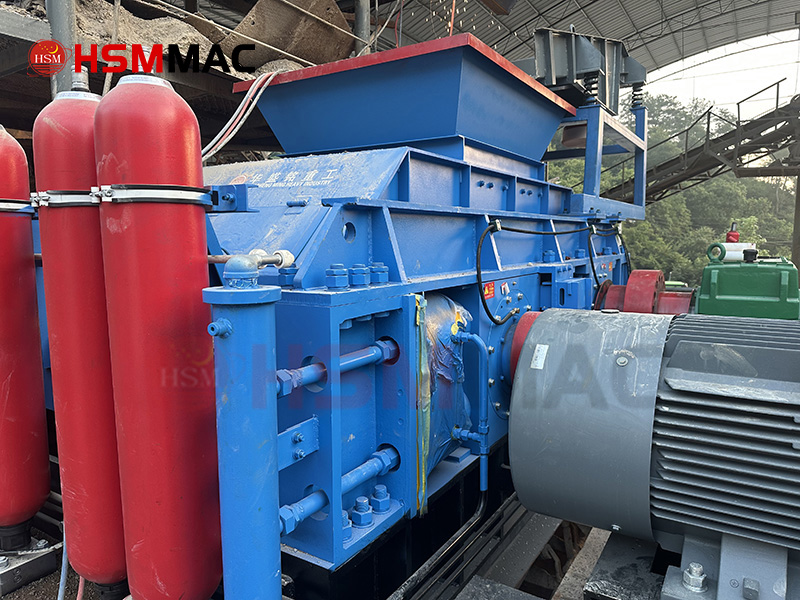
HSM Heavy-Duty Double Roll Crusher Operating in a Construction Waste Recycling Plant
1. Is a Double Roll Crusher Suitable for Construction Waste?
Yes, it serves as the preferred tertiary or secondary fine-crushing machine positioned directly after primary jaw crushers.
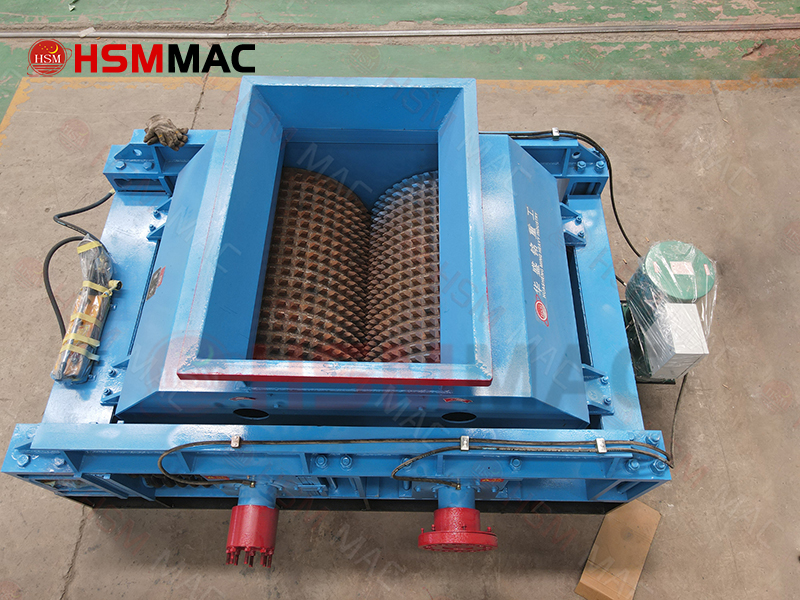
- Toothed Roll: Best for medium crushing of construction waste, accepting larger feed top sizes, and ideal for concrete blocks and brick rubble.
- Smooth Roll: Engineered for fine crushing and manufactured sand production, delivering uniform recycled sand with minimal stone dust.
- Not for Primary Coarse Duties: It is not recommended as a primary coarse crusher for massive, un-pre-crushed lumps of mixed demolition waste.
2. Core Advantages for Construction Waste Recycling
- Low Over-Crushing & Superior Cubical Shape: Crushing via compression and shearing produces fewer needle-flake particles and excessive fine dust. Stable gradation ensures recycled aggregate meets rigorous road base and concrete standards.
- Hydraulic Overload Protection for Rebar: Steel rebar and iron fragments are frequently present in demolition waste. The hydraulic spring system enables movable rollers to retract automatically to pass uncrushable metal safely, preventing severe structural damage.
- Anti-Blocking Design for Wet & Sticky Waste: Optional scraper assemblies and self-cleaning roller surfaces prevent mortar, clay, and wet sludge from caking onto roll surfaces, ensuring stable operation even with high-moisture construction waste.
- Low Energy Consumption & Simple Maintenance: Featuring a streamlined mechanical structure and low rotational speeds, segmented alloy roll shells can be replaced partially rather than requiring full roller overhauls, cutting spare parts expenses and downtime.
- Adjustable Discharge Sizing: Inter-roll gaps adjust online, allowing operators to easily switch between 5–10 mm sand, 10–30 mm aggregate, or 30–50 mm road base materials according to shifting market demand.
- Low Noise & Minimal Dust: Quiet mechanical compression is well-suited for urban demolition sites and enclosed recycling plants, meeting strict environmental protection regulations.
3. Typical Construction Waste Recycling Flowsheet
- Demolition waste: Manual pre-sorting (remove large steel beams) to Primary Jaw Crusher to Vibrating Screen
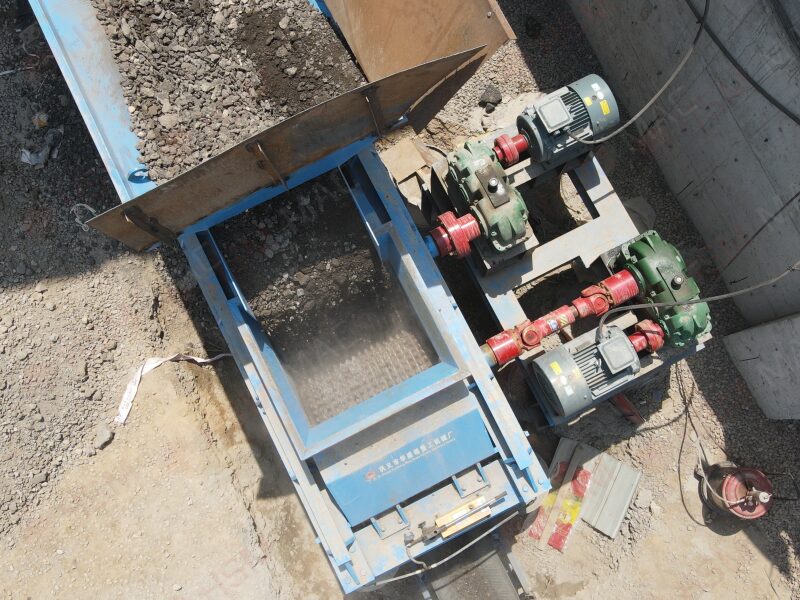
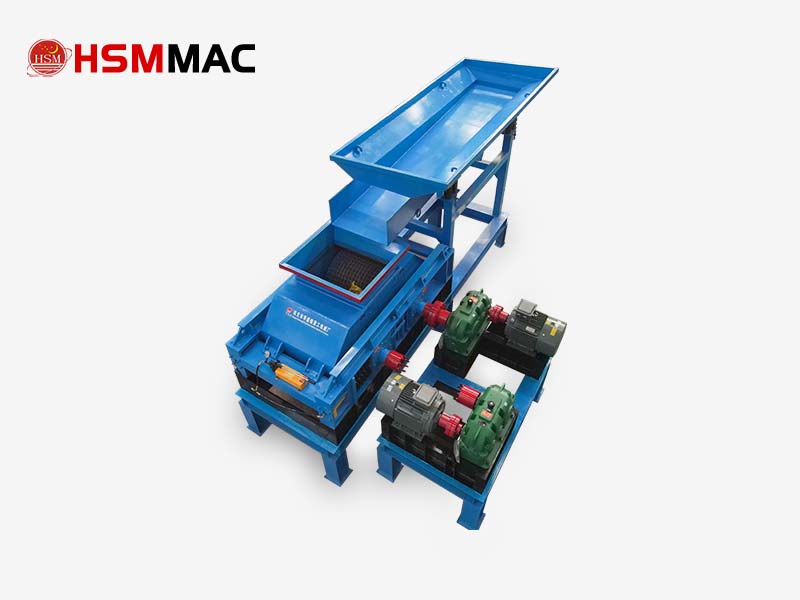
- Screen oversize to HSM Double Roll Crusher (Medium/Fine Crushing) to Closed-Circuit Screening
- Final product to Finished recycled aggregate and manufactured sand stockpiles
4. Selection Tips & Engineering FAQ
Key Selection Parameters to Consider:
- Material composition (concrete blocks, red bricks, ceramic tiles, asphalt, or mixed waste)
- Feed top size, target output specifications, and hourly capacity
- Moisture and clay content (select toothed rollers for sticky, wet feed)
- Integration with an overbelt magnetic iron separator prior to crushing to minimize metal risks
Frequently Asked Questions:
- Q: Double roll crusher vs. impact crusher for construction waste?
A: Impact crushers offer high reduction ratios but generate excessive fine powder and experience rapid wear when processing rebar. Double roll crushers deliver superior aggregate shape, lower wear costs, and minimal dust when strict gradation control is required. - Q: Can it crush concrete containing steel rebar?
A: Yes. However, we strongly recommend installing a magnetic iron separator ahead of the crusher to extract bulk steel bars, significantly extending roll shell lifespan [Custom Parameters Available]. - Q: How long do roll shells last for construction waste?
A: Lifespans vary based on steel contamination and abrasiveness. HSM high-chromium manganese roll shells typically operate for 8 to 18 months under normal recycling conditions.
Ready to Turn Construction Waste Into Saleable Aggregate?
Contact Huashengming Heavy Industry today for custom model selection, engineering support, factory-direct inventory, and on-site test run arrangements tailored to your construction waste recycling project [Custom Parameters Available]!
 +86-13838144666
 +86-13838144666