Steel slag combines extreme abrasiveness and residual tramp iron, making it one of the most punishing feeds for crushing machinery. While no machine is entirely immune to wear, double roll crushers prove significantly more durable than hammer mills or impact crushers by replacing high-speed impact with low-speed compression, uniform roll shell wear, independent part replacement, and hydraulic tramp-iron release. This article details why Huashengming (HSM) Heavy Industry’s double roll crushers deliver superior lifetime wear economics in steel slag recycling lines.
Direct conclusion: Using a double roll crusher for steel slag is noticeably more durable than deploying hammer mills or impact crushers. This durability is evaluated relative to alternative machinery and operational stresses. Because steel slag is highly abrasive and inherently contains residual metallic iron, no crushing equipment is entirely “wear-free.” However, double roll crushers experience slow, uniform wear patterns with individually replaceable roller shells, avoiding the need for high-frequency consumable replacements under punishing operating conditions.
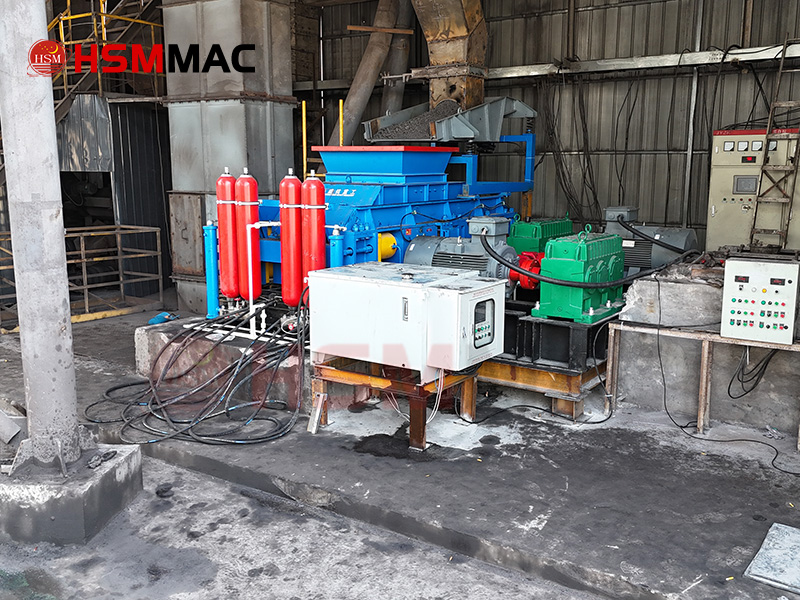
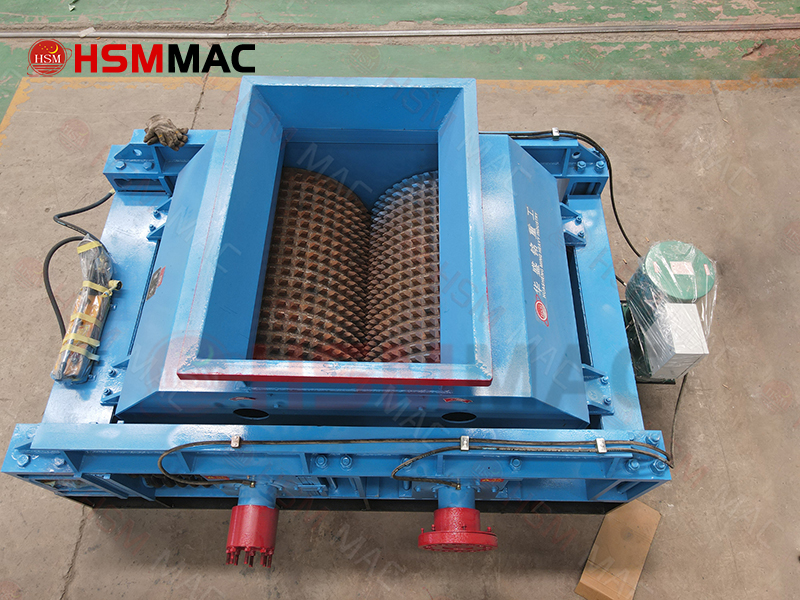
Heavy-Duty HSM Double Roll Crusher Processing Steel Slag
1. Why Steel Slag Is Unforgiving on Equipment
Steel slag is far from ordinary mineral ore; it possesses two intrinsic characteristics that plague crushing machinery:
- High Abrasiveness: Composed primarily of iron oxides and calcium silicate glass phases, steel slag exhibits high hardness and sharp crystalline edges, producing much more aggressive cutting and abrasive wear on metal surfaces than softer minerals like limestone or calcite.
- Residual Metallic Iron: Steel slag inherently contains unreduced metallic iron, steel granules, and occasional massive metal inclusions. This is a natural attribute of steelmaking slag, not accidental feed contamination.
The combination of these properties guarantees that roller shells and hammers will wear down over time. Any vendor claiming their equipment experiences “zero wear” on steel slag is being misleading.
2. Comparative Wear Analysis: Roll Crushers vs. Impact Mills
| Comparison Metric | Double Roll Crusher | Hammer Mill / Impact Crusher |
|---|---|---|
| Crushing Mechanism | Low-speed compression (zero high-speed impact) | High-speed rotor impact and particle throwing |
| Wear Components | Roller shells (individually replaceable wear parts) | Hammers / blow bars (high-frequency consumables) |
| Wear Characteristics | Uniform, gradual surface degradation | Localized impact chipping and rapid edge blunting |
| Maintenance & Replacement | Single shell swaps without major machine overhauls | Frequent shutdowns for bulk hammer overhauls |
| Fines Control | Controlled sizing (“crush to size and exit”) | Excessive fine powder generation and dust |
In steel slag processing, hammer and blow bar degradation under severe abrasion and metallic impact is well documented. Double roll crushers feature uniform roll shell wear profiles, enabling worn individual segments to be swapped out without returning the main machine to a workshop 【Custom Parameters Available】—representing true industrial durability.
3. Three Pillars of Roll Crusher Durability in Slag Duty
- Low-Speed Compression Prevents Chipping: Roll crushers operate via counter-rotating compression rolls at low peripheral speeds, eliminating high-velocity impact zones. Sharp slag edges and residual steel pieces cannot cause the catastrophic localized chipping experienced by high-speed hammers, ensuring predictable wear behavior.
- Modular Shell Replacement: Roller shells are manufactured in segments. When wear reaches operating limits, maintenance crews replace individual shell sections while keeping the main frame, bearings, and drive assemblies intact. Compared to dismantling rotor assemblies on hammer mills, double roll maintenance minimizes downtime and labor.
- Hydraulic Relief Safeguards Against Tramp Iron: Because steel slag routinely contains tramp metal, Huashengming roll crushers incorporate high-response hydraulic (or spring) relief systems. When massive metal blocks enter the gap, movable rolls retract instantly and reset automatically, transforming potential shaft-breaking jams into routine, non-disruptive events.
4. Metallurgical Standards and Operational Boundaries
- High-Chrome Alloy Shells as Baseline: To combat extreme slag abrasiveness, high-chromium alloy roller shells are specified as a strict engineering baseline rather than an optional upgrade, significantly extending service intervals.
- Honest Assessment of Wear: “More durable” does not mean “indestructible.” Roll shell wear represents a predictable operating cost. Economic evaluations should focus on total wear cost per ton combined with minimal downtime, rather than unrealistic zero-wear claims.
- Correct Flowsheet Sequencing: In steel slag processing, crushing must precede magnetic separation. The double roll crusher reduces slag blocks to optimal release sizes, after which overbelt magnetic separators recover metallic iron. Placing magnetic separation upstream of primary crushing risks damaging equipment with uncrushed massive iron blocks.
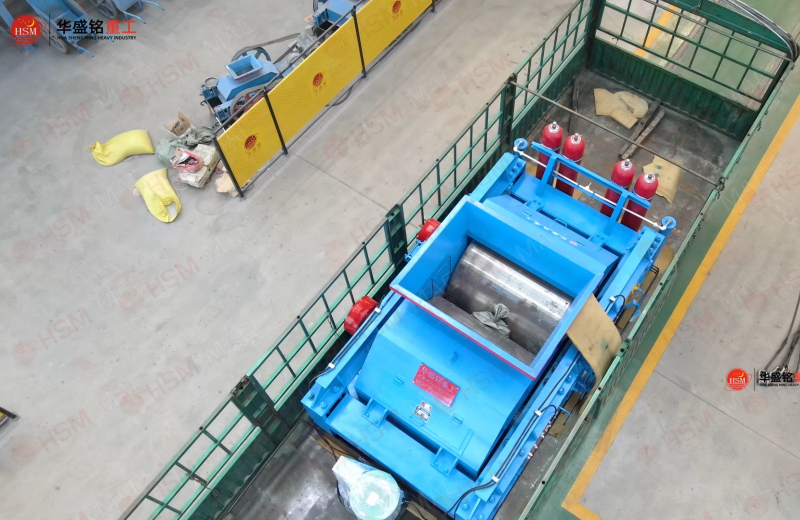
High-Chrome Roller Shells
 +86-13838144666
 +86-13838144666