In the production of machine-made sand, gumi stone (with a particle size typically ranging from 5 to 15mm) is widely used as secondary crushing material due to its moderate hardness, low impurity content, and good gradation for the preparation of high-quality machine-made sand. However, many sand plant owners are confronted with a common pain point: the wear of the roller skin of the sand-making machine is too fast, requiring replacement two or three times a year, leading to frequent machine downtime, high accessory costs, and unstable output. As a result, the question “Can the roller skin of the gumi stone sand-making machine last for more than two years? Are there any truly durable manufacturers?” has become a hot topic in the industry. The answer is affirmative – as long as the right material is selected, the working conditions are matched, and a reliable manufacturer is chosen, it is entirely feasible for the roller skin to last for more than two years.
Why can’t ordinary roller skins last for more than a year?
Most small-scale manufacturers, in an effort to cut costs, use ordinary ZGMn13 high-manganese steel or recycled cast iron to make the roller skins. These materials have a relatively low initial hardness (around HRC40). When continuously crushing the dense and silicon-rich small-sized gumi stones, the material causes continuous scouring and micro-cutting on the roller surface, resulting in:
The roller surface is quickly ground smooth, and the output material becomes coarser.
The tooth profile disappears, and the crushing efficiency decreases.
It needs to be shut down for replacement every 3 to 6 months, and it is common to replace it 2 to 3 times a year.
What is more serious is that frequent replacements not only cost tens of thousands of yuan in parts but also result in the loss of a large number of orders due to machine downtime, making it not worth the expense.
II. The Key to Not Replacing Roll Skins for Two Years: High-Chromium Alloy + Reasonable Operating Conditions
To truly achieve the “two-year no replacement” for roller skins, two major conditions must be met:
1. Durable material: High-chromium manganese steel alloy roller skin is the core.
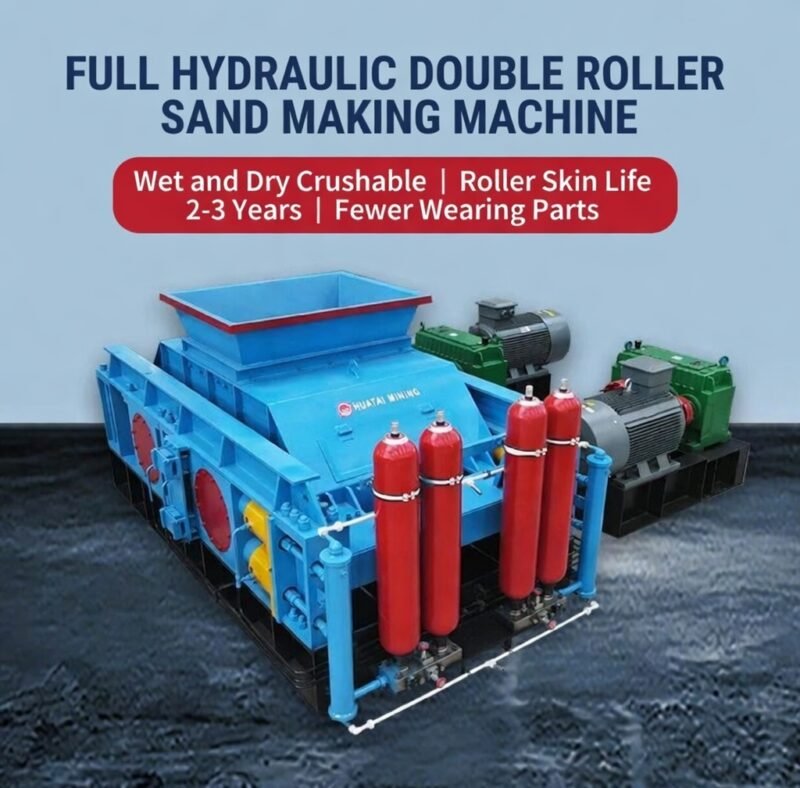
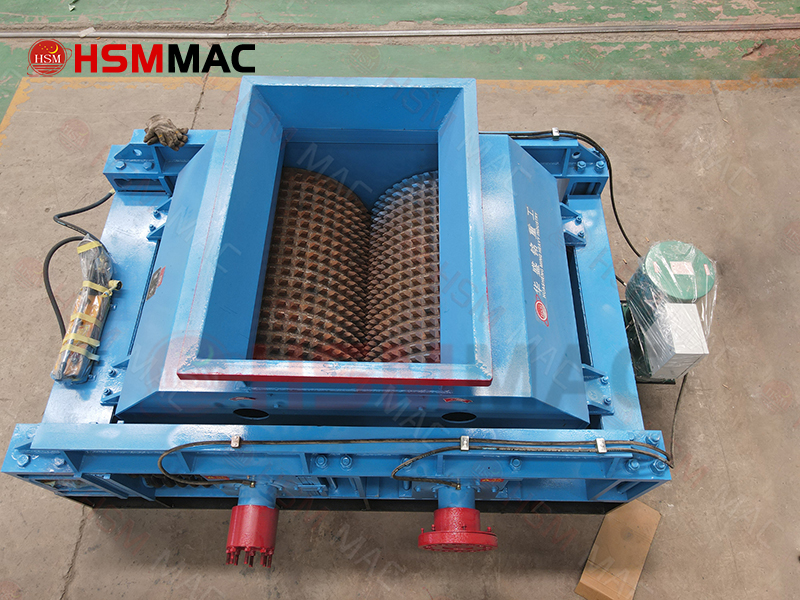
The manufacturer uses high-chromium-manganese steel alloy roller skins such as Cr20 and Cr26. After overall quenching treatment, the surface hardness reaches HRC58–62, with carbides evenly distributed, forming a dense and wear-resistant network. Compared with high-manganese steel, its wear resistance is increased by 3–5 times. When processing materials with medium and low hardness (compressive strength 80–120MPa) and high brittleness like gumi stone, the wear rate is low.
2. Work condition matching: Gua Mi Shi is the ideal material.
The guami stone has been roughly crushed, with uniform particle size, no large pieces to impact, and no impurities such as steel bars or soil. It is extremely “friendly” to the equipment. Under this working condition, the high-chromium roller skin is almost in a “light load, high efficiency” state, and its service life is naturally prolonged.
Field tests have shown that under the condition of continuous operation for 10 hours per day, the service life of high-chromium alloy roller skins generally reaches 18 to 24 months, and some customers have even used them for over 30 months.
Can any manufacturer in Gongyi achieve this? Let’s let real cases speak.
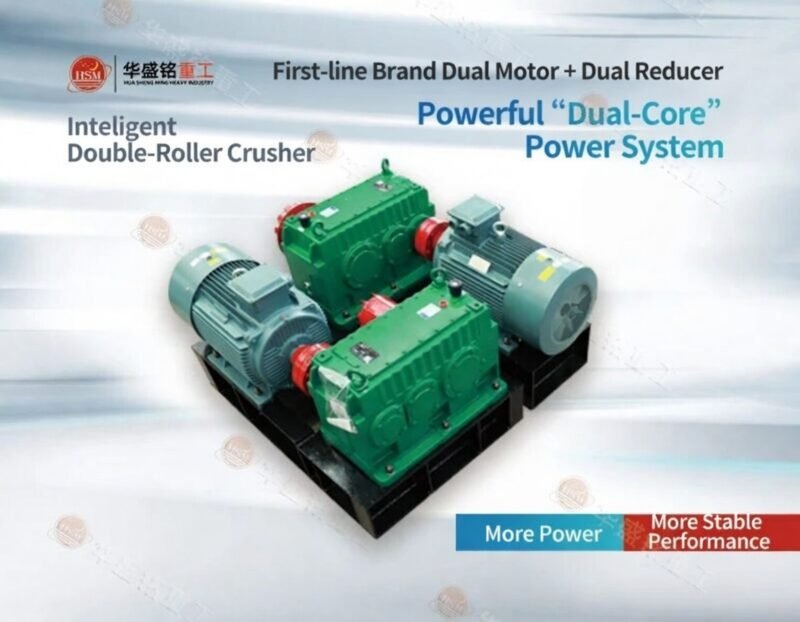
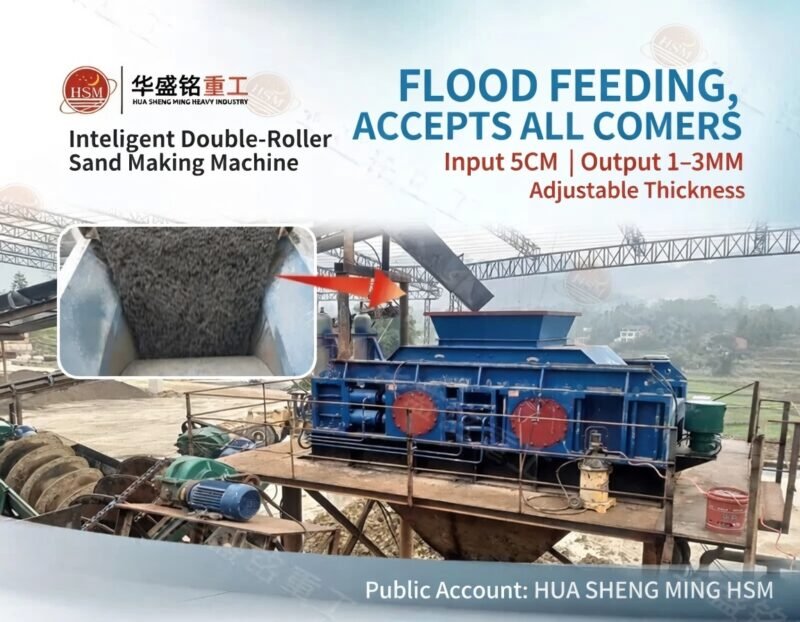
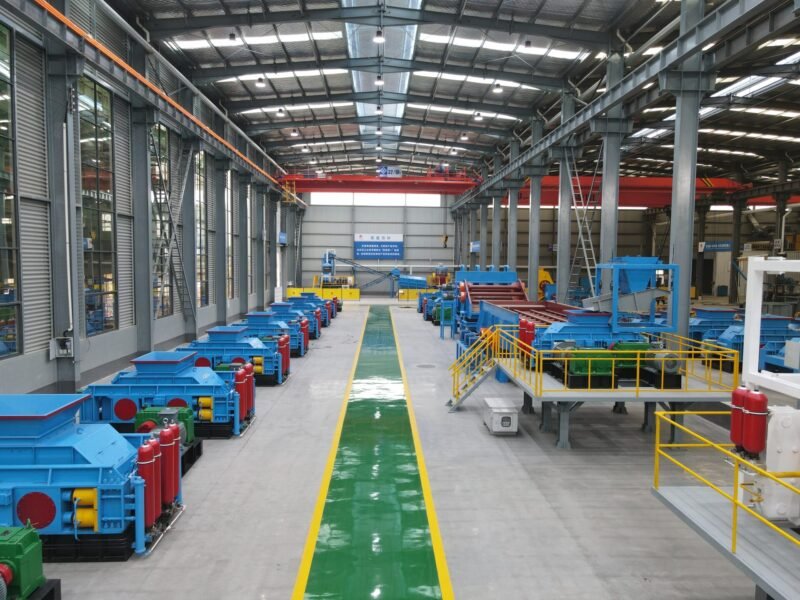
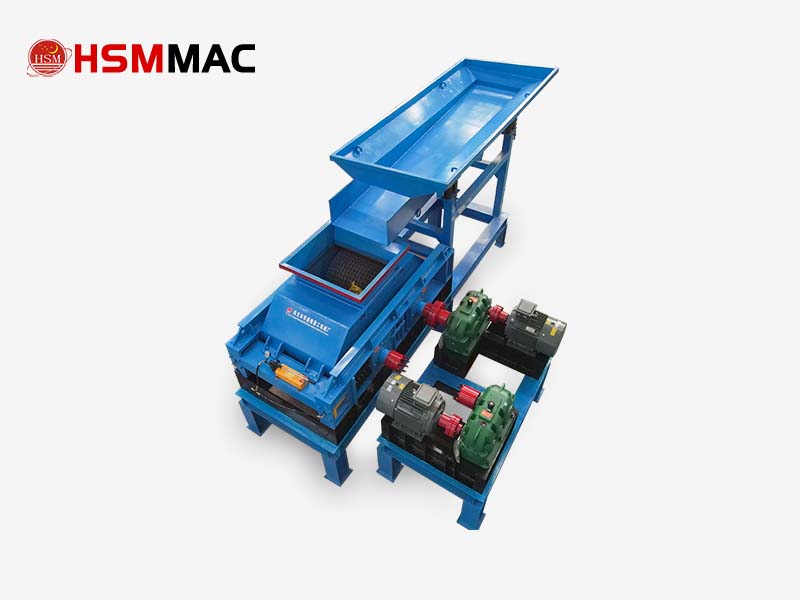
In Gongyi, Henan Province – the core area of China’s mining machinery industry, some physical manufacturers have already adopted “high wear-resistant roller skins” as standard equipment. Take Huashengming Heavy Industry as an example. All its special double-roller sand-making machines for gumi stones are equipped with high-chromium manganese steel alloy roller skins, and it publicly promises that under normal gumi stone working conditions, the roller skins are guaranteed for 18 months.
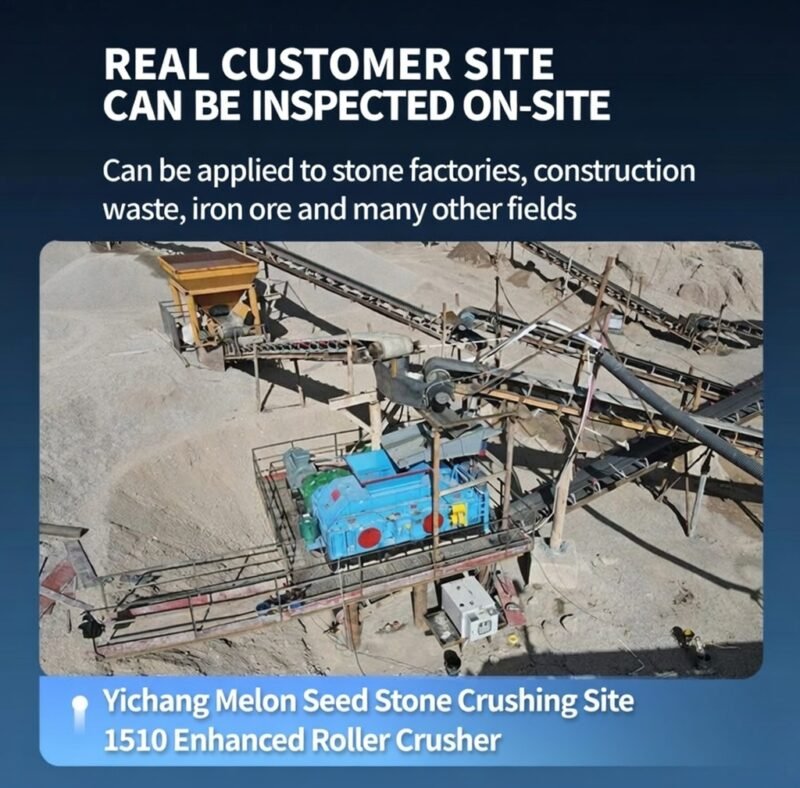
More importantly, they support bringing materials for trial operation and opening up the customer’s site. For example:
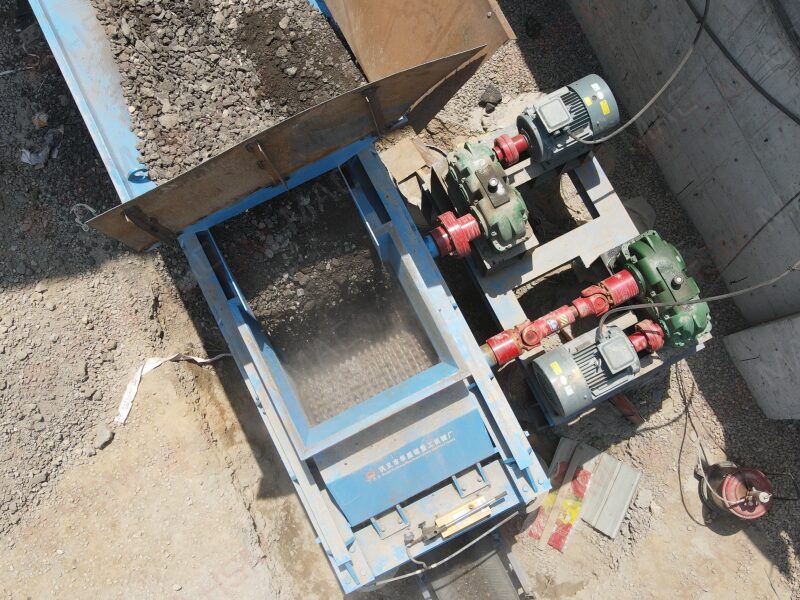
In a sand plant in Nanyang, Henan Province, a 1210 type double roller machine is used to process local melon seed stone (with an input size of 8–12mm), aiming for an output size of 1–3mm. After 22 months of operation, the roller surface has only slightly flattened and has not been replaced. The average daily output has remained stable at 80 tons.
A customer from Linyi, Shandong Province, provided feedback: “Previously, we used a hammer crusher, and the hammer heads needed to be replaced every month. After switching to a double roller crusher, we haven’t touched the rollers for two years, and our electricity bill has also been reduced by 30%.
These are not promotional slogans but verifiable real data.
IV. How to Distinguish “True High-Chromium” from “False Wear-Resistant”?
There are many cases in the market where “high manganese steel” is passed off as “high chromium alloy”. We suggest you distinguish them through the following methods:
Request to review the material report: A legitimate manufacturer can provide metallographic inspection or hardness test data.
Observe the fracture surface or wear surface: The fracture surface of high-chromium roller skin is silvery white, and it still maintains a metallic luster after wear; inferior roller skin turns black and is prone to flaking.
Compare the prices: The cost of high-chromium roller skin is 2 to 3 times that of ordinary steel. If the overall machine price is abnormally low, be cautious of material reduction.
Keep the machine running: Operate your guami stone continuously for 2 hours and observe the changes on the roller surface.
Five. Not only wear-resistant, but also with more significant comprehensive benefits.
Choosing high-wear-resistant double-roller sand-making machines not only means “less roller replacement”, but also brings about cost reduction and efficiency improvement throughout the entire production chain.
Savings on parts: Save the cost of 3 to 4 replacements over two years (approximately 20,000 to 40,000 yuan).
Save electricity: Low-speed extrusion saves more than 25% of electricity compared to hammering crushing.
Save labor: No frequent shutdowns for maintenance are required, and one person can manage multiple units.
Improve quality: Good particle shape of the discharged material, less powder, and higher selling price of sand.
default
VI. Conclusion: Say No to “Changing Three Times a Year”, Starting with Choosing the Right Manufacturer
Gypsum sand making should be a high-profit business and should not be held back by poor equipment. It is not an unrealistic expectation but a mature technical reality that the roller skin can last for more than two years. The key lies in: identifying high-chromium manganese steel alloy material, matching suitable materials, and choosing a solid manufacturer in Gongyi that has casting capabilities and dares to open up the customer’s site.
Now, bring your gumaishi and come to Huashengming for a free trial run, on-site inspection and viewing of real operation cases. With stable production for two years without changing the roller, say goodbye to the predicament of “more time spent on machine repair than operation”, and let your sand plant truly achieve high efficiency, worry-free operation and high profits!
 +86-13838144666
 +86-13838144666