High-Pressure Grinding Rolls (HPGR) vs. Impact Crushers in Iron Ore Processing: High-Efficiency & Low-Wear Crushing Upgrade
⚡ Mechanism Comparison: Impact Striking vs. High-Pressure Material-Bed Comminution
The operational issues encountered with impact crushers stem directly from their working principle: high-speed mechanical strikes against extremely hard ore yield low energy utilization, localized severe wear, and uncontrollable particle size distributions.
The HPGR Advantage: HPGR operates on continuous high-pressure bed comminution between counter-rotating rollers. Materials are compacted and crushed layer-by-layer rather than struck via single-point impacts. Energy is applied directly to particle fractures, resulting in superior size uniformity and evenly distributed roll-surface wear.
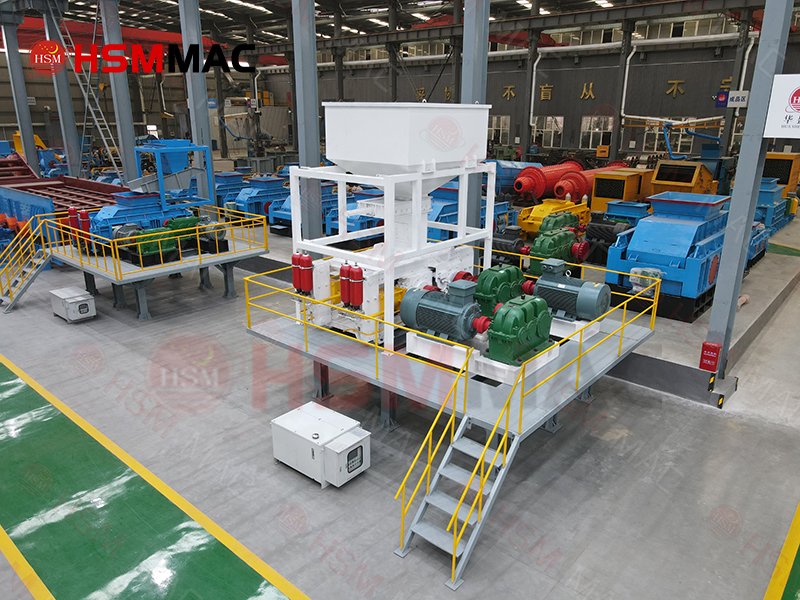
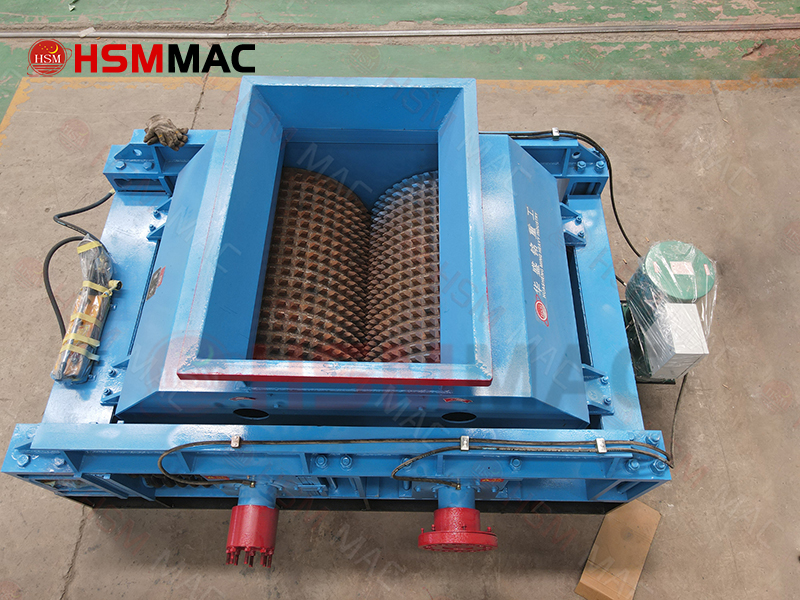
High-Pressure Grinding Roll (HPGR)
📊 Field Performance Comparison
| Performance Metric | Impact Crusher | High-Pressure Grinding Roll (HPGR) |
|---|---|---|
| Finished Product Particle Sizing | High fines content, high proportion of flaky/elongated particles, wide size distribution. Increases downstream grinding & separation load. | Inter-particle compression fractures ore along natural texture lines. Concentrated particle sizing, minimal over-grinding, cubical particle shape. |
| Equipment Wear & Maintenance | Severe localized wear on hammers and blow bars. High replacement frequency and extended downtime. | Even wear across roll surface, easily restored via hardfacing welding. Significantly extended continuous operating cycles. |
| Energy Consumption | Heavy power losses due to idling, material rebounding, and ineffective impacts. High electricity consumption per ton. | Energy acts directly on the compacted bed. Higher energy efficiency substantially lowers power consumption per ton of ore. |
| Operational Stability | Discharge sizing fluctuates heavily as hammers wear down, requiring frequent manual adjustments or parts replacement. | Hydraulic roll gap is adjustable online for precise, controllable product sizing with minimal production fluctuation. |
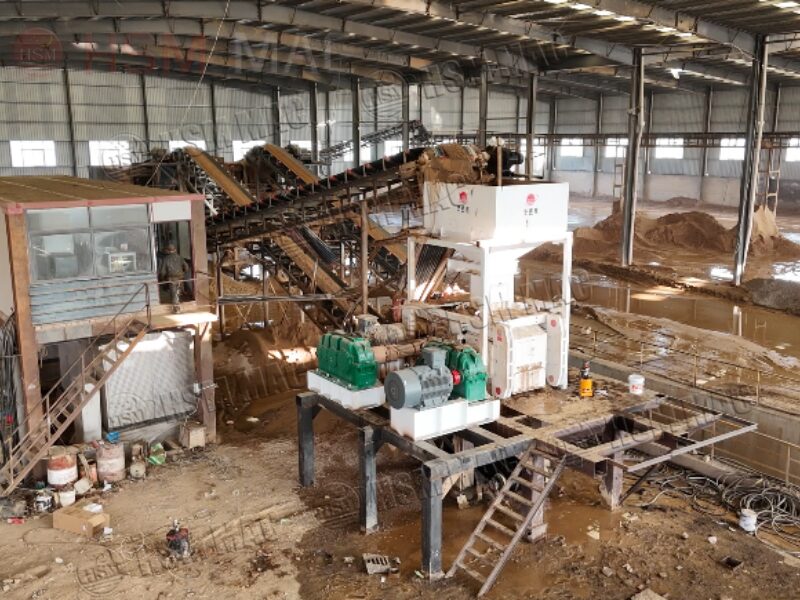
Client site inspection verifying HPGR operational stability and product gradation
🎯 Ideal Application Scenarios for Iron Ore HPGR Upgrade
HPGR technology is the optimal replacement or upgrade solution under the following plant conditions:
- Strict Particle Size Uniformity Needs: When current production lines require consistent particle size distribution without excessive fine powder interfering with downstream magnetic separation or flotation.
- High Power Costs per Ton: When plant operators aim to lower power consumption per ton through energy-efficient “more crushing, less grinding” front-end equipment.
- Plant Retrofits with Limited Footprint: When retrofitting existing lines requires compact, high-throughput machinery that easily integrates into tight plant layouts.
Conclusion: For hard, abrasive iron ore processing, transitioning from high-velocity impact crushing to High-Pressure Grinding Rolls (HPGR) solves core pain points of rapid wear, high energy costs, and erratic particle size, delivering long-term efficiency and operational stability.
 +86-13838144666
 +86-13838144666