In the coal mining and processing industry, crushing equipment plays a vital role in determining operational efficiency, product quality, and overall production costs. Among the various types of crushers available, the tooth roller crusher—also known as the double-tooth roller crusher—has emerged as a preferred choice for coal crushing applications. This article provides a comprehensive overview of tooth roller crushers, their working principles, key advantages, and their extensive applications in the coal industry
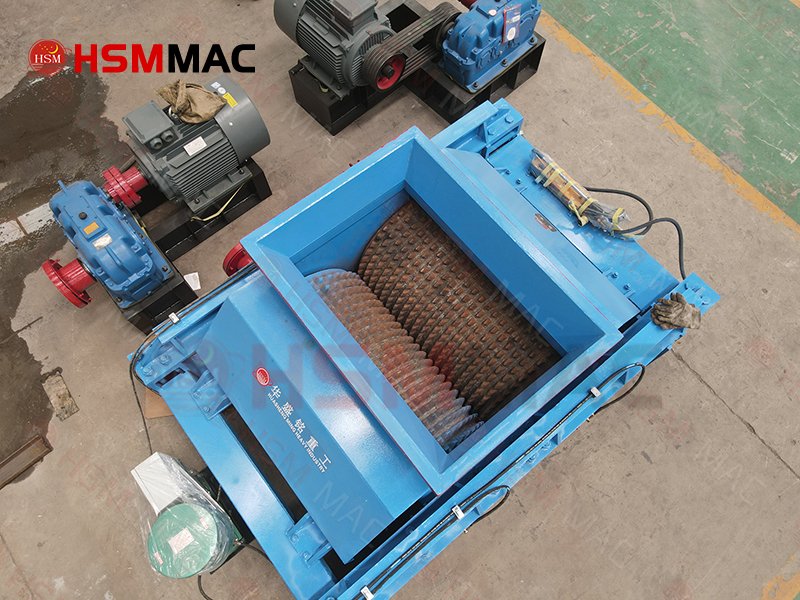
Hydraulic Double Tooth Roller Crusher
What Is a Tooth Roller Crusher?
A tooth roller crusher is a type of crushing equipment that utilizes two or four toothed rollers rotating in opposite directions to shear, squeeze, and split materials. It is specifically designed for crushing medium-hard and brittle materials, with coal being one of its primary applications. The equipment is widely used in coal mines, coal preparation plants, metallurgical facilities, and other industrial sectors.
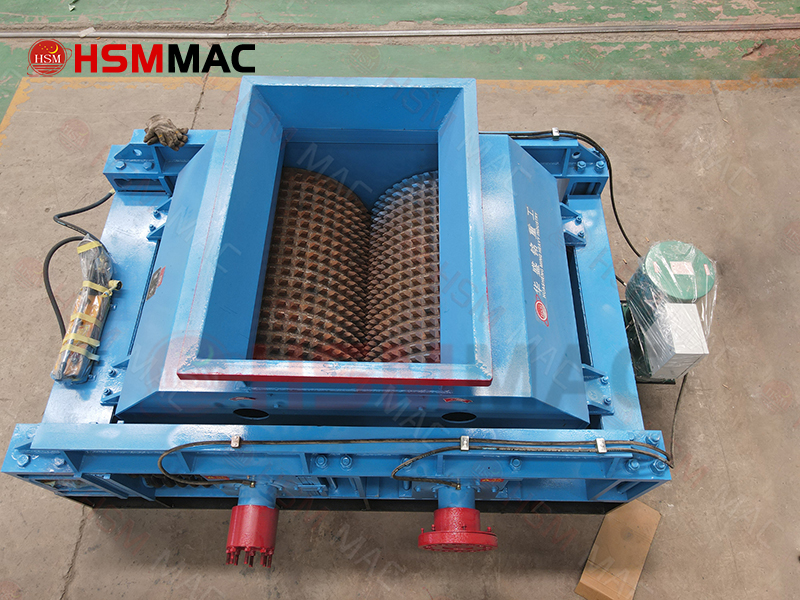
The crusher typically consists of a transmission device, frame, crushing rollers, hydraulic adjustment systems, and coupling mechanisms.
Working Principle
The working principle of a tooth roller crusher is fundamentally different from traditional crushers that rely on impact and compression. Instead, it takes advantage of the fact that materials like coal have compressive strengths far greater than their shear and tensile strengths. The equipment uses shear, tensile, and splitting forces to achieve selective crushing.
When coal enters the crusher, the two toothed rollers rotate toward each other at relatively low speeds. Materials that are already at the required size pass through the gaps between the rollers and are discharged immediately—a feature that effectively screens out合格 particles and prevents over-crushing. Oversized materials are caught between the rollers and subjected to shear and tensile forces, breaking them down efficiently.
Some models feature differential-speed rotation, which enhances the shearing effect and allows the rollers to self-clean, preventing material adhesion and blockage—a significant advantage when processing sticky or high-moisture coal
Key Advantages for Coal Crushing
1. High Crushing Ratio with Uniform Product Size
Tooth roller crushers offer a crushing ratio of 5–8, ensuring that feed materials are effectively reduced to the desired particle size. The output particle size is uniform and consistent, which is critical for downstream coal preparation processes.
2. Low Over-Crushing Rate
One of the most significant advantages of tooth roller crushers in coal applications is their remarkably low over-crushing rate. Unlike hammer crushers that tend to produce excessive fines, tooth roller crushers employ selective crushing—only oversized particles are broken, while合格-sized materials are immediately screened out. For coal crushed to below 50mm, the over-crushing rate for particles under 3mm is less than 10%. Some advanced models can achieve over-crushing rates as low as 5%. This not only preserves the quality of the coal product but also reduces the generation of dust and fines.
3. Screening and Crushing in One Machine
Tooth roller crushers combine screening and crushing functions in a single unit. The rotating rollers act like a rotating grate: materials that meet the size requirement pass through immediately, while oversized materials are crushed. This dual functionality simplifies the coal preparation process, reduces equipment investment, and lowers production costs.
4. Excellent Adaptability to Moisture and Sticky Materials
Unlike many other crusher types that suffer from blockage when processing wet or sticky coal, tooth roller crushers are designed to handle such materials effectively. The differential-speed rotation and self-cleaning tooth design prevent material adhesion and accumulation on the roller surfaces. This makes them particularly suitable for processing raw coal with high moisture content or粘性 materials.
5. Low Energy Consumption and Operational Costs
Tooth roller crushers are known for their energy efficiency. Compared to traditional crushers, they consume less power while delivering higher throughput. The equipment features a simple structure, low noise levels, minimal vibration, and reduced dust emissions. Maintenance is straightforward, with replaceable tooth plates that can be quickly swapped out when worn. These factors contribute to lower overall operating costs.
6. Robust Overload Protection
Tooth roller crushers are equipped with multiple overload protection mechanisms. Limiting torque fluid couplings between the motor and reducer prevent power overload. Sensor-based protection systems and mechanical spring devices allow the rollers to retreat when encountering uncrushable materials (such as tramp iron), protecting the core components from damage.
7. Large Processing Capacity
Modern tooth roller crushers can achieve impressive throughput. For example, some models have been documented to process 1,200–1,400 tons per hour with high efficiency and reliable operation. Large-scale equipment used in major coal mining operations can handle capacities exceeding 5,000 tons per hour with feed sizes up to 1,200mm
Applications in the Coal Industry
Tooth roller crushers are extensively used throughout the coal industry value chain:
-
Raw Coal Crushing in Large Coal Mines: The equipment is particularly suitable for crushing raw coal, including coal containing gangue, in large-scale underground and open-pit coal mines.
-
Coal Preparation Plants: Tooth roller crushers are widely deployed in coal preparation plants for primary, secondary, and tertiary crushing of coal. They help prepare coal to the required feed size for washing and beneficiation processes.
-
Coke and Metallurgical Coal Processing: The crushers are used for crushing coke, petroleum coke, and metallurgical coal in coking plants.
-
Coal Gangue Processing: Tooth roller crushers effectively handle coal gangue, reducing it to suitable sizes for backfilling or further utilization.
-
Coal Slime Treatment: Recent innovations have extended the application of tooth roller crushers to coal slime crushing, addressing material adhesion and blockage issues effectively.
-
Power Plants: The equipment is used in circulating fluidized bed boiler systems and coal-water slurry preparation.
Conclusion
Tooth roller crushers have proven to be an indispensable piece of equipment in the coal industry. Their unique combination of high crushing efficiency, low over-crushing rate, excellent adaptability to moisture and粘性 materials, energy efficiency, and robust construction makes them the ideal choice for coal crushing applications. As the coal industry continues to pursue greater efficiency, intelligence, and sustainability, tooth roller crushers will undoubtedly remain at the forefront of coal processing technology.
 +86-13838144666
 +86-13838144666