Granite sand production – equipment selection directly determines production costs and sand quality. Many users encounter various questions in actual operation: How to choose between roller crusher, hammer crusher, and impact crusher? What is the sand yield? Are operating costs high? Based on extensive field case studies, HSM has compiled the following common questions and answers.
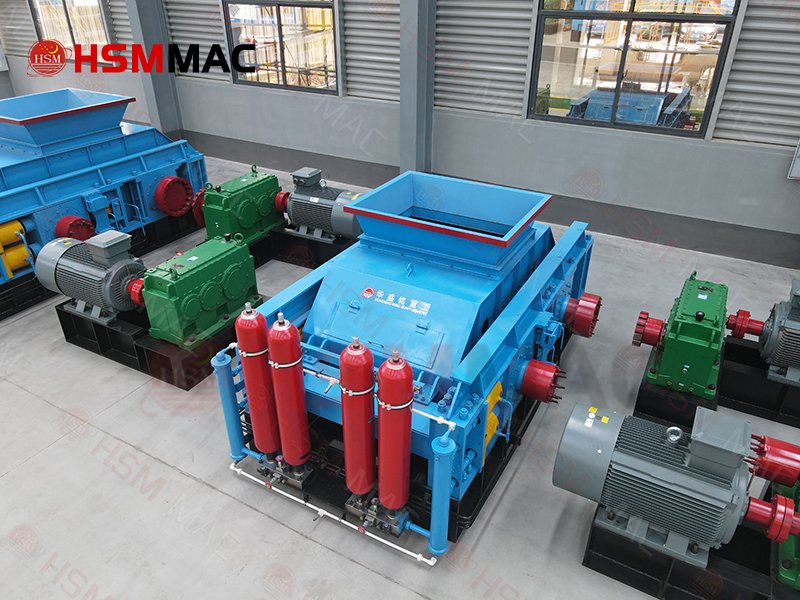
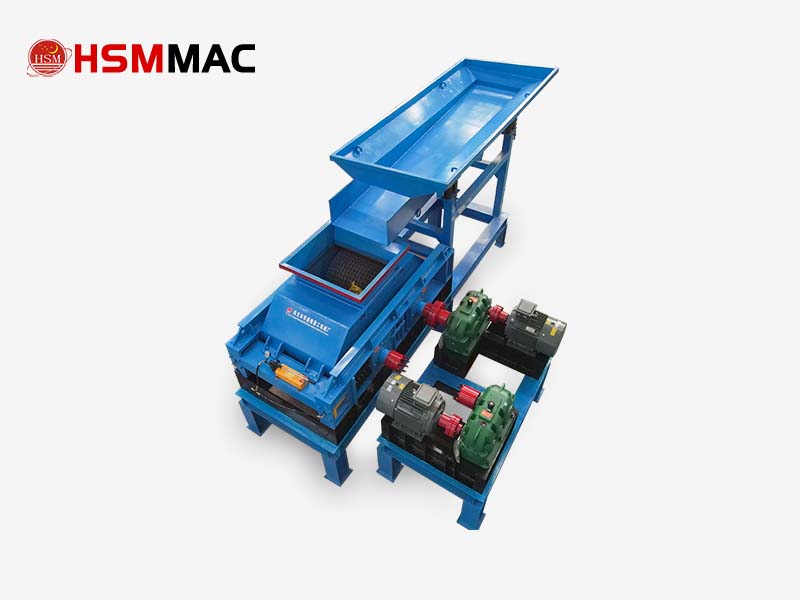
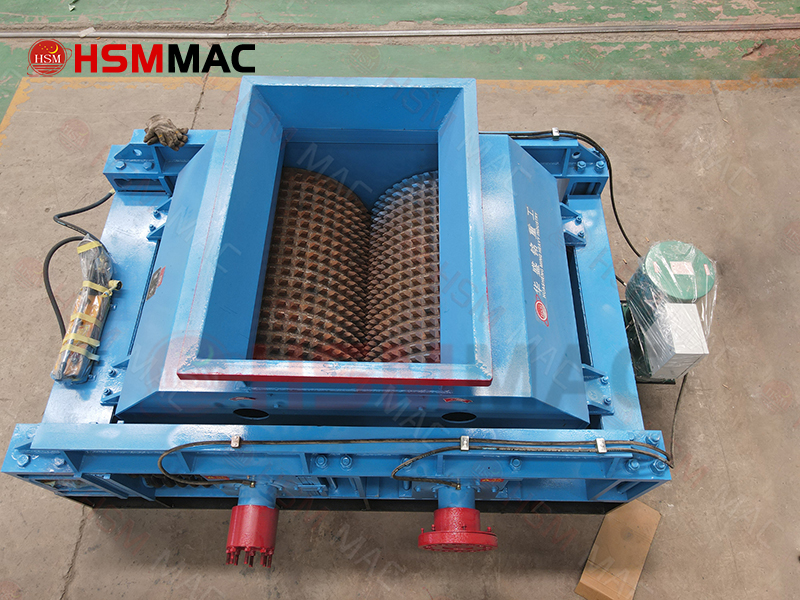
Granite sand maker
Q1: For granite sand making, how to choose between a roller sand maker and an impact sand maker?
The key factors are “wear” and “fines.” Impact sand makers rely on high-speed impact, which causes rapid hammer wear and generates excessive fines when processing granite, making them suitable for coarse crushing where fines are not a concern. Roller sand makers use lamination crushing, providing uniform wear and controllable fines, making them more suitable for medium and fine crushing where finished sand quality is critical. A general recommendation: use impact crushers for coarse crushing and roller sand makers for medium-fine crushing.
Q2: What is the maximum feed size for a roller sand maker?
Different models have different maximum feed sizes: small units typically accept below 30mm, medium units below 50mm, and large units up to 80mm. If the run-of-mine material is larger, it is recommended to use a jaw crusher or cone crusher for coarse crushing before feeding into the roller sand maker.
Q3: Can one roller sand maker produce both coarse sand and fine sand?
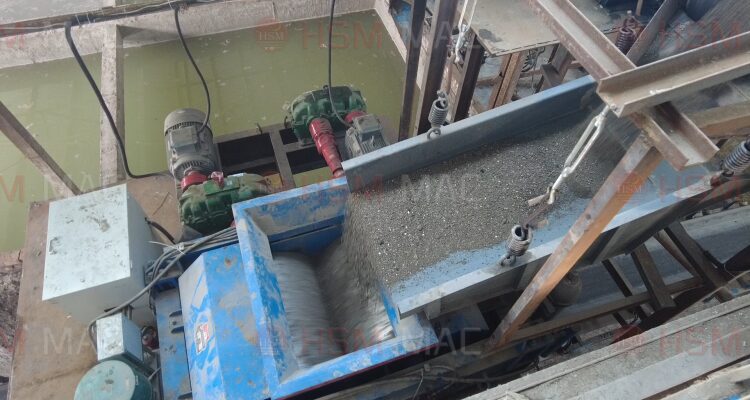
Granite sand maker producing sand and gravel
Yes, but not simultaneously. By adjusting the roll gap hydraulically, the discharge size can be changed within minutes. Increase the roll gap for coarse sand, reduce it for fine sand – no need to stop the machine or disassemble any parts, making operation convenient.
Q4: What is the sand yield rate of a roller sand maker for granite?
The sand yield rate is affected by feed size, material moisture content, roll gap setting, and other factors. Due to granite’s hardness, the coarse particle fraction tends to be higher. However, with proper roll gap settings and closed-circuit screening, the sand yield can be controlled within an ideal range. It is recommended to verify with actual material testing for specific data.
Q5: How often do the roll shells need to be replaced?
The replacement cycle depends on the abrasiveness of the granite and operating hours. For moderately abrasive granite, the roll shells can last a considerable time; for highly abrasive material, the cycle will be shorter. HSM uses high-chromium manganese steel composite hardfaced roll shells with high surface hardness and strong wear resistance, significantly extending service life compared to ordinary materials.
Q6: What should be done when roll shells wear out?
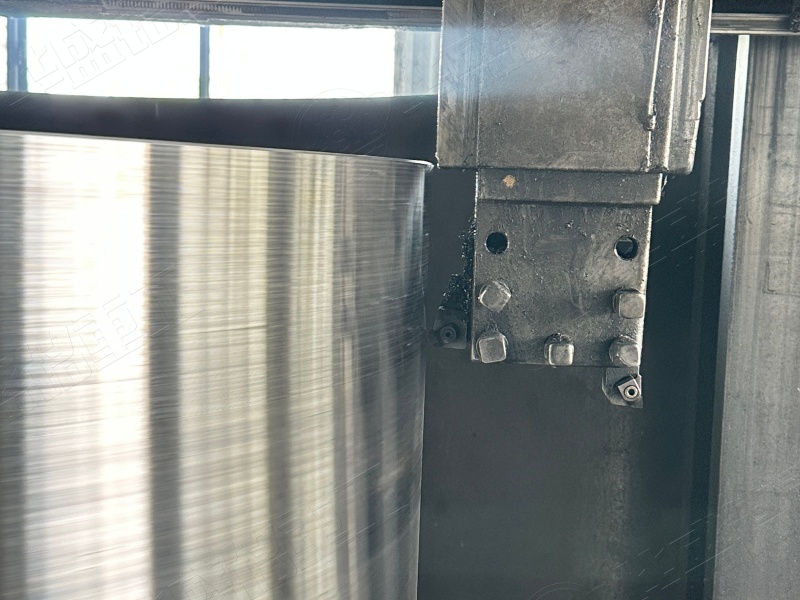
Roll shell on-site repair in progress
There are two approaches for worn roll shells. For minor wear or uneven surfaces, on-site turning repair can restore roundness and smoothness. For severe wear or insufficient thickness, the roll shells need to be replaced. HSM roll shells feature a split design for easy replacement.
Q7: Is daily maintenance of the roller sand maker troublesome?
Not at all. Daily maintenance mainly involves regular checks on roll surface wear, bearing lubrication, and fastener tightness. HSM roller sand makers have a simple structure and reliable transmission system, requiring minimal routine maintenance and infrequent shutdowns for repairs.
Q8: How many years can a roller sand maker last?
The main body (frame, bearing housings, main shafts, etc.) typically has a design life of 8-10 years or more. Roll shells are wear parts and should be replaced according to their wear cycle. With proper maintenance, the entire machine can operate stably for many years.
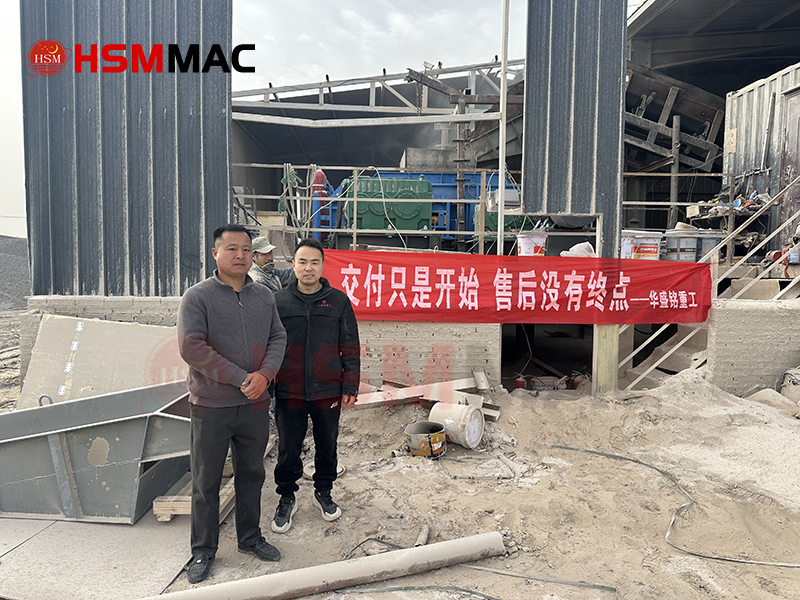
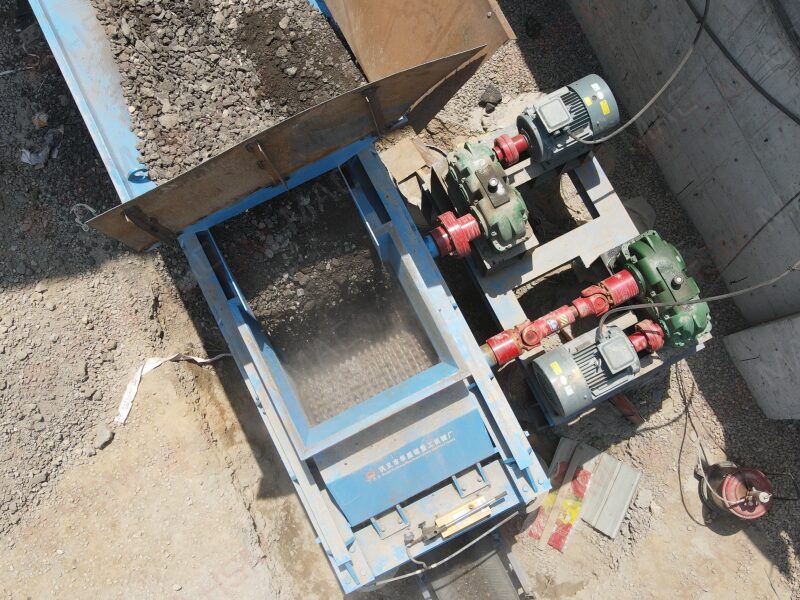
Granite sand maker delivery site
Q10: How can I get a suitable selection plan?
HSM provides free material testing. Customers can send granite samples to the HSM test centre to verify discharge size and processing performance with actual materials. Test results serve as the basis for equipment selection. Additionally, engineers can be dispatched for on-site assessment to provide a proposal based on site conditions and production requirements.For a detailed technical proposal for a granite sand maker or to schedule a test, please contact HSM Heavy Machinery → https://www.hsmmachinery.com/contact-us
 +86-13838144666
 +86-13838144666