While double roll crushers naturally generate significantly fewer fines than impact crushers due to their static compression principle, pushing fine powder yields down to an even lower level requires systematic optimization across operational and circuit parameters. By fine-tuning roll gap management, pre-scalping screening, full-width feeding discipline, reduction ratios, peripheral speeds, roll surface geometry, circulating loads, and feed moisture, Huashengming (HSM) Heavy Industry clients can minimize over-crushing across gold ore, quartz, river pebbles, and granite processing lines.
Double roll crushers rely on inter-roller compression rather than violent impact, giving them an inherent advantage over impact crushers in suppressing fine stone powder. However, to drive fine powder and slime generation down to an absolute minimum, operators must coordinate adjustments across seven key operational and circuit directions. This optimization framework is especially vital for gold beneficiation, quartz sand making, and high-spec aggregate production where excessive fines erode product value [Custom Parameters Available].
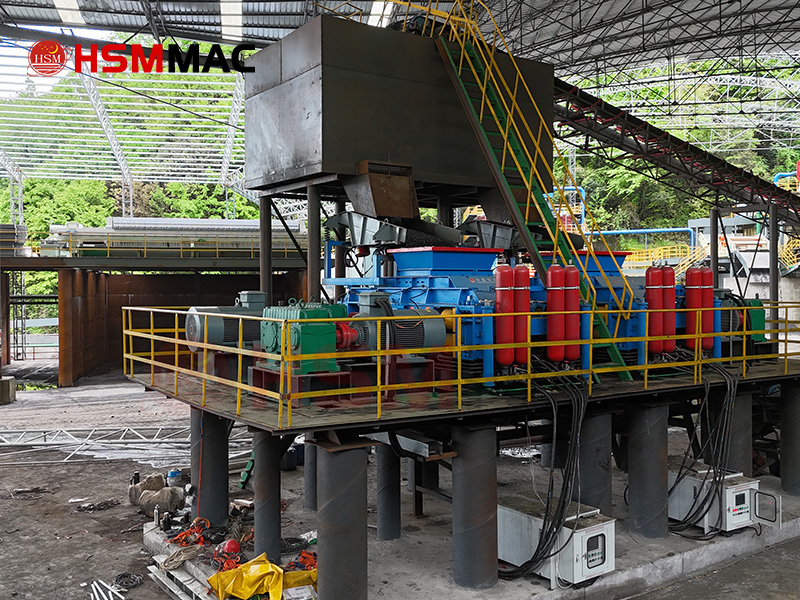
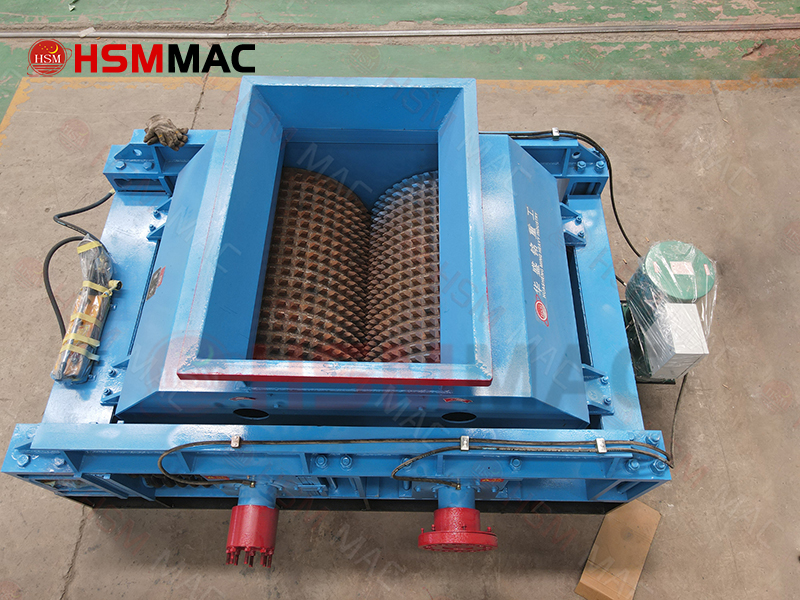
HSM Heavy-Duty Hydraulic Double Roll Crusher Operating in a Low-Fines Circuit
1. Seven Key Directions to Minimize Fine Powder Generation
- Set Reasonable Roll Gaps (Avoid Excessive Narrowing): The inter-roller gap is the primary control variable. Setting the discharge gap overly narrow triggers severe inter-particle over-crushing. Always calibrate gaps according to target product specs rather than forcing an unnecessarily tight clearance. On hydraulic models, ensure stable pressure holding and compensate for gap drift promptly as roller shells wear.
- Implement Pre-Screening Before Crushing: Route incoming feed across a scalping screen to bypass native qualified fine material around the crusher. Preventing already-sized particles from entering the crushing chamber stops them from being re-squeezed into fine dust, yielding an immediate, highly noticeable drop in overall powder percentages.
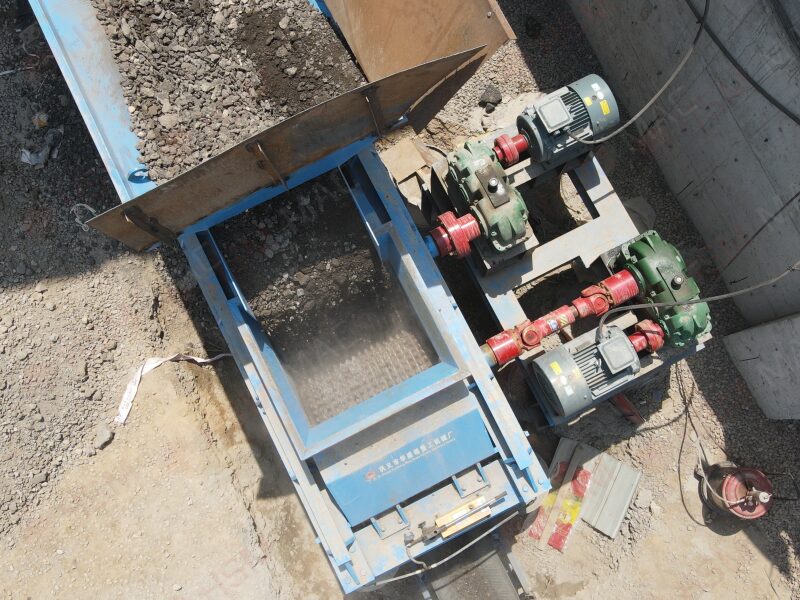
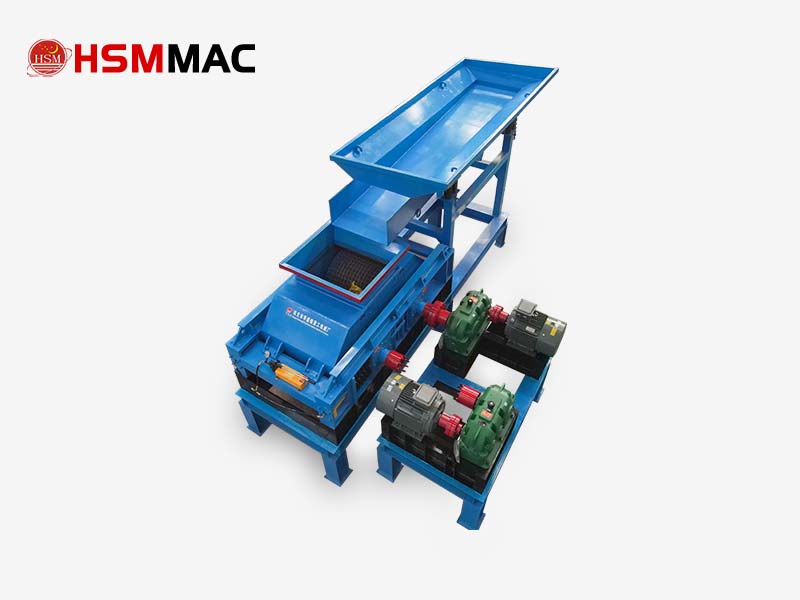
- Control Feeding: Stable, Uniform, and Non-Overloaded: Use a vibrating feeder to distribute material evenly along the entire roller length, eliminating localized stacking, choking, and off-center loading. An overfilled crushing chamber forces particles to grind against one another, causing fine powder yields to spike. Match feed rates strictly to rated machine capacity.
- Control Feed Sizing & Limit Reduction Ratios: Keep single-stage reduction ratios within 3:1 to 5:1. Avoid forcing large, hard rocks to undergo extreme size reduction in a single pass. If high reduction is required, adopt multi-stage progressive crushing to eliminate the extreme nip stress that generates micro-fines.
- Optimize Roll Speed (Variable-Frequency Control): On VFD-equipped models, lower peripheral roller speeds when throughput targets permit. Higher rotational speeds increase particle shear friction and residence time in the nip zone, whereas low-speed compression ensures rapid discharge and minimal over-crushing.
- Strategic Roll Surface Selection: When ultra-low fines are required, prioritize smooth shell profiles over aggressive toothed rolls (which tend to generate more splitting dust). For abrasive hard rock, specify thickened high-chromium alloy shells that maintain a smooth, concentric wear profile. For moist or sticky ores, install scraper assemblies to prevent compacted mud cakes from forming and grinding into excess fines.
- Closed-Circuit Screening & Circulating Load Control: Pair the crusher with a downstream vibrating screen to separate oversize particles and route them back for re-crushing. However, avoid running an excessively high circulating load; heavy internal recirculation subjects rock to repeated crushing cycles, causing fine powder levels to climb steadily.
2. Managing Feed Moisture Content
Feed moisture directly influences fracture mechanics. Excessively dry and brittle ores fracture explosively into airborne dust upon contact, while overly wet, clay-bearing ores adhere to the rollers and form compacted surface cakes. Keeping feed moisture within a balanced operating window stabilizes material flow and prevents frictional grinding caused by blinding or caking [Custom Parameters Available].
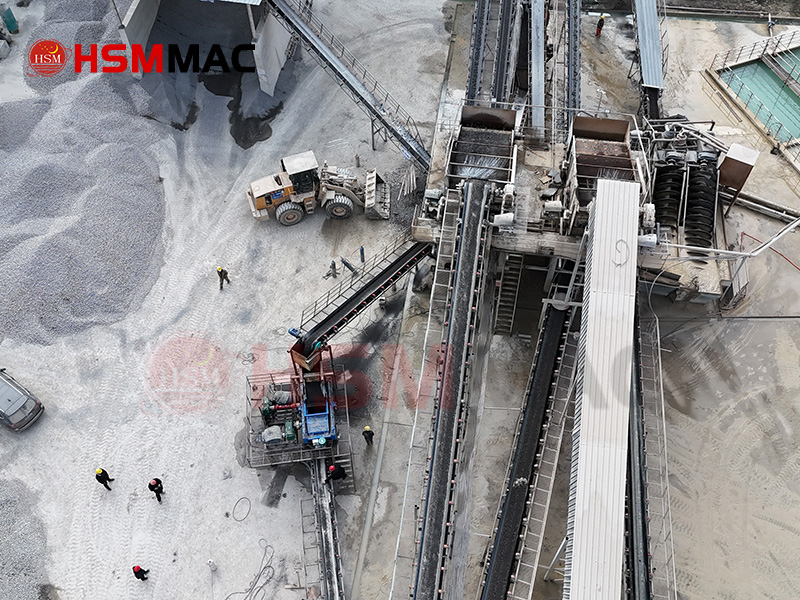
Closed-Circuit Vibrating Screen
3. Important Technical Boundary & Alternative Solutions
Process Limit Reminder: A double roll crusher cannot achieve absolute zero fine powder due to the natural physics of compressive rock fracture. If an industrial application demands near-zero fines, standalone crushing alone cannot suffice. For specialized flowsheets requiring ultra-low fines or advanced inter-particle bed comminution, an HSM High-Pressure Grinding Roll (HPGR) is available as an engineering alternative [Custom Parameters Available].
 +86-13838144666
 +86-13838144666