Roll Crusher Solutions for Sand Making Production Lines
Roll Crusher Solutions for Sand Making Production Lines Crushing Solutions
Manufactured sand has become a critical raw material in construction, infrastructure, and concrete production. With natural sand resources depleting and environmental regulations tightening, aggregate producers are turning to efficient crushing technologies to produce high-quality sand from rock. ……
- Productive Capacity:
- Finished Product Size:
- Included Equipment:
Roll Crusher Solutions for Sand Making Production Lines Crushing Solutions
Manufactured sand has become a critical raw material in construction, infrastructure, and concrete production. With natural sand resources depleting and environmental regulations tightening, aggregate producers are turning to efficient crushing technologies to produce high-quality sand from rock. Among these technologies, the double roller crusher — commonly known as a roll crusher — is gaining attention as a reliable and cost-effective solution in sand making circuits. This article explores how roll crushers contribute to sand production, their key advantages, typical configurations, and real-world performance.
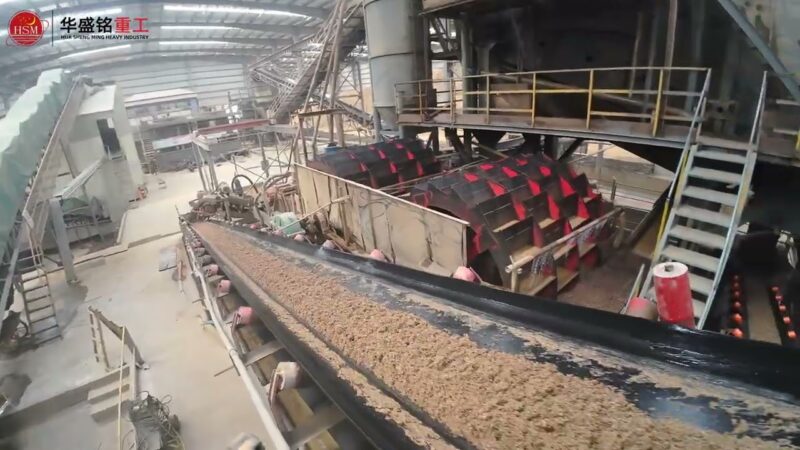
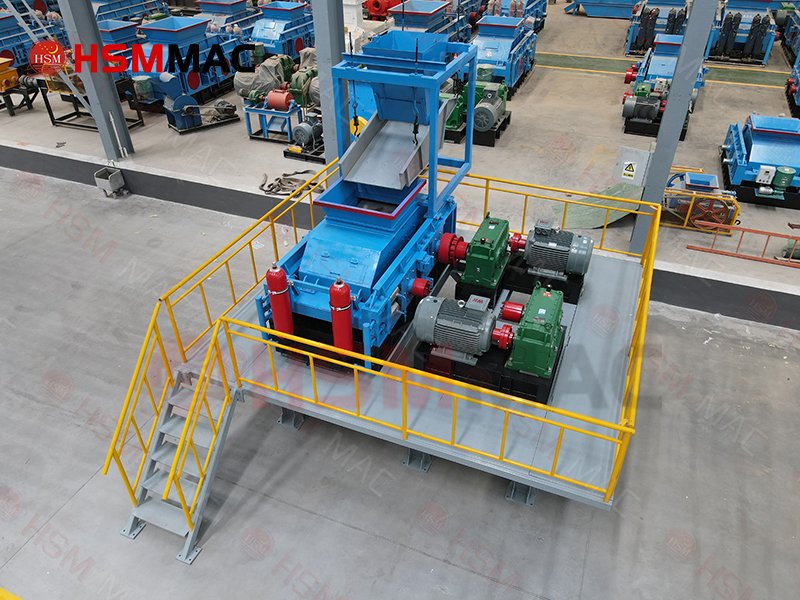
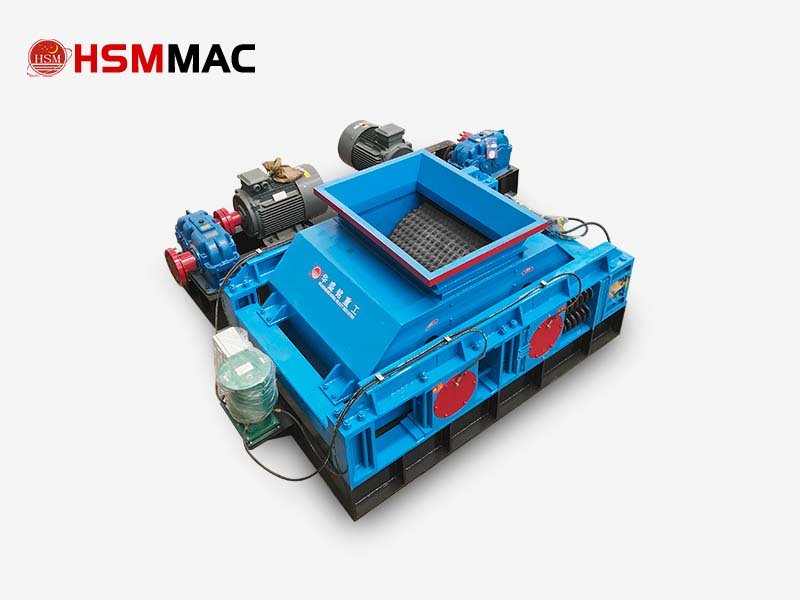
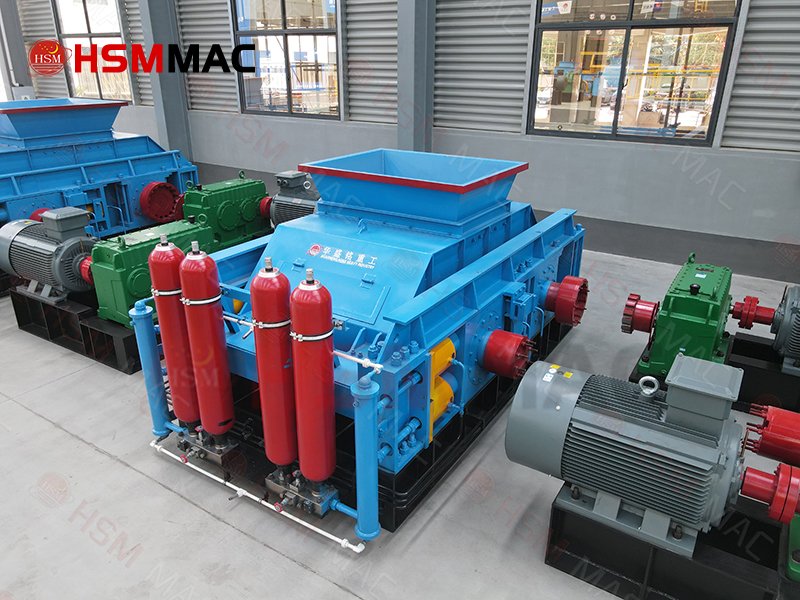
double roll crusher for sand making
The Role of Roll Crushers in Sand Production
In a sand making production line, the goal is to convert coarse aggregates into fine particles with a controlled size distribution, typically below 4.75 mm. While vertical shaft impact (VSI) crushers and cone crushers are often the primary workhorses, roll crushers serve a crucial complementary role — especially in the secondary and tertiary crushing stages for medium-hard materials such as limestone, dolomite, and some types of granite.
Roll crushers excel at producing particles with a narrow size range and low amounts of ultra-fine material. They are particularly effective as:
-
Pre-grinders before a VSI crusher, reducing feed size and improving final sand quality.
-
Tertiary crushers that directly produce sand-sized particles from smaller feed, minimizing the need for recirculation.
-
Size-reduction units for raw materials with high moisture content or clay, where impact crushers may clog.
How a Roll Crusher Works
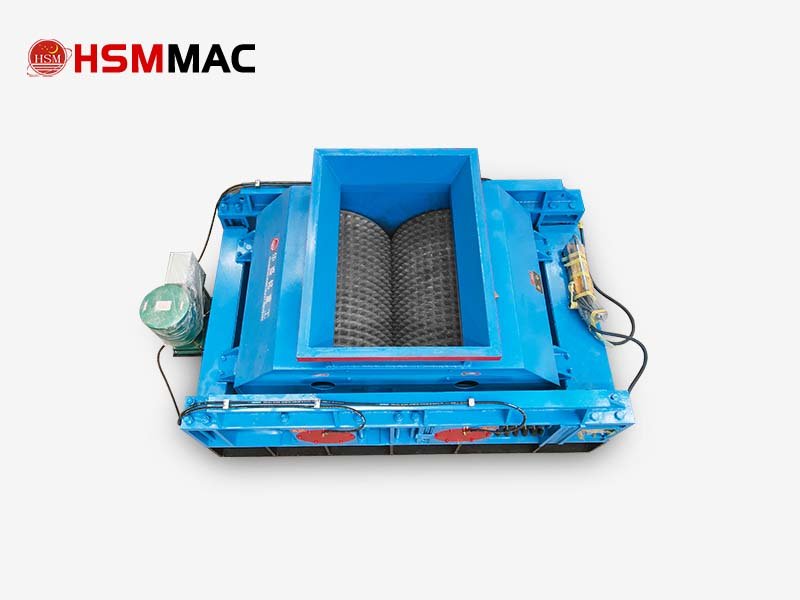
A double roller crusher consists of two counter-rotating rolls — one fixed and one movable — mounted in a heavy-duty frame. Material is fed into the gap between the rolls and is crushed by compression as the rolls rotate toward each other. The gap between the rolls can be adjusted to control the output particle size, typically from 2 mm to 20 mm, depending on the model and application.
Key design features include:
-
Hydraulic or spring adjustment for precise gap control.
-
Wear-resistant roll surfaces — either smooth, corrugated, or toothed, selected based on the material.
-
Low rotational speed (usually 50–200 rpm), which reduces dust and noise.
Because roll crushers rely on compression rather than impact, they produce significantly fewer fines and micro-fines than impact crushers operating at the same reduction ratio.
Key Advantages of Roll Crushers in Sand Making
1. Precise Particle Size Control and Low Over-Crushing
One of the biggest challenges in manufactured sand production is controlling the amount of material finer than 0.075 mm (micro-fines). Excessive micro-fines reduce concrete workability and increase water demand. Roll crushers, with their adjustable gap and compression crushing principle, generate a more cubical product with a predictable size distribution and typical micro-fines content of only 5–10%, compared to 15–25% for hammer mills or impactors.
2. Higher Sand Yield and Improved Gradation
Roll crushers can be tuned to maximize the production of particles in the 0.15–4.75 mm range — the core sand fraction. By setting the roll gap to the desired top size and using appropriate roll surface profiles, operators can achieve sand yields of 60–80% from a single pass, reducing the load on downstream screening and recirculation systems.
3. Energy Efficiency
Because roll crushers operate at low speeds and use compression rather than high-speed impact, their specific energy consumption is low. Typical power draw for a medium-sized roll crusher processing limestone is 0.5–0.8 kW·h per ton, significantly less than VSI crushers (1.5–3.0 kW·h/t) or cone crushers (1.0–2.0 kW·h/t) for comparable duties.
4. Excellent Wear Resistance and Low Maintenance
Roll surfaces are made from high-chromium alloy or manganese steel, and many designs allow individual segment replacement. In abrasive applications, wear life can reach 6–12 months before resurfacing or replacement. Maintenance is straightforward — roll gap adjustment and bearing lubrication are the primary routine tasks, with no need for frequent hammer or liner changes.
5. Superior Wet Material Handling
Roll crushers are not sensitive to moisture in the same way as impact crushers. Materials with up to 15% moisture content can be processed without clogging, making roll crushers ideal for sand production from wet or clay-bearing feed, such as river gravel, weathered rock, or excavated material.
6. Compact Footprint and Low Vibration
The simple, robust design of a roll crusher means it occupies less space than a comparable cone or VSI crusher and produces minimal vibration. This makes it easier to install in existing plants or mobile units.
Typical Configurations in Sand Making Lines
In a modern sand making circuit, a roll crusher is often installed as follows:
-
Feed size: 20–50 mm from a secondary jaw or cone crusher.
-
Output size: 0–5 mm, with adjustable top size.
-
Closed-circuit operation: Oversize from vibrating screens is recirculated to the roll crusher.
Selection Considerations for Roll Crushers in Sand Making
To achieve optimal performance, the following factors should be considered when selecting a roll crusher:
-
Roll diameter and width: Determines capacity and maximum feed size.
-
Roll surface type: Smooth rolls for fine crushing; corrugated or toothed rolls for larger feed or wet, sticky material.
-
Gap adjustment range: Must cover the desired product size and allow for wear compensation.
-
Feed characteristics: Hardness, abrasiveness, moisture content, and clay content.
-
Throughput requirement: Match crusher capacity with upstream and downstream equipment.
-
Automation: Modern roll crushers can be equipped with PLC controls for automatic gap adjustment and overload protection.
Conclusion
Roll crushers offer a practical, cost-effective solution for sand making production lines, particularly when processing medium-hard rocks, wet materials, or when low micro-fines content is critical. Their ability to deliver precise particle size control, high sand yield, low energy consumption, and minimal maintenance makes them a valuable addition to both new and existing sand plants.
For producers aiming to improve sand quality while reducing operating costs, integrating a double roller crusher into the crushing circuit is a proven strategy worth evaluating.
hot products
Click here to view All Services
 +86-13838144666
 +86-13838144666