Q: What is the difference between a roll crusher and a hammer crusher?
A: They differ significantly in crushing principle, applicable materials, and output control:
1. Different working principles
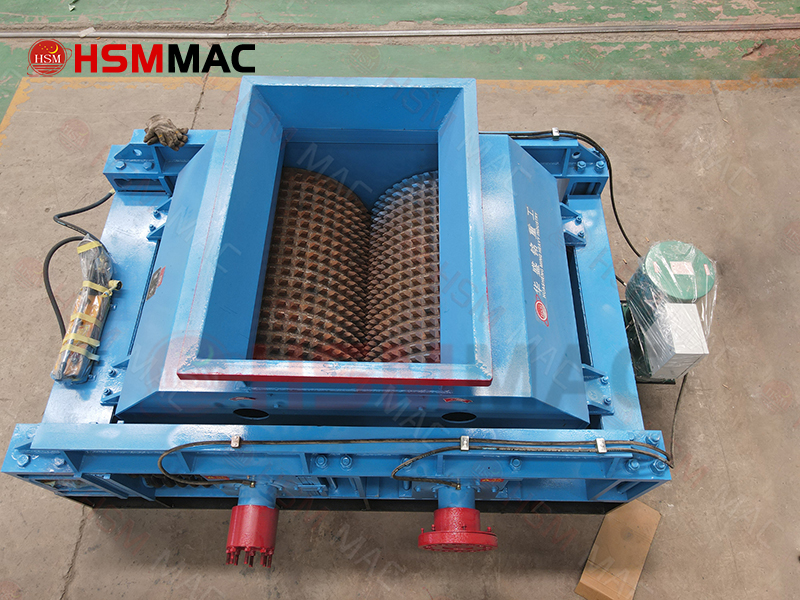
A roll crusher is a compression-type crusher. Two rolls rotate toward each other. Material falls into the V-shaped crushing chamber between the rolls and is crushed by the compression and shearing forces generated by the counter-rotating rolls, then discharged from the bottom.
A hammer crusher is an impact-type crusher. The motor drives the rotor at high speed. Material enters the crushing chamber and is crushed by the high-speed impact, shearing, and tearing of the hammers, as well as by impact between particles. Material smaller than the grate gap is discharged; larger particles continue to be struck and ground until they reach the required size.
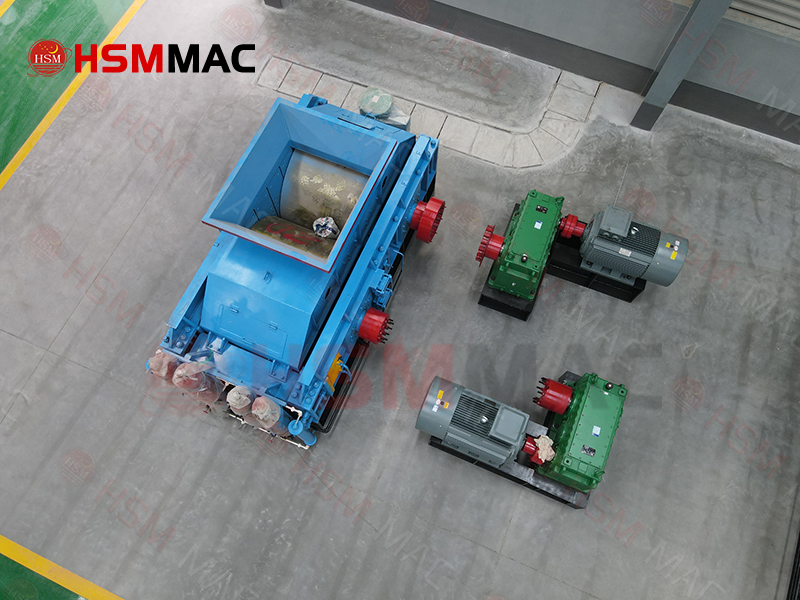
Double Roll Crusher
2. Different applicable materials
Hammer crushers are suitable for medium-hardness, brittle materials such as limestone, coal, salt, chalk, gypsum, brick, and coal gangue, with compressive strength generally not exceeding 150MPa. However, moisture content is limited to 10%-15%, as higher moisture can clog the grate.
Roll crushers handle a wider range of materials, including coal, coal gangue, coke, limestone, iron ore, and quartz, with compressive strength generally up to 160MPa. They adapt better to materials with higher moisture content and are less prone to clogging.
3. Different output size control
Hammer crushers control output size by adjusting the gap between hammers and grate or replacing the grate, typically achieving sizes under 25mm.
Roll crushers control output size by adjusting the roll gap between the two rolls, with output sizes typically adjustable between 0.5-50mm, offering more precise and convenient adjustment.
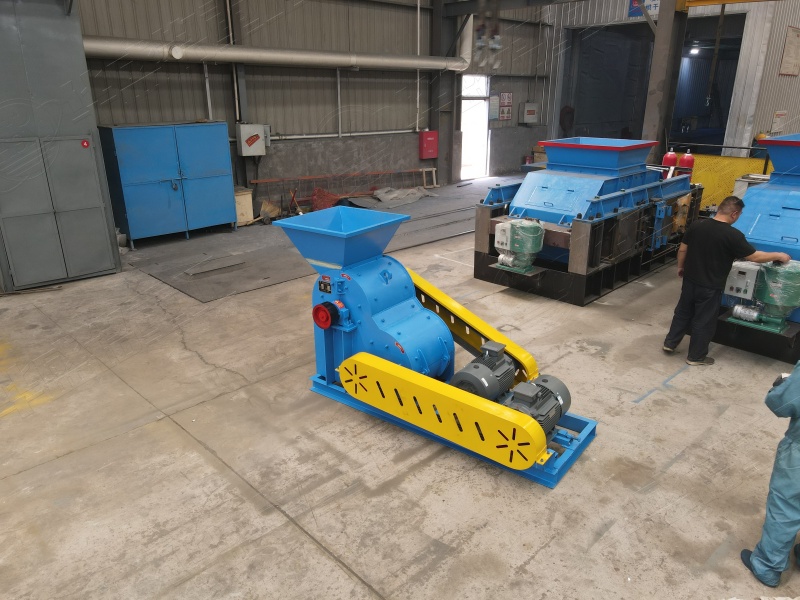
Two-stage crusher
4. Different over-crushing rates
Hammer crushers, relying on high-speed impact, repeatedly strike material in the chamber, resulting in higher over-crushing and more fines generation.
Roll crushers use compression crushing — material passes through the roll gap once and is formed in a single pass, resulting in a much lower over-crushing rate and better retention of target particle sizes.
5. Pros and cons
Hammer crushers offer a high crushing ratio (10-50), compact structure, and high production capacity — but hammers and grates wear quickly, require frequent maintenance, and have strict moisture limitations.
Roll crushers feature a simple structure, easy maintenance, convenient adjustment, and low over-crushing — but have relatively lower processing capacity and the rolls are subject to wear.
 +86-13838144666
 +86-13838144666