Ore crusher selection ultimately comes down to a clear financial balance: electricity consumed per ton, wear parts consumed, and qualified yield produced. Choosing double roll crushers for the fine-crushing stage does not rely on a single flashy parameter; rather, it delivers comprehensive savings across every page of the ledger—slashing power bills and consumable expenses while boosting finished yields and grinding mill efficiency. This article breaks down the three cost-saving links, four efficiency-boosting benefits, application boundaries, and essential parameters required for custom Huashengming (HSM) engineering proposals.
Ore crusher selection ultimately comes down to a fundamental financial balance: How much electricity is consumed, how many wear parts are ground away, and how much qualified output is produced per ton of ore? When deploying equipment in the fine-crushing stage, the advantage of double roll crushers does not lie in a single striking specification, but in the fact that every ledger sheet shows savings—lower power bills, reduced consumable expenses, higher finished yields, and direct operational benefits for downstream grinding mills.
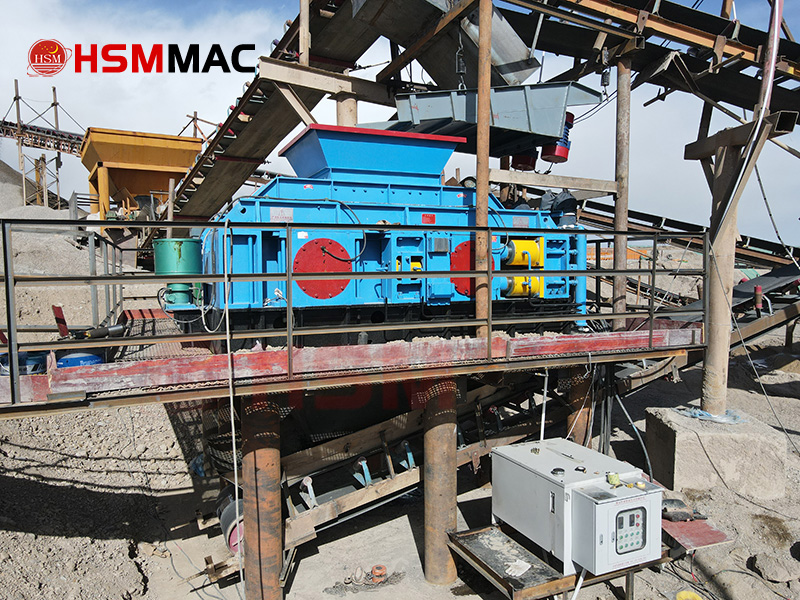
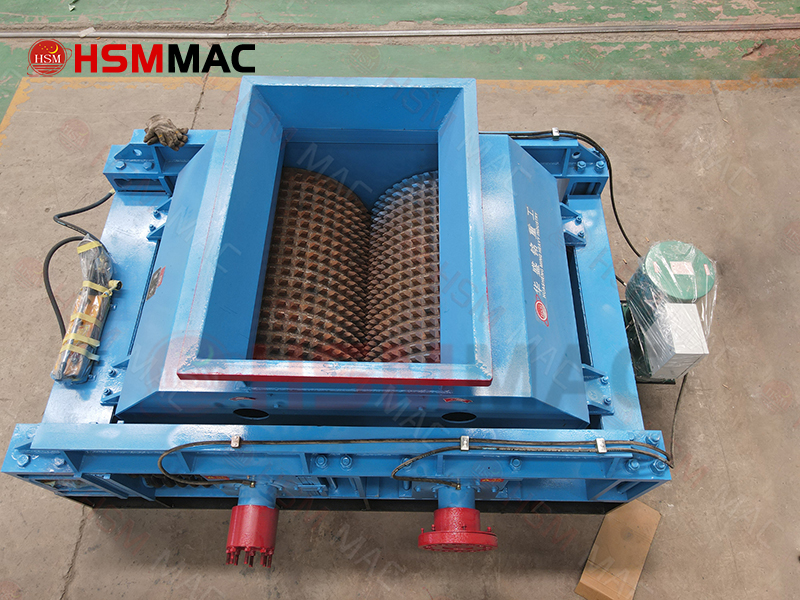
HSM Hydraulic Double Roll Crusher Operating in an Industrial Ore Processing Plant
1. Cost Reduction Across Three Critical Plant Links
| Cost-Saving Link | Engineering Mechanism | Plant Financial Impact |
|---|---|---|
| 1. Crushing Power Savings | Low-speed, single-pass compression with zero high-speed rotor windage losses. | Given massive ore tonnages, every fraction of a kilowatt-hour shaved per ton multiplies into substantial annual power savings 【Custom Parameters Available】. |
| 2. Consumable & Labor Savings | Lacks high-frequency hammers/throwers; utilizes uniform high-chromium roller shells. | Replaces constant consumable swaps with slow periodic maintenance; eliminates the need for dedicated maintenance crews. |
| 3. Downstream Grinding Savings | Compresses mill feed sizing (“more crushing, less grinding”) prior to ball milling 【Custom Parameters Available】. | Grinding consumes the plant’s largest share of electricity; lighter ball mill workloads slash total plant power bills dramatically. |
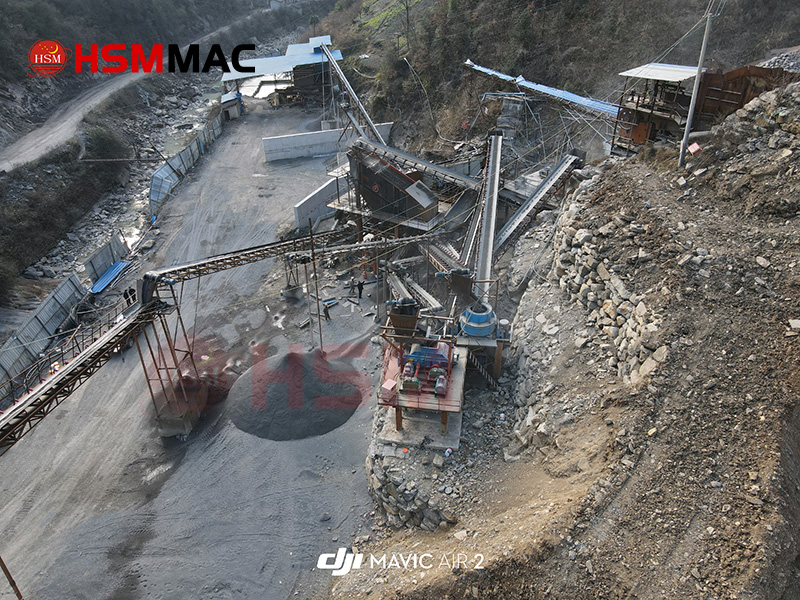
Multi-Stage Ore Crushing Circuit
2. Efficiency Gains: Higher Yields, Superior Shape & Maximum Uptime
- 1. High Finished Yield & Low Over-Crushing: Operating on a “sufficiently crushed, immediately discharged” compression logic, fine powder generation is minimized. Processing a ton of raw ore yields a higher proportion of qualified material; for beneficiation lines, low over-grinding prevents fine slimes that cause mineral loss during flotation or gravity recovery.
- 2. Superior Particle Shape & Market Value: Compression comminution yields high cubical proportions with minimal needle-flake content. Whether supplied as construction aggregate or processed mineral feed, excellent particle shape translates directly to superior market pricing power.
- 3. Minimal Stoppages & True Rated Capacity: Hydraulic safety relief systems protect against accidental tramp metal, while roller shell wear cycles are measured in months rather than days. Eliminating frequent maintenance shutdowns bridges the gap between nominal design capacity and actual daily output.
- 4. Multi-Mineral Versatility: Simple inter-roll gap adjustments allow the machine to adapt instantly when switching between mixed ores or mining faces, altering operating parameters without changing out mechanical parts or halting production.
3. Application Boundaries & Operational Positioning
- Highly Suitable Applications: Fine crushing of metallic ores (iron ore, copper ore, gold ore, etc. equipped with high-chromium wear shells) and medium-to-low hardness non-metallic minerals (calcite, barite, phosphate rock, coal-series minerals) 【Custom Parameters Available】.
- Circuit Positioning: Double roll crushers function exclusively as fine-reduction machinery. They are never intended for primary coarse reduction; upstream jaw and cone crushers must handle initial heavy reduction stages.
- Not Recommended For: Extremely muddy, high-moisture sticky ores (which require upstream washing or pre-drying facilities prior to crushing).
4. Standard Reference Configuration
Standard Proven Flowsheet:
Vibrating Feeder $rightarrow$ Jaw Crusher (Primary Coarse Reduction) $rightarrow$ Cone Crusher (Secondary Medium Reduction) $rightarrow$ Double Roll Crusher (Fine Reduction & Sizing) $rightarrow$ Circular Vibrating Screen (Closed-Circuit Oversize Return Loop) $rightarrow$ Fine Ore Bin / Grinding Ball Mill.
Capacities range from compact models (e.g., 2–10 TPH) up to heavy-duty industrial units delivering 300–400 TPH. Required mill feed sizing, ore hardness, and targeted processing capacity determine exact model selection 【Custom Parameters Available】.
5. Frequently Asked Questions
Q: Can a single double roll machine handle varying ore hardnesses?
A: Yes, inter-roll gaps adjust easily to accommodate different ore types. Equip high-chromium roller shells when processing harder abrasive ores, with specific model sizing calculated based on your hardest ore feed.
Q: Can older beneficiation plants add a double roll crusher without installing primary coarse crushers?
A: In most cases, yes. By inserting the unit downstream via “post-screening fine reduction” or parallel bypass configurations, retrofit installation is straightforward and can be completed during scheduled plant maintenance windows. Flowsheet layouts are evaluated based on existing site conditions.
6. Four Parameters Needed for Custom Cost Calculations
To calculate your plant’s specific cost-reduction potential and receive a customized equipment configuration, please provide:
- Ore Name & Compressive Hardness: (e.g., iron ore, copper ore, gold ore, calcite)
- Maximum Feed Lump Dimensions: (Top-size entering the fine crushing stage)
- Target Mill Feed Sizing or Finished Fineness: (Required output grading specs)
- Expected Processing Capacity: (Tons per hour target)
Providing these four details allows Huashengming to deliver complimentary equipment configurations and financial ROI calculations 【Custom Parameters Available】.
Referenced process descriptions serve as engineering guidelines; specific energy savings and output metrics are governed by ore material testing and formal project agreements.
Want to Calculate the Cost Reductions in Your Ore Fine-Crushing Circuit?
Contact Huashengming Heavy Industry today for factory-direct inventory, custom project engineering, and reliable global shipping for domestic and international mining projects across Africa, Southeast Asia, and worldwide 【Custom Parameters Available】!
 +86-13838144666
 +86-13838144666