In the field of concrete crushing, double-tooth roller crushers (counter-roller crushers) have become the preferred equipment for processing construction waste (such as concrete blocks and waste bricks and tiles) due to their unique crushing mechanism and performance advantages. The following is a professional interpretation from four dimensions: applicability analysis, core advantages, selection points, and precautions.
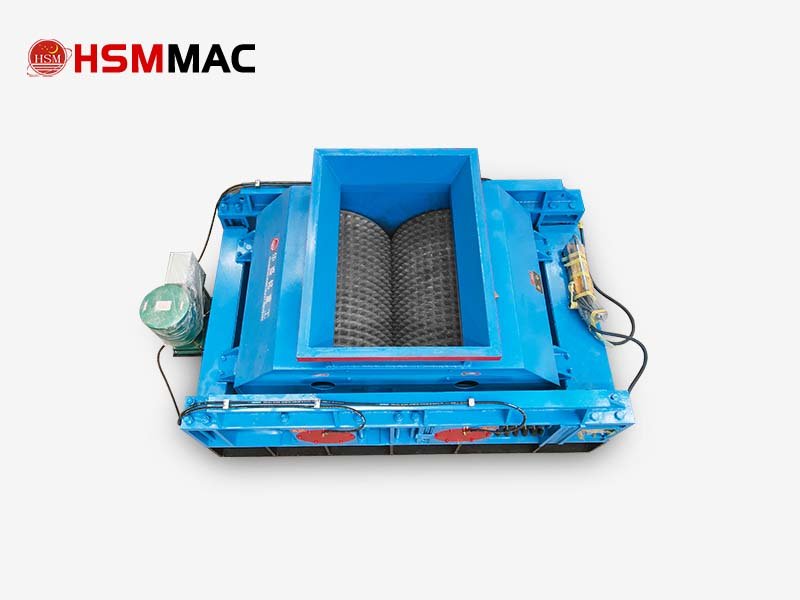
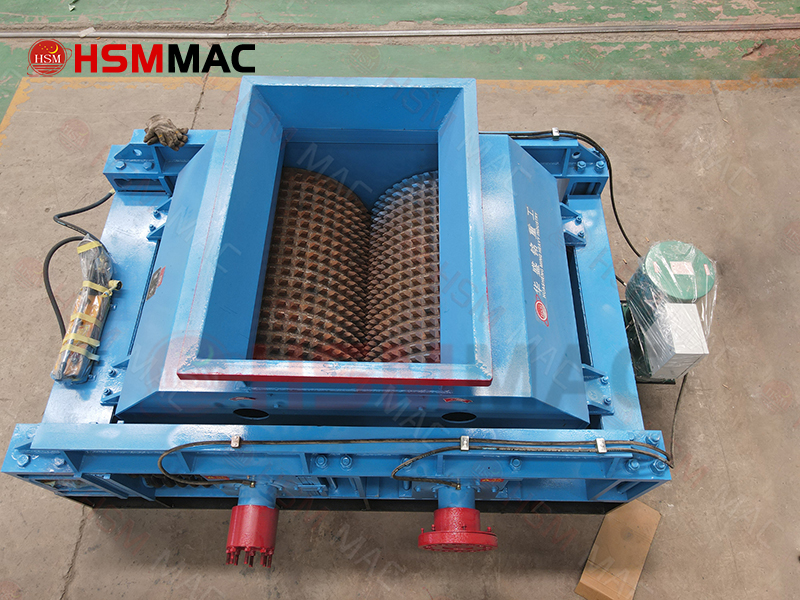
Double-Tooth Roller Crusher
1. Double-tooth roller crusher Applicability Analysis: The ideal choice for crushing medium-to-low hardness concrete
Material Property Compatibility
The aggregates in concrete (such as limestone and crushed stone) are medium-to-low hardness brittle materials (compressive strength ≤ 70 MPa), which aligns perfectly with the design intent of the double-tooth roller crusher. Through a combination of compression and shear crushing, it efficiently breaks down concrete blocks while preserving the angularity of the aggregates, thereby enhancing the compressive strength of recycled aggregates. Moisture Content Adaptability
Supports processing of wet, sticky concrete blocks with moisture content ≤15%. The shear force generated by the rotating rollers can peel off adhered asphalt or cement paste, preventing blockages (traditional jaw crushers often experience reduced efficiency due to wet material adhesion).
Application Scenario Validation
Construction Waste Recycling: Crushing concrete precast panels and brick-concrete structure waste to produce recycled aggregate (0-50mm) for roadbed filling or new concrete production.
Industrial Solid Waste Treatment: Decomposing cement kiln waste, desulphurisation gypsum, etc., to achieve resource utilisation.
2. Double-tooth roller crusher Core Advantages: Balancing Efficiency and Environmental Protection
Precise particle size control
Hydraulic/mechanical adjustable roller spacing (5-50mm), uniform output particle size (cubic content >80%), meeting recycled aggregate gradation requirements; compared to impact crushers, over-crushing rate reduced by over 30%, minimising the impact of powder on recycled aggregate performance.
Energy Efficiency and Intelligence
Low-energy operation: Low-speed, high-torque design, with energy consumption of only 0.5-0.8 kWh/ton, achieving 25% energy savings compared to jaw crushers.
Intelligent protection system: Hydraulic overload protection prevents damage from foreign objects, and automatic lubrication extends maintenance intervals.
Outstanding environmental performance
Closed structure + built-in dust-proof panels reduce dust emissions by 60% and noise levels below 85 dB; mobile models (such as tyre-mounted/track-mounted) reduce carbon emissions from transportation, meeting green construction standards.
3. Double-tooth roller crusher Selection criteria: Parameter matching and application suitability
| Parameters | Recommended range | Applicable scenarios |
| Processing capacity | 50-500t/h | Small and medium-sized construction sites (50-200 t/h) |
| Feed particle size | ≤1500mm | Large concrete precast slabs |
| Discharge particle size | 0-50mm (adjustable) | Preparation of recycled aggregates |
| Motor power | 75-450kW | High-intensity continuous operation |
Model Recommendations
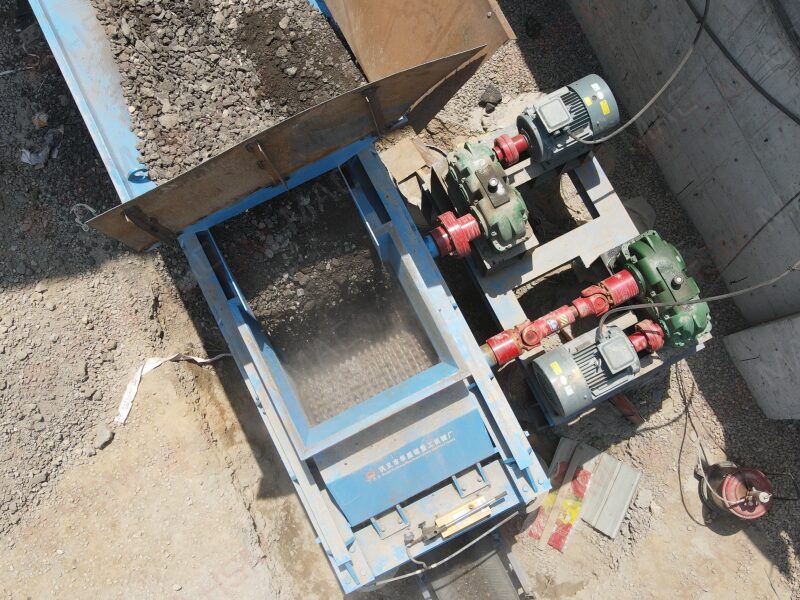
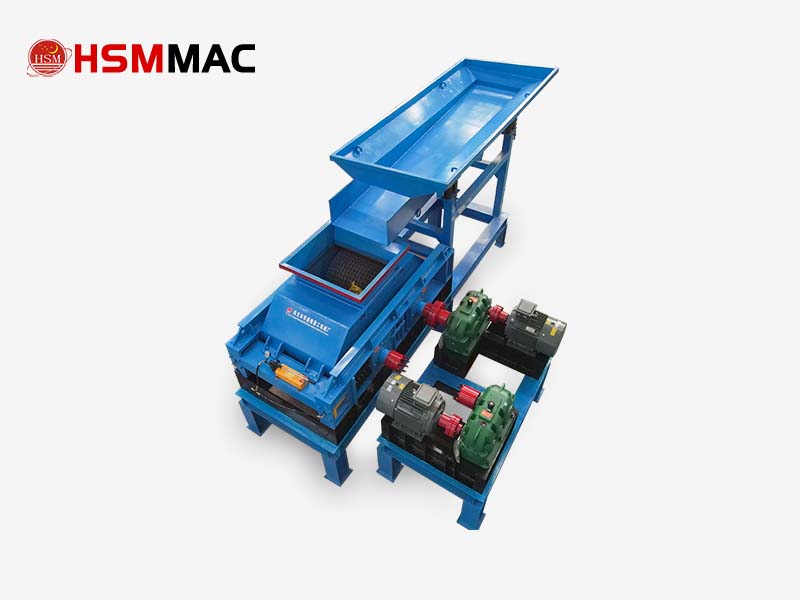
Fixed Double-Tooth Roller Crusher (e.g., 2PGC1200×1500): Suitable for large-scale processing in fixed locations, equipped with a vibrating screening system to achieve continuous production.
Mobile Double-Tooth Roller Crusher Station (e.g., YPS200 Mobile Impact Crusher): Integrates crushing and screening functions, with flexible relocation capabilities, suitable for on-site operations at construction sites.
Brand and Configuration Recommendations
Prioritise brands with patented wear-resistant alloy tooth roller technology (e.g., Huashengming’s high-chromium alloy tooth rollers), with a lifespan exceeding 8,000 hours; confirm whether it includes a metal detector (to prevent rebar damage) and an automatic iron removal system (to enhance recycled aggregate purity).
4. Double-tooth roller crusher Precautions and Maintenance Guidelines
Pre-processing Requirements
Concrete blocks must have reinforcing bars removed in advance (using a magnetic separator drum) to prevent tooth roller wear; large materials (>1.5 m³) must be pre-crushed with a hydraulic shear to prevent overload.
Maintenance Schedule
Daily Inspection: Clean residual material from tooth gaps and check lubrication system oil levels after each shift;
Regular Replacement: Wear-resistant tooth rollers must be replaced every 8,000 hours, and reducer oil must be replaced every 500 hours.
Safety Standards
Before startup, confirm that the protective cover is closed and the emergency stop button functions normally; when crushing concrete containing reinforcing bars, the metal detector must be activated to prevent equipment damage.
Double-tooth roller crusher Summary
The double-tooth roller crusher, with its precise particle size control, low over-crushing rate, high wear resistance, and anti-blocking design, has become the gold standard equipment for concrete recycling and crushing. Its economic advantages (reducing material costs by 30%-50%) and environmental benefits (reducing carbon emissions and promoting resource recycling) will be further enhanced under the ‘waste-free city’ policy. When selecting a model, it is essential to match the processing capacity, particle size requirements, and mobility needs, prioritising brands with strong wear resistance and comprehensive after-sales service.
 +86-13838144666
 +86-13838144666