River pebbles are notoriously challenging raw materials for manufactured sand production due to their high silica ($SiO_2$) content, extreme compressive hardness, and severe abrasiveness. This article examines whether double roll crushers are effective for crushing river pebbles, highlighting their exceptional output particle shape and controllable stone powder generation while detailing two operational trade-offs (moderate single-unit capacity and faster roller wear). Successful deployment depends heavily on three critical factors: feed size control, uniform volumetric feeding, and robust tramp iron/hydraulic protection. A recommended 50–80 TPH configuration and expert FAQ guidance are also provided.
River pebbles are among the most demanding materials in manufactured sand production: boasting high silica ($SiO_2$) content, extreme hardness, and intense abrasiveness that drive up equipment investment and wear-part consumption. Many clients ask whether double roll crushers can effectively break river pebbles and how well they perform. The direct answer is: Yes, they break pebbles effectively, and their strengths in particle shape and stone powder control are outstanding—though operators must accept moderate single-unit capacities and relatively fast roller shell wear. Achieving optimal results depends entirely on three critical factors: feed size control, proper feeding methods, and upstream crushing configuration.
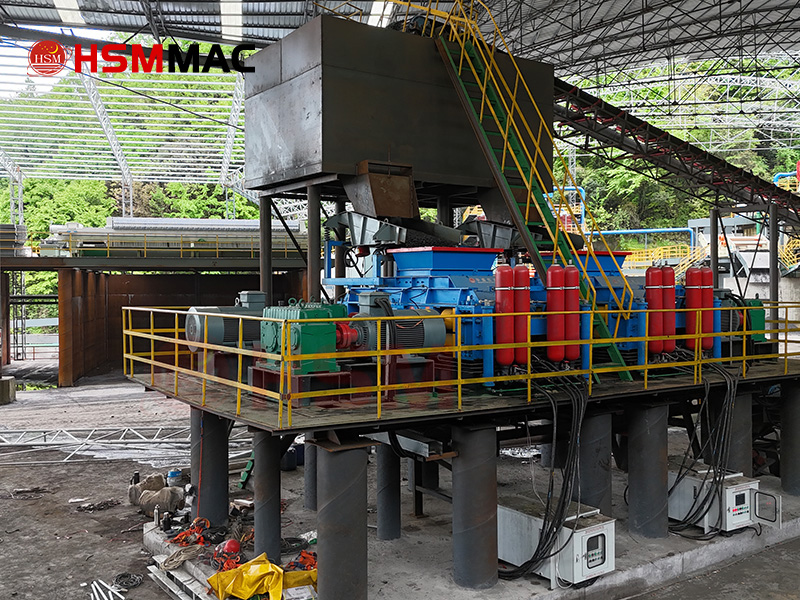
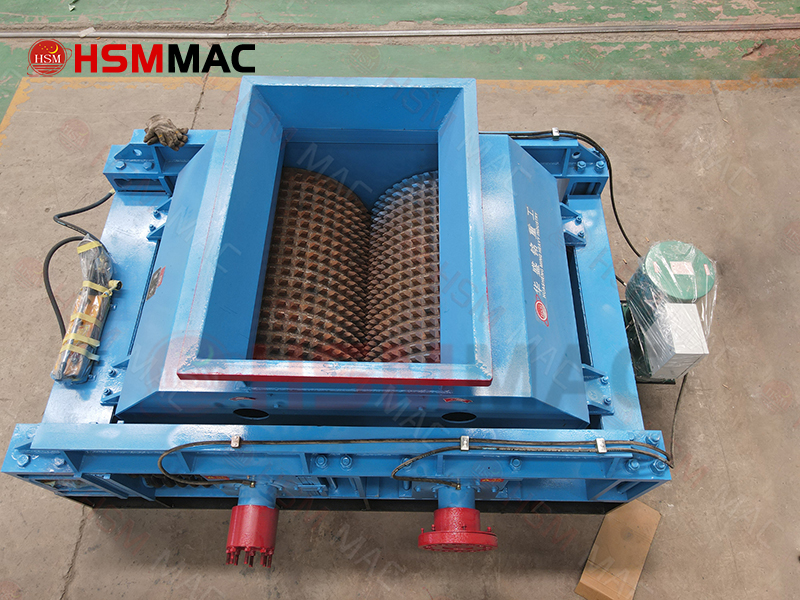
HSM Double Roll Crusher Processing River Pebbles in an Active Plant
1. Performance Overview: Strong Comminution & Excellent Sand Quality
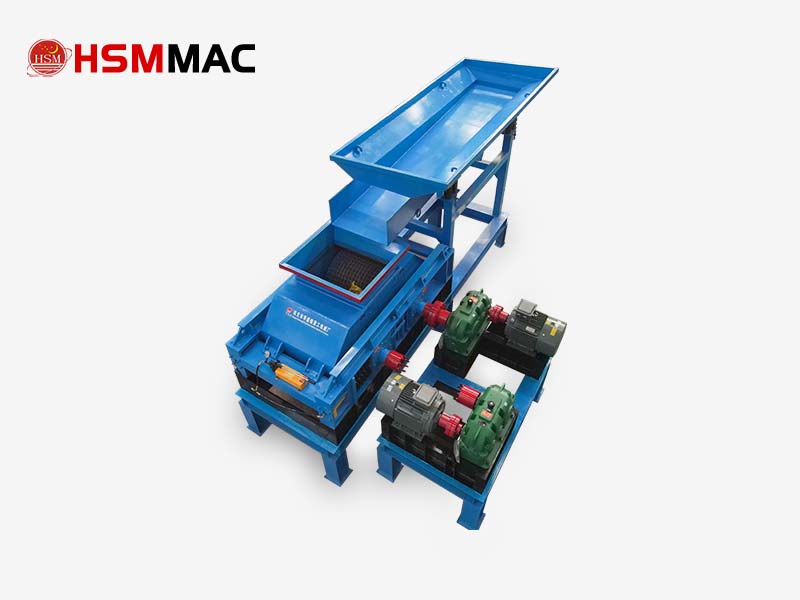
Double roll crushers operate via two counter-rotating rollers applying continuous static compression and shear forces to the material. Because river pebbles are brittle, they fracture and crush cleanly within the roll gap rather than enduring high-speed, repetitive impact smashing. This delivers three major advantages:
- Regular Cubical Particle Shape: Finished sand exhibits low needle-and-flake ratios with rough, angular surfaces that bond exceptionally well with cement slurry, earning high acceptance from commercial concrete batch plants.
- Low Stone Powder & Minimal Over-Crushing: Fine powder generation is far more controllable than in high-speed impact crushers, making it easier to adjust stone powder content and fineness modulus.
- Adjustable Discharge Sizing: Simple inter-roll gap adjustments allow seamless switching between 0–3mm and 0–5mm specifications from the same raw material source.
2. Two Operational Realities to Accept
| Operational Reality | Engineering Mechanism | Economic & Operational Perspective |
|---|---|---|
| 1. Moderate Single-Unit Capacity | Low-speed compression machine whose hourly output is constrained by roll diameter and width. | For massive single-unit outputs above 100 TPH, cone crushers combined with VSI sand makers are better suited. |
| 2. Faster Roller Shell Wear | Extreme river pebble abrasiveness causes high friction and metal erosion on roll faces. | Shell lifespan is shorter than when crushing limestone; however, low electrical power consumption and high finished sand yield offset consumable costs. Evaluate total operating economics rather than roller price alone 【Custom Parameters Available】. |
3. Three Critical Factors for Successful Operation
- ① Strict Feed Size Control: Double roll crushers function as fine-reduction machines. Raw river pebbles should always be pre-crushed to under 30mm before entering the rolls. Feeding raw boulders over 100mm directly causes output collapse, shell chipping, and heavy shock loads on main shafts 【Custom Parameters Available】.
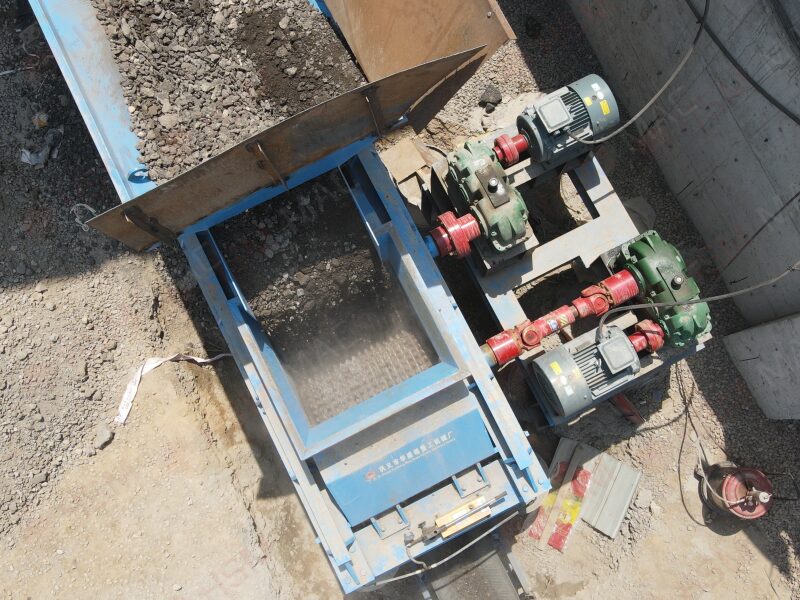
- ② Uniform Full-Width Feeding (No Bias Loading): Feed material evenly across the entire active roll width. One-sided or biased feeding creates deep localized grooves, drastically shortening overall roller shell lifespan. Proper feeding technique impacts operating costs more than the choice of roller manufacturer.
- ③ Mandatory Tramp Iron Removal & Hydraulic Protection: River pebble stockpiles frequently contain stray metal fragments. High-intensity magnetic iron separators combined with hydraulic safety relief systems are essential baseline safeguards to protect roller faces and main shafts.
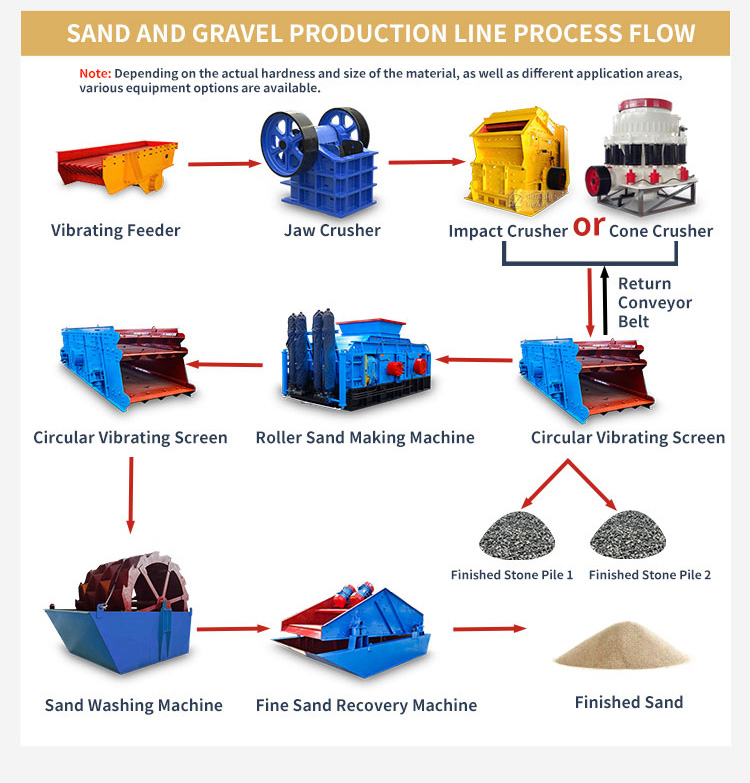
50–80 TPH River Pebble Sand-Making Plant Flowsheet
4. Recommended Configuration (50–80 TPH River Pebble Line)
Standard Proven Flowsheet:
Vibrating Feeder $rightarrow$ Jaw Crusher or Cone Crusher (Coarse/Medium Reduction) $rightarrow$ Magnetic Iron Separator $rightarrow$ Double Roll Sand Maker (Fine Reduction) $rightarrow$ Circular Vibrating Screen (Closed-Circuit Oversize Return) $rightarrow$ Bucket Wheel Sand Washer $rightarrow$ Dewatering Screen.
Using a cone crusher for the primary stage is recommended because its inter-particle comminution and low wear rates ensure exceptionally uniform feed delivery to the roll crusher stage. Exact equipment models, roll dimensions, and motor power ratings must be calculated based on actual pebble sizing, clay content, and target capacity 【Custom Parameters Available】.
5. When Double Roll Crushers Should NOT Be Used for Pebbles
- Operations requiring single-unit capacities exceeding 150 TPH.
- Plants processing large feed lump sizes without an upstream primary coarse crusher.
- Raw materials with high clay/mud content lacking any prior washing or scrubbing facilities.
For such conditions, cone crusher + VSI impact sand maker combinations are far more appropriate, or washing issues must be resolved before crushing.
6. Frequently Asked Questions
Q: Can river pebbles be fed directly into a double roll crusher?
A: Not recommended. Exceeding allowable feed size limits causes sharp drops in hourly throughput and accelerates roller shell wear. An upstream primary crusher is mandatory.
Q: How frequently do roller shells need replacement?
A: Lifespans vary widely depending on pebble hardness, feed size consistency, and feeding uniformity across plants. Huashengming provides heavy-duty high-chromium replacement wear shells upon request 【Custom Parameters Available】.
Q: What is the expected finished sand yield?
A: Sand yield depends on target fineness modulus, closed-circuit circulation load, and screening efficiency. Accurate calculations require evaluating finished 0–5mm output specifications. We recommend submitting material samples and tonnage targets for professional configuration analysis 【Custom Parameters Available】.
Ready to Process River Pebbles with High Efficiency?
Huashengming Heavy Industry provides custom selection solutions, equipment quotations, and on-site operational videos tailored to your river pebble source and target output 【Custom Parameters Available】.
Contact HSM today for factory-direct inventory, professional engineering support, and free raw material sample trial testing.
 +86-13838144666
 +86-13838144666