In bentonite processing, compressive strength is secondary to moisture management and stickiness. Wet montmorillonite clay blinds screens, cakes impact chambers, and halts high-speed hammer mills. When equipped with specialized toothed roll surfaces, Huashengming (HSM) double roll crushers overcome sticky clay through low-speed positive gripping, tearing action, and an open crushing chamber. This article explores how roll crushers eliminate cleaning downtime, preserve swelling capacity, tolerate seasonal moisture swings, and maximize uptime in bentonite processing plants.
Ask any bentonite plant operator what the crusher actually does, and you rarely hear about compressive strength. You hear about hours: hours lost unclogging vibrating screens, hours chipping dense clay cakes out of impact chambers, and hours a hammer mill sat idle because wet feed turned its grinding chamber into a solid, unyielding mass.
Bentonite (montmorillonite clay) is soft—breaking it is trivial. Keeping an industrial plant running smoothly while the clay is wet and sticky is not, and that forms the core purchasing decision. This article examines the double roll crusher from an operations manager’s perspective: not simply asking “can it crush bentonite?” (almost any machine can), but evaluating what it does to plant uptime, cleaning schedules, and finished product quality 【Custom Parameters Available】.
Note: Capacity and size figures are indicative reference values; final equipment selection is confirmed against your specific bentonite grade and moisture range.
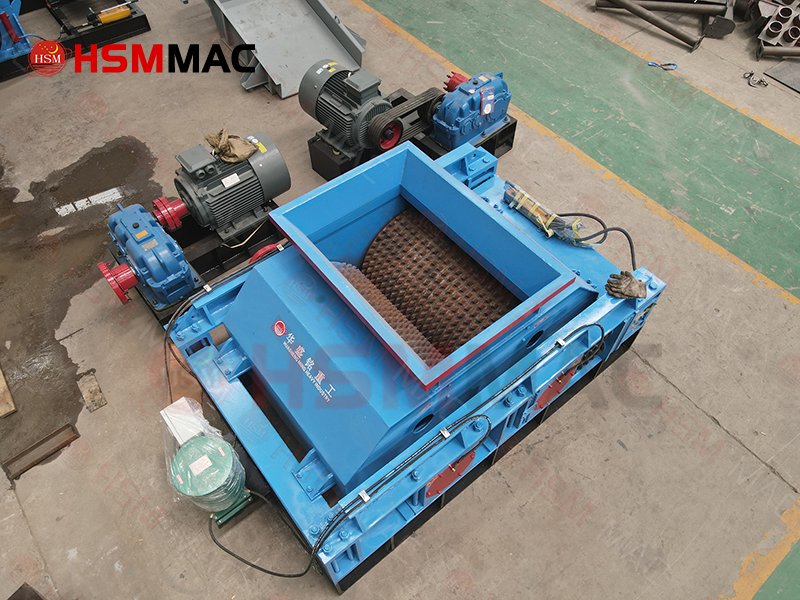
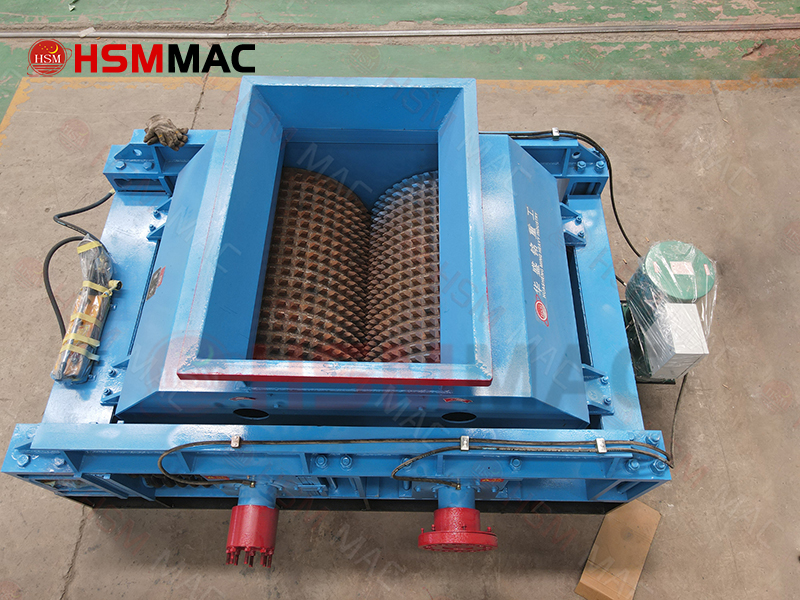
HSM Toothed Double Roll Crusher Operating in a Bentonite Plant
1. Where Stickiness Attacks a Plant—and How the Roll Crusher Answers
- Blinding & Caking $\rightarrow$ Low-Speed Tearing, Open Chamber: Wet bentonite cakes onto any surface that strikes it at high velocity: hammer faces, impact plates, and screen grids. The toothed double roll crusher features no internal classification screens and no restricted impact zones—crushing occurs strictly at the roll gap, and specialized teeth grip and tear the plastic mass instead of compacting it against a dead plate. A machine that would choke a hammer mill within an hour keeps flowing steadily through an entire shift.
- Cleaning Downtime $\rightarrow$ Less Build-Up, Planned Maintenance: Every clay cake represents an unscheduled shutdown. The roll crusher’s low peripheral speed generates minimal frictional heat and avoids compaction, drastically reducing material adhesion. Instead of emergency manual cleanouts, maintenance returns to a predictable schedule—a factor that frequently dictates crusher selection in sticky clay plants.
- Product Quality $\rightarrow$ Preserving Swelling Capacity: Bentonite is purchased for its activated properties: swelling, binding, and sealing. Aggressive high-speed impact and its associated thermal generation can degrade the exact performance characteristics customers test for, while over-crushing into fine powder makes material harder to handle and dustier to dose. Compression crushing breaks lumps to size and exits immediately, disturbing the clay crystal structure minimally 【Custom Parameters Available】.
- Moisture Swings $\rightarrow$ Toothed Roll Tolerance: As-mined bentonite moisture fluctuates with seasonal weather and bench variations. Toothed roll surfaces maintain positive traction in wet, plastic feed where smooth rolls slip and high-speed machines choke. When rainy seasons alter feed conditions, plant operators do not need to change machinery.
- Tramp Rock $\rightarrow$ Hydraulic Relief Protection: Country rock and stray metal inevitably arrive with mined ore. Hydraulic relief systems retract movable rolls instantly to pass uncrushable objects safely before returning to operating position—turning a potential bent shaft disaster into a two-second event.
2. Where the Crusher Sits in a Bentonite Flowsheet
Standard Proven Flowsheet:
As-Mined Bentonite $\rightarrow$ Toothed Double Roll Crusher $\rightarrow$ Circular Vibrating Screen (Optional) $\rightarrow$ Rotary Dryer / Grinding Mill Feed $\rightarrow$ Activated Final Product.
End-Use Grades and Crusher Functions:
- Foundry Binder / Drilling Mud Grades: Delivers consistent mill feed while preserving natural swelling performance.
- Iron Ore Pelletizing Binder: Provides uniform lump reduction ahead of thermal drying and fine pulverization.
- Civil Engineering / Sealing Grades: Acts as the primary sizing step for coarser commercial specifications.
- Cat Litter / Absorbent Grades: Establishes target granule ranges through controlled lump sizing and screening.
Most bentonite plants crush prior to drying—wet crushing is precisely the operating duty that favors specialized toothed roll machinery 【Custom Parameters Available】.
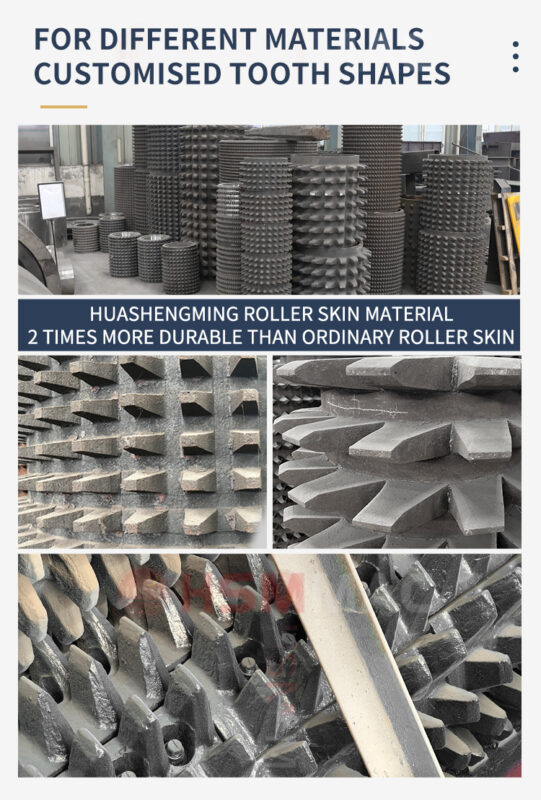
Toothed Roller Shells
 +86-13838144666
 +86-13838144666