Optimal Feed Size & Efficiency Rule:
- The “Sweet Spot” (~1/2 Maximum Limit): Maximum throughput and energy efficiency occur when the feed size is approximately 50% of the machine’s maximum rated feed opening.
- Ideal Reduction Ratio: Peak efficiency is maintained when the single-pass reduction ratio stays within the optimal 2.5:1 to 4:1 range.
- Uniformity Over Extremes: Uniformly sized material ensures stable nip angles, prevents dynamic roll slippage, and eliminates excessive liner wear.
For the exact same double roll crusher, varying the incoming feed size causes drastic performance differences. Feeding rock near the maximum design limit leads to roll bounce, material bridging, and accelerated liner wear; conversely, feeding material that is too fine underutilizes the compression zone. The highest throughput and lowest energy consumption occur when raw material sits in the mid-range of allowable feed dimensions and exhibits uniform grading. Huashengming (HSM) assists customers with precise model selection based on feed particle size distribution and real-world trial testing.
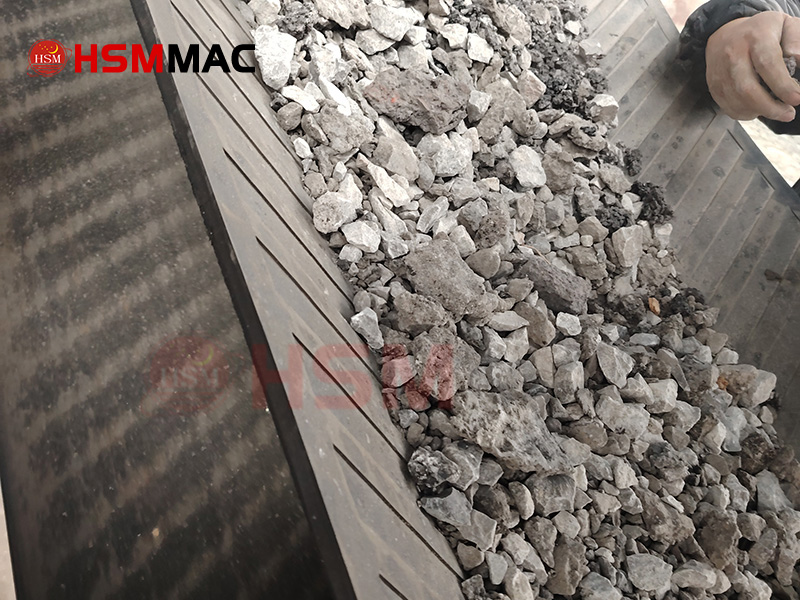
Actual Footage of Feed Material Entering a Double-Roll Crusher
1. Why Feed Size Directly Controls Crushing Efficiency
Double roll crushers rely on the friction between two counter-rotating roller surfaces to draw material into the crushing chamber. The particle diameter directly dictates whether material is gripped instantly or slips:
• Roller Gripping & Nip Angle Mechanics
If rock dimensions exceed the maximum friction threshold, the rollers bounce or slide against the material face rather than gripping it, resulting in severe local surface gouging and throughput drops.
• Compression Density & Bed Crushing
Properly sized rock forms a continuous choke-feed bed between the rolls. This inter-particle compression maximizes energy transfer, turning power draw directly into particle breakage.
• Continuous Processing Flow
Well-matched feed sizing passes smoothly through the pinch zone without causing sudden hydraulic relief displacement or motor current spikes.
2. Defining the Peak Efficiency Operating Zone
- Mid-Range Dimension Rule (~1/2 Max Limit): Operating at roughly 50% of the maximum feed aperture allows immediate gripping without material hesitating at the throat.
- Strict Reduction Ratio Alignment (2.5:1 to 4:1): Keeping the ratio of incoming diameter to product discharge gap within 2.5:1 to 4:1 delivers optimum single-pass crushing efficiency.
- Consistency & Uniformity: Uniform sizing allows operators to set tight, fixed roller gaps, yielding highly predictable particle sizing with low fine generation.
3. Consequences of Incorrect Feed Sizing
| Feed Size Condition | Operational Impact | Efficiency & Equipment Effect |
|---|---|---|
| Too Close to Upper Limit | Rock bounce, throat bridging, slow ingestion. | Reduced hourly tons, accelerated roller wear, high power spikes. |
| Too Small / Under-Sized | Insufficient nip engagement across roll face. | Wasted machine capacity, low compression, inefficient energy use. |
| Highly Mixed / Erratic Sizes | Large rocks block small rock passage; uneven gap loading. | Uneven liner wear grooves, unstable discharge grading, lower overall capacity. |
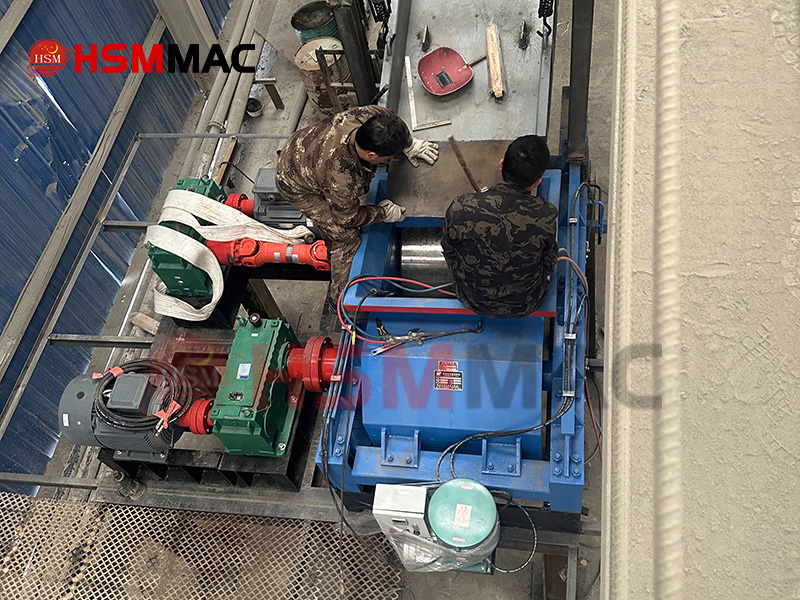
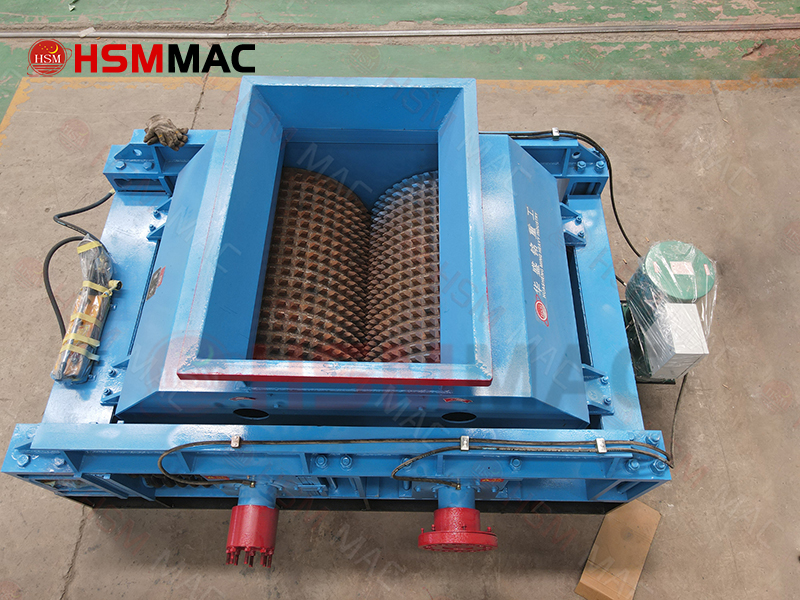
Huashengming Double-Roll Installation Site
4. Plant Strategies to Guarantee Peak Efficiency
- Size-Based Equipment Selection: Share raw stone sizing charts and maximum block dimensions with HSM engineers to configure the optimal roller diameter 【Custom Parameters Available】.
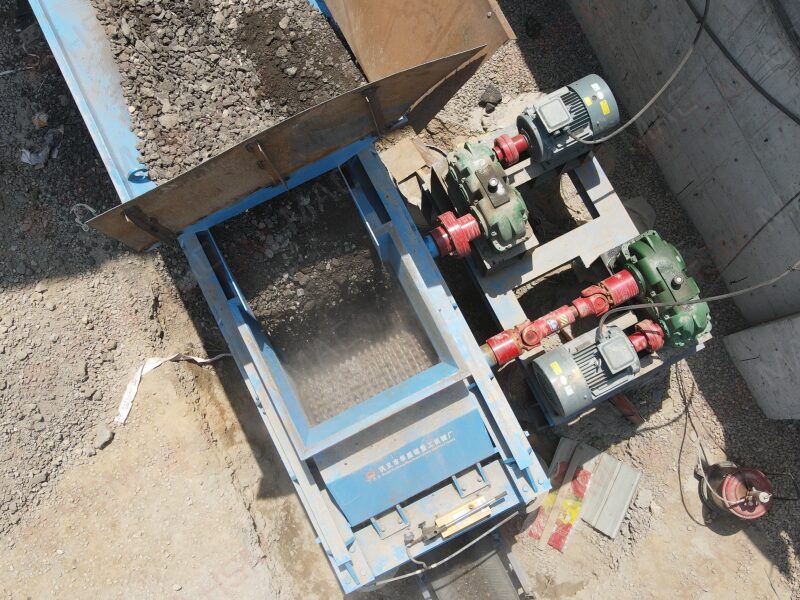
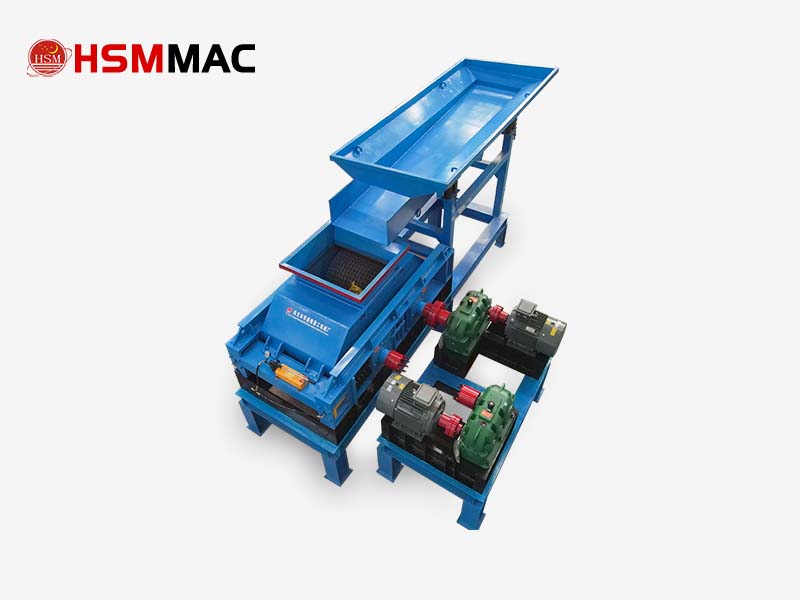
- Controlled Vibrating Feeding: Pair the double roll crusher with a regulated vibrating feeder to maintain a consistent full-width stream, preventing localized wear and sudden surge loads.
- Pre-Screen Scalping: Implement a pre-screen or grizzly to divert extreme oversize rocks or excessive natural fines before entering the double roll crusher.
- Material Sample Verification: Send rock samples to Huashengming for teststand trials to verify throughput rate, motor draw, and exact discharge grading.
Efficiency Rule of Thumb: Target a feed size around 50% of the max feed rating with a 2.5:1 to 4:1 reduction ratio.
Contact Huashengming today to arrange free material trial crushing and custom equipment sizing.
 +86-13838144666
 +86-13838144666