In the field of non-metallic mineral processing, clay minerals such as bentonite and kaolin are widely used in industries such as ceramics, papermaking, coatings, drilling mud, environmental adsorbents, and cosmetics due to their unique physical and chemical properties. However, these materials face a common challenge in the crushing stage: they are soft but highly adhesive, and are prone to excessive pulverization or agglomeration under high-speed impact, resulting in loss of effective particles, changes in physical properties, and even equipment blockage. Therefore, choosing the right crushing equipment is crucial. Practical experience has shown that the double roll crusher, with its low-speed extrusion, controllable force, and no high-speed impact process characteristics, is an ideal choice for crushing bentonite and kaolin, effectively avoiding excessive pulverization and preserving the original properties and value of the minerals.
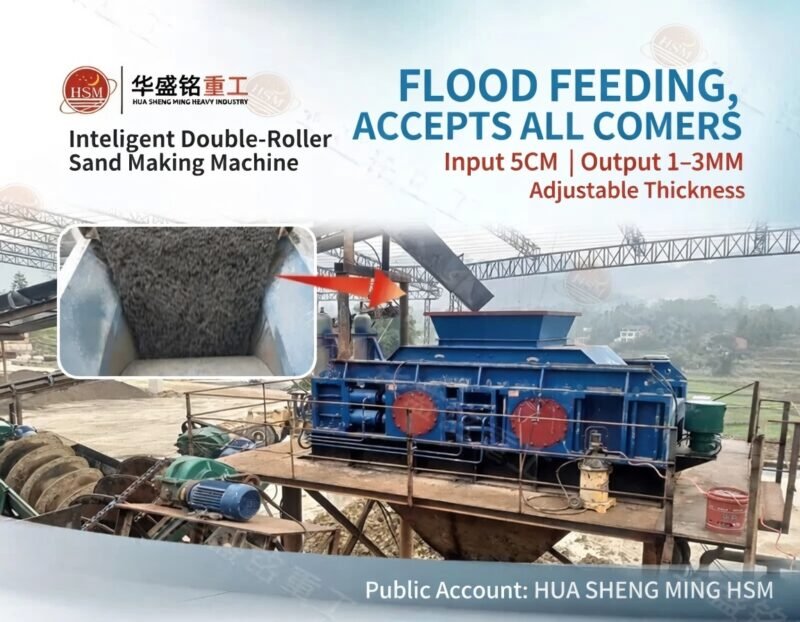
crusher
I. Crushing Characteristics and Challenges of Bentonite and Kaolin Bentonite (mainly composed of montmorillonite) and kaolin (mainly composed of kaolinite) are both layered silicate minerals with low hardness (Mohs hardness 1–3), but they have strong water absorption, plasticity, and plate-like structures. During the crushing process, if impact-type equipment such as hammer crushers or impact crushers are used, the following problems may occur: Excessive pulverization: High-speed hammer heads crush the minerals into ultra-fine powder, destroying their plate-like crystal structure and reducing key indicators such as cation exchange capacity (CEC) or whiteness; Agglomeration and lumping: Fine particles re-agglomerate due to static electricity or moisture, forming “false particles”, affecting subsequent dispersion and application; Equipment clogging: Especially in slightly humid conditions, the material easily adheres to the hammer heads, screen plates, or inner walls of the cavity, causing frequent blockages and requiring frequent machine shutdowns for cleaning; Introduction of iron contamination: High-speed friction easily wears metal parts, and iron filings mix into the product, affecting the purity requirements of applications (such as ceramic glazes, cosmetic fillers). These problems not only reduce product quality but also significantly increase energy consumption and maintenance costs, seriously restricting enterprise benefits.

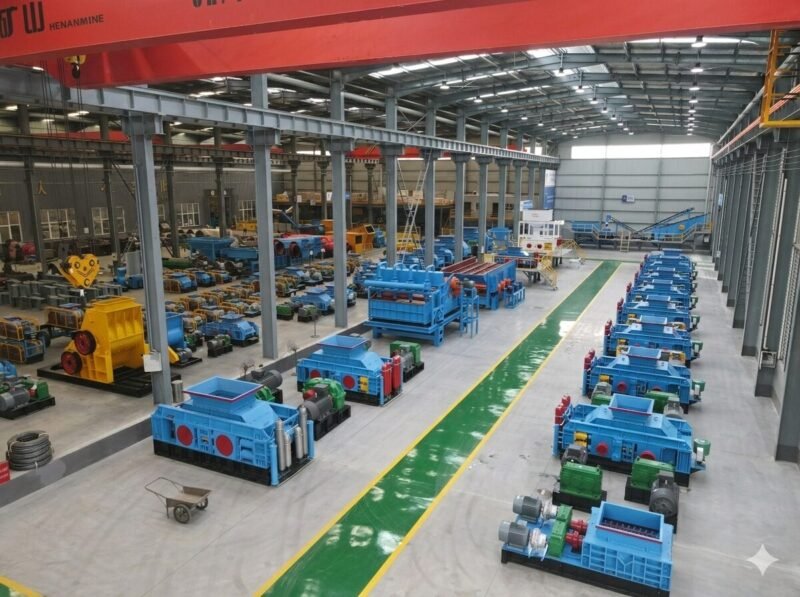
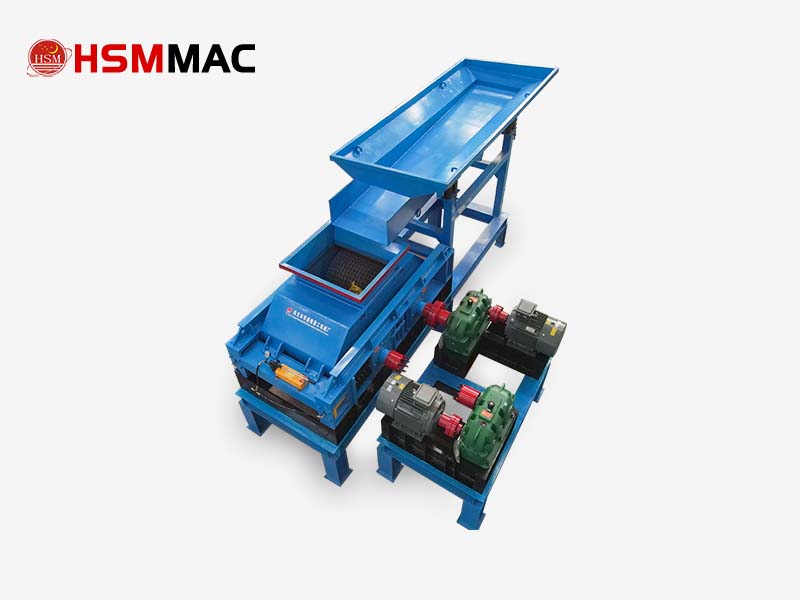
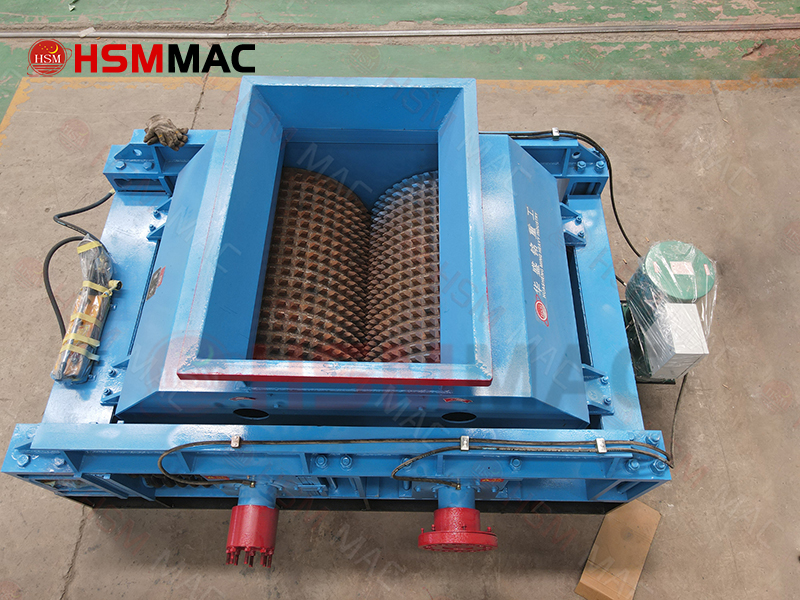
roll crusher product Display
II. Why is the Double Roll Crusher More Suitable? The double roll crusher adopts a low-speed, static pressure, and layering crushing principle, completely avoiding the drawbacks of impact-type equipment. The material is evenly fed from the top and enters between two relatively rotating rollers, where it is crushed and peeled off under continuous and controllable pressure. This process has three core advantages:
1. Controllable crushing force, avoiding excessive pulverization By adjusting the gap between the two rollers or the hydraulic pressure, the crushing intensity can be controlled. For soft minerals like bentonite and kaolin, a “light pressure” mode can be adopted, only separating the lumps into original particles, preserving the plate-like structure and surface activity, and ensuring that the product performance does not deteriorate.
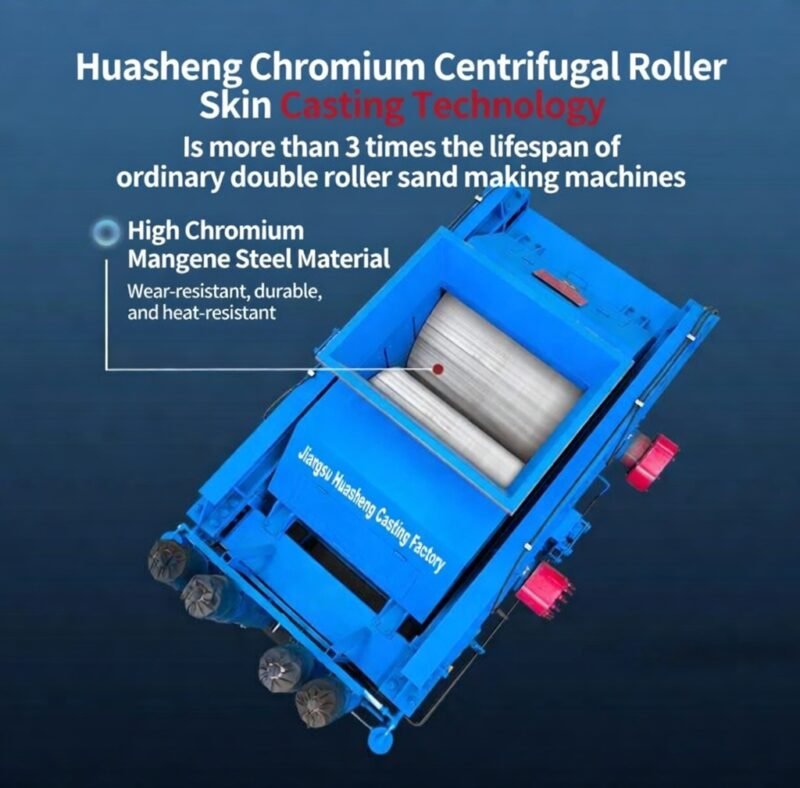
2. Uniform particle size of the output, no excessive fine powder The crushing by extrusion causes the particles to naturally separate along the cleavage planes, and the finished product has a concentrated effective particle size range with low content of ultra-fine powder. For example, when the target output is 20–80 mesh, over 90% of the particles are within this range, eliminating the need for complex screening and return feeding, and improving the yield of the finished product.
3. Closed structure, preventing contamination and clogging The entire machine is designed as a closed system, and the roller surface can be selected as smooth or shallow grooved, combined with low-speed operation, the material is less likely to splash or adhere. Even when processing slightly moist materials, it can maintain stable operation. At the same time, key contact parts can be made of stainless steel or ceramic coatings to prevent iron contamination and meet the strict purity requirements of the market.
III. Economic Operation and Environmental Advantages The double roll crusher has a simple structure, no high-speed wear parts, and only requires lubrication of the bearings during daily operation, with low maintenance costs. The roller surface is made of wear-resistant alloy materials, and its service life can last for several years in soft mineral conditions. Low-speed operation results in low noise and low dust, and combined with a simple dust removal system, it can meet environmental acceptance requirements, making it particularly suitable for factories located in industrial parks or near residential areas. In addition, due to the absence of excessive pulverization, the raw material utilization rate is high, reducing waste; the quality of the finished product is stable, and the selling price is higher. A ceramic raw material factory reported: “After switching to the double roll crusher, the whiteness of kaolin increased by 2%, and the customer repurchase rate significantly increased.”
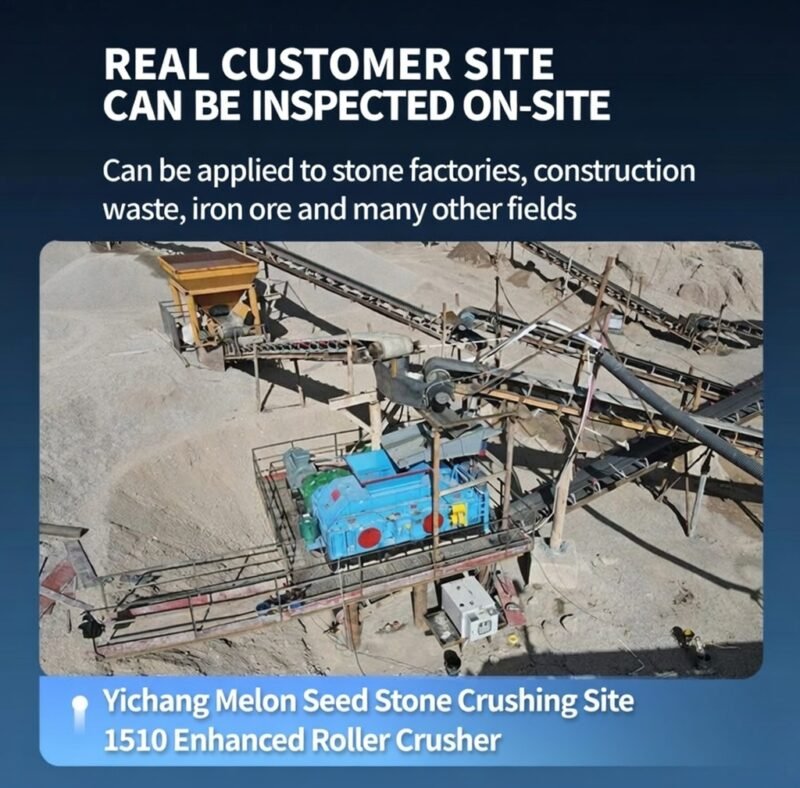
IV. Selection and Implementation Suggestions To fully leverage the advantages of the double roll crusher, it is recommended to: Control the moisture content of the feed: Use dry materials as much as possible. If processing wet materials, consider equipping with anti-sticking roller surfaces or heating feed devices; Pre-screening and impurity removal at the front end: Remove hard impurities such as stones and wood chips to protect the roller surfaces; Choose professional manufacturers: Prioritize suppliers with experience in non-metallic mineral crushing and support for material customization (such as stainless steel chambers); Conduct on-site trial operation with materials: Test the particle size, fluidity, and whether there is agglomeration of the output to ensure it meets the requirements of downstream processes.
 +86-13838144666
 +86-13838144666