Industrial slag varies significantly depending on its origin—ranging from air-cooled blast furnace slag (BFS) to metal-laden steel slag. Crushing lumpy, air-cooled slag into high-value road base, commercial aggregate, or pre-grind feed requires equipment engineered to handle extreme abrasiveness and residual tramp iron. This article details why Huashengming (HSM) Heavy Industry’s double roll crushers excel in slag processing lines, combining low-speed compression, high-chrome metallurgy, and automatic hydraulic tramp-iron relief for maximum uptime and cost efficiency.
“Slag” is not a single material—and that distinction changes your crusher choice completely. Industrial slag encompasses several distinct metallurgical by-products, including air-cooled blast furnace slag (BFS) from ironmaking, steel slag from steelmaking, and their various processed forms. The optimal crushing strategy depends entirely on the specific slag type you handle, and the double roll crusher occupies a vital, high-tonnage position within that landscape: converting lumpy, air-cooled slag into saleable aggregate or pre-grind mill feed.
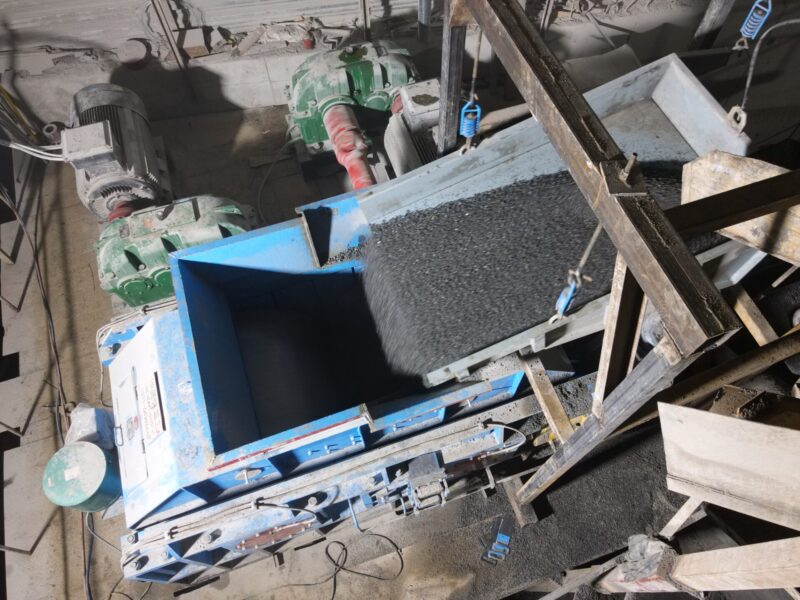
Heavy-Duty HSM Double Roll Crusher Operating in a Slag Processing Yard
1. What Slag Processing Demands From a Crusher
Air-cooled slag—the most common processing feed—discharges from yards as lumpy, vesicular (porous), highly abrasive material. It must be systematically crushed before serving as road base, concrete aggregate, or pre-grind feed for GGBS (Ground Granulated Blast-Furnace Slag). Granulated or pelletized slag, by contrast, is already fine and glassy, typically bypassing primary crushing directly to fine grinding.
For lumpy slag requiring size reduction, the double roll crusher’s primary objective is to break material to a consistent, predictable top size without burning through expensive wear parts or choking on material quirks 【Custom Parameters Available】.
2. Why a Roll Crusher Suits Lumpy Slag Duty
- Compression Crushing Suits Hard, Abrasive Slag: Slag is extremely hard and abrasive, with steel slag carrying unreduced metallic iron—exactly the feed that destroys high-speed impact hammers and blow bars. The roll crusher’s low-speed compression avoids repeated high-velocity impacts. Equipped with heavy-duty high-chrome alloy roll shells, wear becomes a planned, scheduled, single-part expense rather than a daily breakdown hazard.
- Automatic Tramp-Iron Protection: Steel slag routinely contains scrap steel, unreduced metallic inclusions, and occasional tramp metal. The hydraulic relief system retracts the movable roll automatically to pass uncrushable metal and resets instantly—turning a potential shaft-breaking breakdown into a brief, non-disruptive event. On steel slag, hydraulic tramp relief is a vital necessity for daily operation.
- Consistent Product Sizing: Whether destined for road base aggregate or pre-grind ball mill feed, a consistent top size is critical. The inter-roll gap fixes product sizing reliably, ensuring downstream magnetic separators, vibrating screens, or grinding mills operate in their optimal efficiency zones.
- Minimal Over-Crushing & Fines Control: The “crush-to-size-and-exit” mechanism prevents unnecessary pulverization. For aggregate producers, excess fines degrade product quality; for pre-grind plants, excess fines add useless dust loads to handling systems. Roll crushers deliver controllable sizing without creating unnecessary dust storms.
- Tolerance for Warm, Dusty Feed: Slag often arrives warm and dusty straight from cooling beds. The open crushing chamber contains no fine internal screen decks to blind and no high-speed impact cavities to choke on dust, maintaining continuous throughput.
3. Where It Sits in a Slag Handling Line
Standard Proven Flowsheet:
Slag Stockpile (Cooling Yard) $rightarrow$ Primary Jaw Crusher (Optional for Oversize) $rightarrow$ Double Roll Crusher (Fine Sizing) $rightarrow$ Magnetic Separator (Steel Recovery) $rightarrow$ Circular Vibrating Screen $rightarrow$ Commercial Aggregate / Pre-Grind Feed Stockpile.
For ground product lines, pre-crushing slag ahead of ball mills follows the proven “crush more, grind less” philosophy—utilizing low-cost compression crushing to reduce expensive mill grinding power requirements 【Custom Parameters Available】.

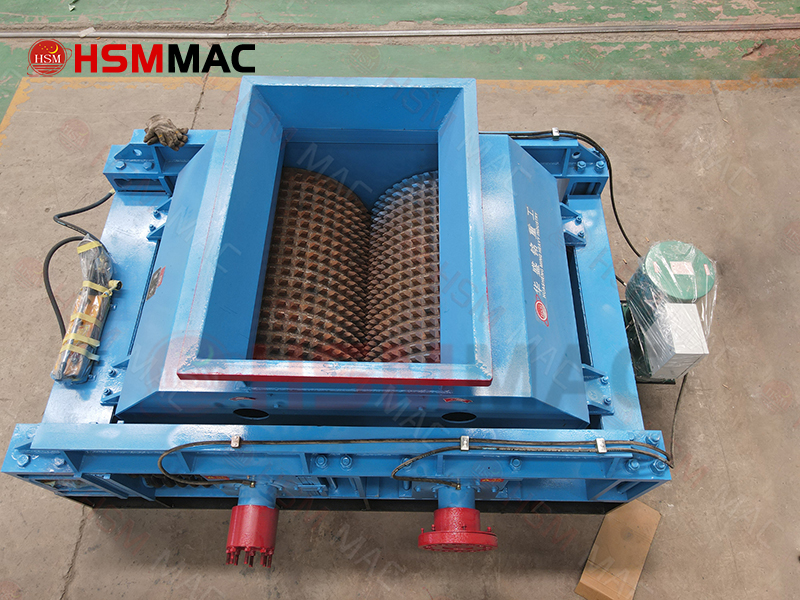
High-Chrome Roll Shells
4. An Honest Comparison: Roll Crusher vs. Alternative Equipment
- vs. Hammer / Impact Crushers: On abrasive, iron-bearing slag, hammers and blow bars experience rapid wear and generate uncontrolled fines. Double roll crushers win decisively on wear cost per ton and product sizing stability, despite carrying a higher initial capital investment.
- vs. Jaw Crushers: Jaw crushers act as primary coarse reduction units, frequently positioned upstream to handle massive boulders. The double roll crusher provides the secondary/tertiary fine-crushing stage that jaw crushers cannot achieve, delivering a uniform mill- or screen-ready top size.
- vs. High-Pressure Grinding Rolls (HPGR): For ultra-large GGBS pre-grinding operations, HPGRs dominate. Double roll crushers are the preferred solution for aggregate recycling yards and plants seeking lower upfront capital expenditure with simpler operational maintenance.
5. Four Parameters Required for Inquiry
To receive a precise engineering proposal and quotation for slag processing, please provide:
- Slag Type & Origin: (Air-cooled blast furnace slag, steel slag, or ladle slag; residual iron content)
- Feed Top Size: (Maximum lump dimensions entering the crusher)
- Target Output Specification: (Road base aggregate sizing, concrete chip specs, or mill feed requirements)
- Design Capacity: (Target throughput in tons per hour)
Providing these four metrics enables Huashengming to specify exact equipment models, motor ratings, hydraulic settings, and high-chrome roll metallurgies tailored to your slag processing plant 【Custom Parameters Available】.
Referenced process descriptions serve as engineering guidelines; specific performance parameters are governed by official project customization agreements.
 +86-13838144666
 +86-13838144666