As a widely used crushing equipment in mining, construction, and chemical industries, the double roller crusher is favored for its simple structure, low noise, and uniform crushing effect. If you’ve ever wondered how it efficiently crushes materials like coal, ore, and clinker, let’s break down its core working principle in plain terms.
The most critical part of a double roller crusher is its two parallel cylindrical rollers. The core working logic lies in therelative inward rotation of these two rollers. When the equipment starts, the two rollers rotate in opposite directions at a stable speed (one clockwise and the other counterclockwise) driven by the motor and transmission mechanism.
Core Working Logic: Relative Inward Rotation of Rollers

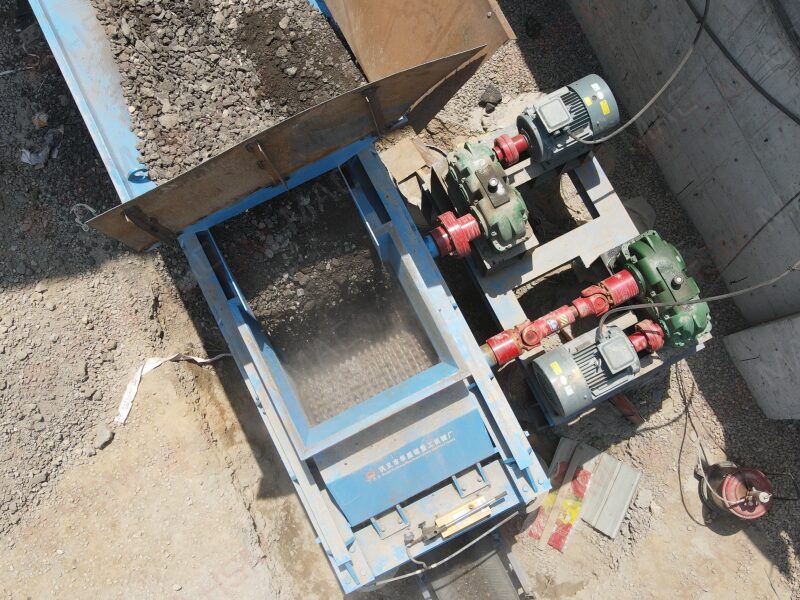
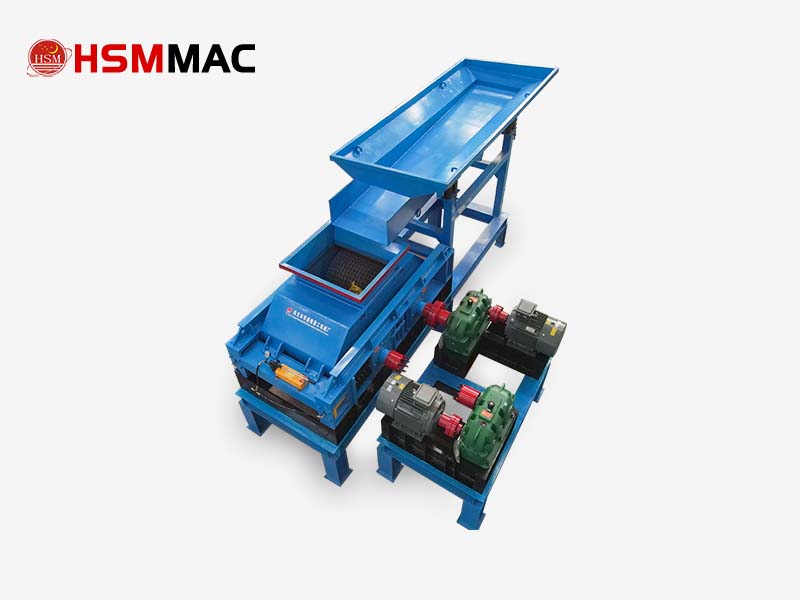
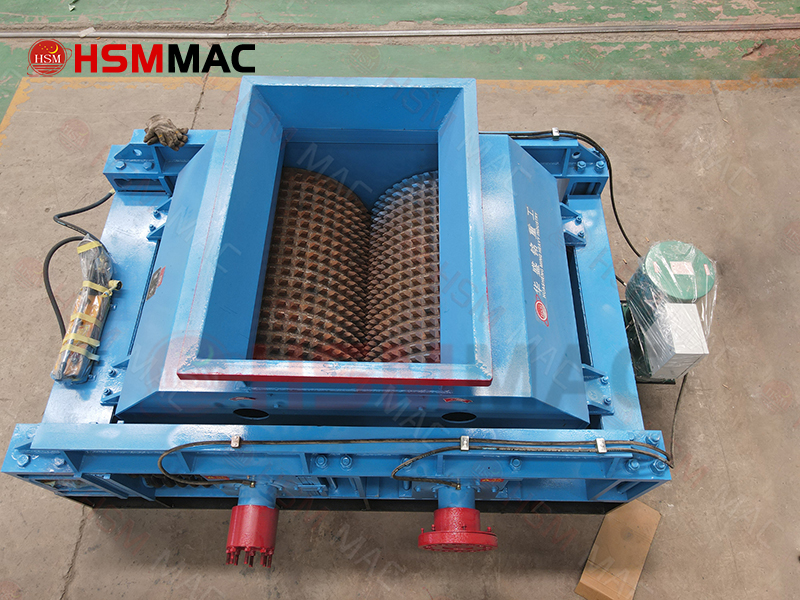
double roller crusher
The most critical part of a double roller crusher is its two parallel cylindrical rollers. The core working logic lies in the relative inward rotation of these two rollers. When the equipment starts, the two rollers rotate in opposite directions at a stable speed (one clockwise and the other counterclockwise) driven by the motor and transmission mechanism.
When raw materials are fed into the feeding port above the two rollers, the rotating rollers will generate a downward traction force, drawing the materials into the crushing cavity (the gap between the two rollers). At this stage, the materials are subjected to three combined forces: extrusion, squeezing, and shearing from the two rotating rollers. For materials with medium hardness (such as coal and limestone), these forces are sufficient to break them into smaller particles.
A key design feature here is that the gap between the two rollers is adjustable. This adjustability directly determines the particle size of the final crushed product. Materials that are larger than the gap will be continuously crushed by the rotating rollers until their size is smaller than the gap, and then they will be discharged from the bottom of the crusher as finished products. If you need finer particles, you just need to reduce the gap; for coarser particles, increase the gap.
Key Design: Adjustable Roller Gap
A key design feature here is that the gap between the two rollers is adjustable. This adjustability directly determines the particle size of the final crushed product. Materials that are larger than the gap will be continuously crushed by the rotating rollers until their size is smaller than the gap, and then they will be discharged from the bottom of the crusher as finished products. If you need finer particles, you just need to reduce the gap; for coarser particles, increase the gap.
It’s worth noting that the double roller crusher is mainly suitable for medium and fine crushing operations. Compared with other crushers, it has the advantages of low dust pollution and minimal over-crushing (avoiding excessive fine powder). This is precisely because its crushing process relies on the controllable gap and gentle extrusion, rather than violent impact.
To sum up, the working principle of the double roller crusher is essentially “drawing materials into the cavity through roller rotation, crushing them by extrusion and shearing, and controlling the product size via adjustable gaps” — a simple yet efficient mechanism that supports various industrial production needs.
 +86-13838144666
 +86-13838144666