The double-roll crusher not only serves perfectly as a stone crashing crusher but also stands as a powerful tool for enhancing product value and reducing overall operating costs. With its robust crushing performance, economical operating costs, and reliable production output, it has proven itself to be the undisputed “powerhouse” and “efficiency expert” in sand and gravel production lines.

Stone Crashing Crusher
1. What is a double-roll crusher?
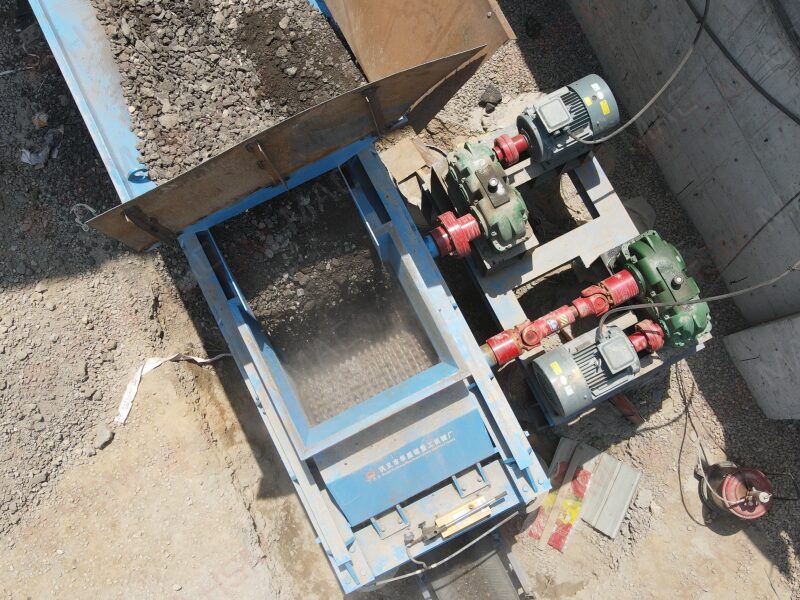
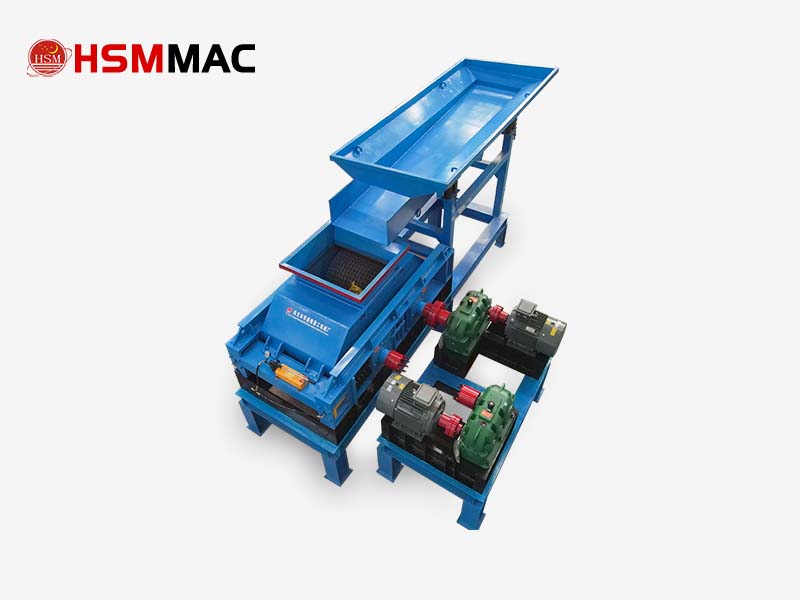
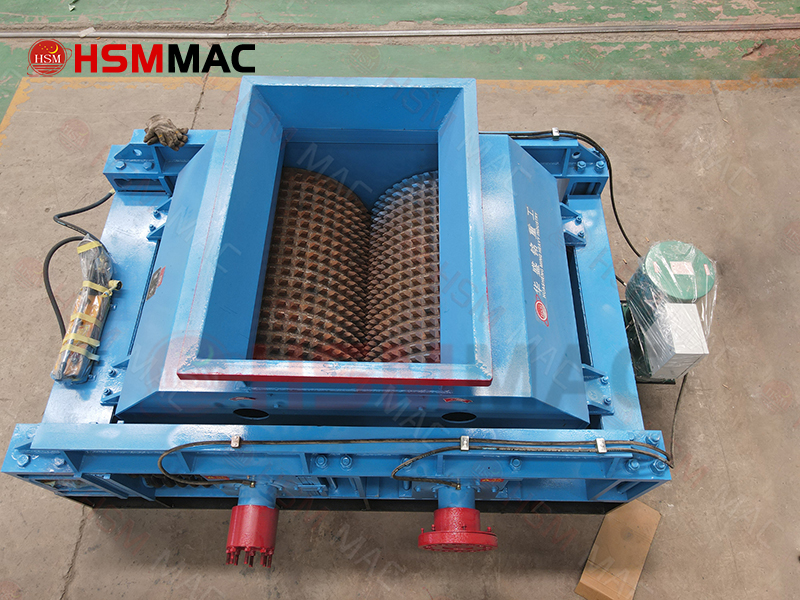
The double-roll crusher, also known as a twin-roll crusher or dual-roll crusher, is a crushing device featuring a classic structure and an intuitive operating principle. It primarily consists of a frame, a pair of counter-rotating rolls, a power transmission system, and adjustment and safety devices. Its core design concept involves achieving material crushing through high-pressure compression between the two rolls, excelling particularly in controlling output particle shape and minimizing over-crushing.
2. What types of rock are being crushed?
River pebbles, cobblestones, limestone, dolomite, potassium feldspar, sodium feldspar, phosphate rock, gypsum, coal, coke, and over 200 other materials.

3. Working Principle

Two rollers rotate toward each other at the same speed or with a slight differential speed, driven by a motor and transmission mechanism. Stone material falls into the top feed opening and is drawn into the gradually narrowing V-shaped crushing chamber between the rollers by friction. Within the crushing chamber, the material undergoes immense continuous compression and shearing forces, resulting in fragmentation. The crushed material is discharged from the bottom under the force of gravity. The final output particle size is entirely determined by the gap between the two rollers (the discharge opening). Adjusting this gap allows for precise control of the product size, making operation extremely straightforward.
4. Advantages
Excellent particle shape with high cube content
Uniform and controllable discharge particle size
Low over-grinding rate and high product yield
Simple structure and easy maintenance
Reliable operation and excellent environmental performance

 +86-13838144666
 +86-13838144666